%20%20--%3E%0A%3Csvg%20version%3D%221.1%22%20id%3D%22Layer_1%22%20xmlns%3D%22http%3A%2F%2Fwww.w3.org%2F2000%2Fsvg%22%20xmlns%3Axlink%3D%22http%3A%2F%2Fwww.w3.org%2F1999%2Fxlink%22%20x%3D%220px%22%20y%3D%220px%22%0A%09%20viewBox%3D%220%200%20684.6%2068.1%22%20style%3D%22enable-background%3Anew%200%200%20684.6%2068.1%3B%22%20xml%3Aspace%3D%22preserve%22%3E%0A%3Cg%3E%0A%09%3Cpath%20d%3D%22M444.1%2C29.3h-17.4v14.5h17.4V29.3z%20M36.4%2C68.1l29.3-50.8V0H50.4L32.9%2C36.8L15.5%2C0H0v68.1h16.7V45.8l12.4%2C22.3H36.4z%0A%09%09%20M49.1%2C68.1h16.6V23.4L49.1%2C52.1V68.1z%20M76.6%2C68.1h45V53.8H93.3V41.6h21V27.1h-21V14.8h28.3V0.1h-45V68.1z%20M175.6%2C68.1h17.3v-68%0A%09%09h-16.5v40.3L150%2C0.1h-17.6v68h16.7V27.7L175.6%2C68.1z%20M235.8%2C14.8h15.4V0.1h-47.4v14.7H219v53.2h16.8V14.8z%20M290.3%2C45.9h-17.1%0A%09%09l7.5-15.6h2L290.3%2C45.9z%20M298.7%2C68.1h18l-32.2-68h-5.7l-32%2C68h18l3.3-7.1h27.1L298.7%2C68.1z%20M325.2%2C68.1h46.2V53.8h-29.6V0.1h-16.7%0A%09%09V68.1z%20M423.7%2C14.8h27.2V0.1H407v68h16.7V14.8z%20M462%2C68.1h46.2V53.8h-29.6V0.1H462V68.1z%20M564.8%2C34.1c0%2C10.7-7.2%2C19.2-18.5%2C19.2%0A%09%09c-11.4%2C0-18.5-8.5-18.5-19.2s7.1-19.2%2C18.5-19.2C557.6%2C14.9%2C564.8%2C23.4%2C564.8%2C34.1%20M580.6%2C34.1c0-19-14.2-34-34.3-34%0A%09%09c-20.2%2C0-34.3%2C15-34.3%2C34c0%2C19%2C14.1%2C34%2C34.3%2C34C566.4%2C68.1%2C580.6%2C53.1%2C580.6%2C34.1%20M604.8%2C20.5c0-4.1%2C3.3-6.2%2C6.7-6.2%0A%09%09c4.4%2C0%2C6.6%2C3%2C6.6%2C6.6h14.7C631.8%2C9.1%2C625.1%2C0.1%2C611%2C0.1c-12%2C0-21.7%2C9.3-21.7%2C20.6c0%2C10.9%2C5.9%2C15.9%2C16.7%2C19.8%0A%09%09c5.2%2C1.8%2C11.5%2C3.2%2C11.5%2C8c0%2C3.3-2.4%2C5.5-6.4%2C5.5c-3.6%2C0-6.6-3-6.6-6.7h-15.2c0%2C11.5%2C7.9%2C20.8%2C21.8%2C20.8c12%2C0%2C21.6-9.3%2C21.6-20.6%0A%09%09c0-10-5.3-16.4-16.7-19.8C610.6%2C26.1%2C604.8%2C25.3%2C604.8%2C20.5%20M670%2C20.9h14.7C683.8%2C9.1%2C677.1%2C0.1%2C663%2C0.1c-12%2C0-21.7%2C9.3-21.7%2C20.6%0A%09%09c0%2C10.9%2C5.9%2C15.9%2C16.7%2C19.8c5.2%2C1.8%2C11.5%2C3.2%2C11.5%2C8c0%2C3.3-2.4%2C5.5-6.4%2C5.5c-3.6%2C0-6.6-3-6.6-6.7h-15.2c0%2C11.5%2C7.9%2C20.8%2C21.8%2C20.8%0A%09%09c12%2C0%2C21.6-9.3%2C21.6-20.6c0-10-5.3-16.4-16.7-19.8c-5.4-1.6-11.3-2.4-11.3-7.2c0-4.1%2C3.3-6.2%2C6.7-6.2C667.7%2C14.4%2C670%2C17.3%2C670%2C20.9%0A%09%09%22%2F%3E%0A%3C%2Fg%3E%0A%3C%2Fsvg%3E%0A)

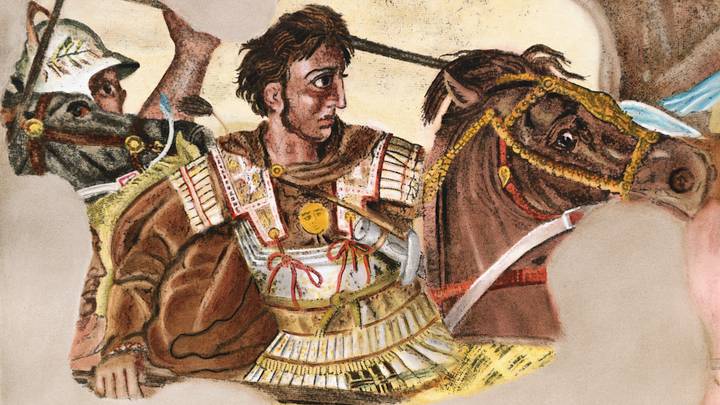
The legendary ruler Alexander III of Macedon, who lived from 356 to 323 BCE, is most commonly known by the more descriptive title of “Alexander the Great.” But why did the reputation of this monarch transcend his lineage to become a figure of such international renown, instead of being known as just one of several kings of the same name from one country? Here is the history of why this man eventually became known as “the Great.”
The first record of Alexander III being referred to by name as “Alexander the Great” is a reference in a play by the Roman writer Plautus, written in the second or third century BCE. The comedy Mostellaria (which has sometimes been translated into English under the title The Ghost) refers to him this way in a line of dialogue from Act III, Scene II, in which the character of Tranio remarks: “They say that Alexander the Great and Agathocles achieved two very great exploits; what shall be the lot of myself, a third, who, unaided, am achieving deeds imperishable?”
The fact that a character in a fictional work would refer to a real person this way suggests he had already acquired this description in real life by this point.
The Accomplishments That Led to Greatness

As to the reasons why his life and accomplishments would lead to him being given this name, there are a number of important factors which led to this status. Alexander’s military success was a major factor which influenced perceptions of his greatness. He never lost a battle, which was regarded as a major achievement, and the fact that he also personally led his men was also notable, and on only one occasion did his army refuse to follow that lead, otherwise showing huge loyalty to him.
His ability to accomplish this at an early age was another contributing factor to acquiring a reputation for greatness. Alexander inherited his father’s throne at the age of only 20 and quickly rose to become a successful leader of multiple territories
At the time of his death, he was only 32, and yet he had accomplished a huge amount in his relatively short life.
Accounts by historians and other writers also played an important role in maintaining his fame. A notable quotation of disputed origin states, “history is written by the victors,” and history is frequently written about the victors by others, too, with Alexander’s many military successes undoubtedly helping to cement his image. His reputation underwent a further enhancement during the 18th century due to a number of Enlightenment-era biographies which focused on him.
The influence of his reign across both Europe and Asia is also important, and shows his legend was not limited to any one region but had relevance across many countries and cultures. His reputation was so high that he has even been credited with inspiring the popularity of Alexander as a name across these continents, and the fact that the name is still a popular one today shows that he continues to have an influence in the modern world.