%20%20--%3E%0A%3Csvg%20version%3D%221.1%22%20id%3D%22Layer_1%22%20xmlns%3D%22http%3A%2F%2Fwww.w3.org%2F2000%2Fsvg%22%20xmlns%3Axlink%3D%22http%3A%2F%2Fwww.w3.org%2F1999%2Fxlink%22%20x%3D%220px%22%20y%3D%220px%22%0A%09%20viewBox%3D%220%200%20684.6%2068.1%22%20style%3D%22enable-background%3Anew%200%200%20684.6%2068.1%3B%22%20xml%3Aspace%3D%22preserve%22%3E%0A%3Cg%3E%0A%09%3Cpath%20d%3D%22M444.1%2C29.3h-17.4v14.5h17.4V29.3z%20M36.4%2C68.1l29.3-50.8V0H50.4L32.9%2C36.8L15.5%2C0H0v68.1h16.7V45.8l12.4%2C22.3H36.4z%0A%09%09%20M49.1%2C68.1h16.6V23.4L49.1%2C52.1V68.1z%20M76.6%2C68.1h45V53.8H93.3V41.6h21V27.1h-21V14.8h28.3V0.1h-45V68.1z%20M175.6%2C68.1h17.3v-68%0A%09%09h-16.5v40.3L150%2C0.1h-17.6v68h16.7V27.7L175.6%2C68.1z%20M235.8%2C14.8h15.4V0.1h-47.4v14.7H219v53.2h16.8V14.8z%20M290.3%2C45.9h-17.1%0A%09%09l7.5-15.6h2L290.3%2C45.9z%20M298.7%2C68.1h18l-32.2-68h-5.7l-32%2C68h18l3.3-7.1h27.1L298.7%2C68.1z%20M325.2%2C68.1h46.2V53.8h-29.6V0.1h-16.7%0A%09%09V68.1z%20M423.7%2C14.8h27.2V0.1H407v68h16.7V14.8z%20M462%2C68.1h46.2V53.8h-29.6V0.1H462V68.1z%20M564.8%2C34.1c0%2C10.7-7.2%2C19.2-18.5%2C19.2%0A%09%09c-11.4%2C0-18.5-8.5-18.5-19.2s7.1-19.2%2C18.5-19.2C557.6%2C14.9%2C564.8%2C23.4%2C564.8%2C34.1%20M580.6%2C34.1c0-19-14.2-34-34.3-34%0A%09%09c-20.2%2C0-34.3%2C15-34.3%2C34c0%2C19%2C14.1%2C34%2C34.3%2C34C566.4%2C68.1%2C580.6%2C53.1%2C580.6%2C34.1%20M604.8%2C20.5c0-4.1%2C3.3-6.2%2C6.7-6.2%0A%09%09c4.4%2C0%2C6.6%2C3%2C6.6%2C6.6h14.7C631.8%2C9.1%2C625.1%2C0.1%2C611%2C0.1c-12%2C0-21.7%2C9.3-21.7%2C20.6c0%2C10.9%2C5.9%2C15.9%2C16.7%2C19.8%0A%09%09c5.2%2C1.8%2C11.5%2C3.2%2C11.5%2C8c0%2C3.3-2.4%2C5.5-6.4%2C5.5c-3.6%2C0-6.6-3-6.6-6.7h-15.2c0%2C11.5%2C7.9%2C20.8%2C21.8%2C20.8c12%2C0%2C21.6-9.3%2C21.6-20.6%0A%09%09c0-10-5.3-16.4-16.7-19.8C610.6%2C26.1%2C604.8%2C25.3%2C604.8%2C20.5%20M670%2C20.9h14.7C683.8%2C9.1%2C677.1%2C0.1%2C663%2C0.1c-12%2C0-21.7%2C9.3-21.7%2C20.6%0A%09%09c0%2C10.9%2C5.9%2C15.9%2C16.7%2C19.8c5.2%2C1.8%2C11.5%2C3.2%2C11.5%2C8c0%2C3.3-2.4%2C5.5-6.4%2C5.5c-3.6%2C0-6.6-3-6.6-6.7h-15.2c0%2C11.5%2C7.9%2C20.8%2C21.8%2C20.8%0A%09%09c12%2C0%2C21.6-9.3%2C21.6-20.6c0-10-5.3-16.4-16.7-19.8c-5.4-1.6-11.3-2.4-11.3-7.2c0-4.1%2C3.3-6.2%2C6.7-6.2C667.7%2C14.4%2C670%2C17.3%2C670%2C20.9%0A%09%09%22%2F%3E%0A%3C%2Fg%3E%0A%3C%2Fsvg%3E%0A)

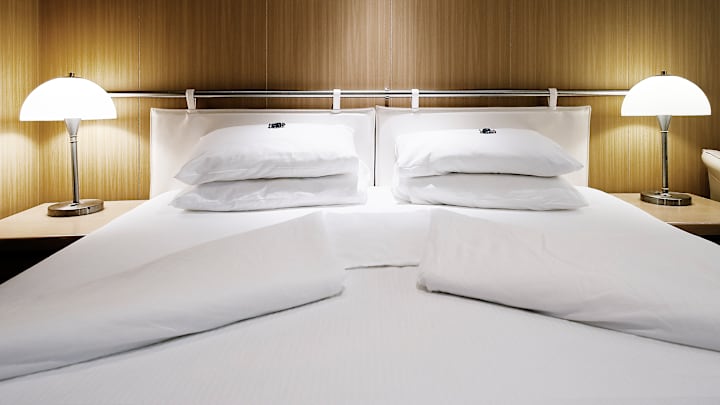
Besides the breakfast, the room service, and the minibar, perhaps the biggest benefit of a hotel stay is that crisp, fresh, just-turned-down feeling of tightly tucked bedding. As comfortable as they might be, though, those sheets are sometimes tucked in extraordinarily tight—making it something of a struggle to force your feet down to the bottom of the bed and free up enough room for yourself under the covers. So why exactly are hotel beds tucked so tightly?
Surprisingly, the origins of this practice lie not in hospitality, but in hospitals—and in particular, the so-called “hospital corner” method of tucking down a bedsheet.
Long before the elasticated fitted bedsheet was invented in the 1950s, flat, plain bedsheets were the only ones available. And in hospitals, where hygiene and precision are understandably important, simply placing a loose sheet over a bed wasn’t exactly ideal. Loose sheets might become tangled in the legs of medical equipment, or in patients’ splints, supports, or crutches, while injured patients might easily take a tumble from a loosely made bed during the night. Fastening their bedsheets down tightly—using the so-called “hospital corner” folding method—ultimately helped with all of these problems, while simultaneously maintaining a high standard of cleanliness and order on the ward.
By the turn of the century, this practice had become the standard in the military too (where, according to legend, beds were made tightly enough for a quarter to be crisply bounced off them). This not only had the advantage of maintaining tidiness in the barracks, but gave recruits another standard to aim for and be assessed by, as well as a handy test of their ability to follow, memorize, and carry out a series of instructions.
All told then, tight bedsheets have a long and somewhat storied history—and it’s their association with cleanliness, order, and precision that have made them a popular addition to hotel rooms today. But now that elasticated fitted sheets are available, why are hospital corners still so frequently used in hotels? Wouldn’t a fitted sheet be an easier option? And wouldn’t it save time in the housekeeping rota?
Well, as true as all of that is, at least part of the reason why fitted sheets have never quite taken off in hotels is, once again, cleanliness. The hot water temperatures that are required to wash bedding hygienically aren’t exactly the best friends of the thin elastic strips that encircle fitted sheets. Washing your own bedsheets at home in hot water every few weeks isn’t going to cause too much damage, of course—but hotel sheets have to undergo a hot-water wash every single day, which would understandably cause the thin elastic in fitted sheets to quickly lose their stretchiness and give out.
Fitted sheets are also notoriously difficult to press and fold, too. Flat bedsheets, meanwhile, can be relatively quickly and easily pressed flat and neatly stacked for ease of storage. Add that to the benefits of crispness and hygiene and the relative disadvantages of using elasticated sheets, and there are several good reasons why hotels have continued to maintain this tight-tucking practice for so long.