%20%20--%3E%0A%3Csvg%20version%3D%221.1%22%20id%3D%22Layer_1%22%20xmlns%3D%22http%3A%2F%2Fwww.w3.org%2F2000%2Fsvg%22%20xmlns%3Axlink%3D%22http%3A%2F%2Fwww.w3.org%2F1999%2Fxlink%22%20x%3D%220px%22%20y%3D%220px%22%0A%09%20viewBox%3D%220%200%20684.6%2068.1%22%20style%3D%22enable-background%3Anew%200%200%20684.6%2068.1%3B%22%20xml%3Aspace%3D%22preserve%22%3E%0A%3Cg%3E%0A%09%3Cpath%20d%3D%22M444.1%2C29.3h-17.4v14.5h17.4V29.3z%20M36.4%2C68.1l29.3-50.8V0H50.4L32.9%2C36.8L15.5%2C0H0v68.1h16.7V45.8l12.4%2C22.3H36.4z%0A%09%09%20M49.1%2C68.1h16.6V23.4L49.1%2C52.1V68.1z%20M76.6%2C68.1h45V53.8H93.3V41.6h21V27.1h-21V14.8h28.3V0.1h-45V68.1z%20M175.6%2C68.1h17.3v-68%0A%09%09h-16.5v40.3L150%2C0.1h-17.6v68h16.7V27.7L175.6%2C68.1z%20M235.8%2C14.8h15.4V0.1h-47.4v14.7H219v53.2h16.8V14.8z%20M290.3%2C45.9h-17.1%0A%09%09l7.5-15.6h2L290.3%2C45.9z%20M298.7%2C68.1h18l-32.2-68h-5.7l-32%2C68h18l3.3-7.1h27.1L298.7%2C68.1z%20M325.2%2C68.1h46.2V53.8h-29.6V0.1h-16.7%0A%09%09V68.1z%20M423.7%2C14.8h27.2V0.1H407v68h16.7V14.8z%20M462%2C68.1h46.2V53.8h-29.6V0.1H462V68.1z%20M564.8%2C34.1c0%2C10.7-7.2%2C19.2-18.5%2C19.2%0A%09%09c-11.4%2C0-18.5-8.5-18.5-19.2s7.1-19.2%2C18.5-19.2C557.6%2C14.9%2C564.8%2C23.4%2C564.8%2C34.1%20M580.6%2C34.1c0-19-14.2-34-34.3-34%0A%09%09c-20.2%2C0-34.3%2C15-34.3%2C34c0%2C19%2C14.1%2C34%2C34.3%2C34C566.4%2C68.1%2C580.6%2C53.1%2C580.6%2C34.1%20M604.8%2C20.5c0-4.1%2C3.3-6.2%2C6.7-6.2%0A%09%09c4.4%2C0%2C6.6%2C3%2C6.6%2C6.6h14.7C631.8%2C9.1%2C625.1%2C0.1%2C611%2C0.1c-12%2C0-21.7%2C9.3-21.7%2C20.6c0%2C10.9%2C5.9%2C15.9%2C16.7%2C19.8%0A%09%09c5.2%2C1.8%2C11.5%2C3.2%2C11.5%2C8c0%2C3.3-2.4%2C5.5-6.4%2C5.5c-3.6%2C0-6.6-3-6.6-6.7h-15.2c0%2C11.5%2C7.9%2C20.8%2C21.8%2C20.8c12%2C0%2C21.6-9.3%2C21.6-20.6%0A%09%09c0-10-5.3-16.4-16.7-19.8C610.6%2C26.1%2C604.8%2C25.3%2C604.8%2C20.5%20M670%2C20.9h14.7C683.8%2C9.1%2C677.1%2C0.1%2C663%2C0.1c-12%2C0-21.7%2C9.3-21.7%2C20.6%0A%09%09c0%2C10.9%2C5.9%2C15.9%2C16.7%2C19.8c5.2%2C1.8%2C11.5%2C3.2%2C11.5%2C8c0%2C3.3-2.4%2C5.5-6.4%2C5.5c-3.6%2C0-6.6-3-6.6-6.7h-15.2c0%2C11.5%2C7.9%2C20.8%2C21.8%2C20.8%0A%09%09c12%2C0%2C21.6-9.3%2C21.6-20.6c0-10-5.3-16.4-16.7-19.8c-5.4-1.6-11.3-2.4-11.3-7.2c0-4.1%2C3.3-6.2%2C6.7-6.2C667.7%2C14.4%2C670%2C17.3%2C670%2C20.9%0A%09%09%22%2F%3E%0A%3C%2Fg%3E%0A%3C%2Fsvg%3E%0A)

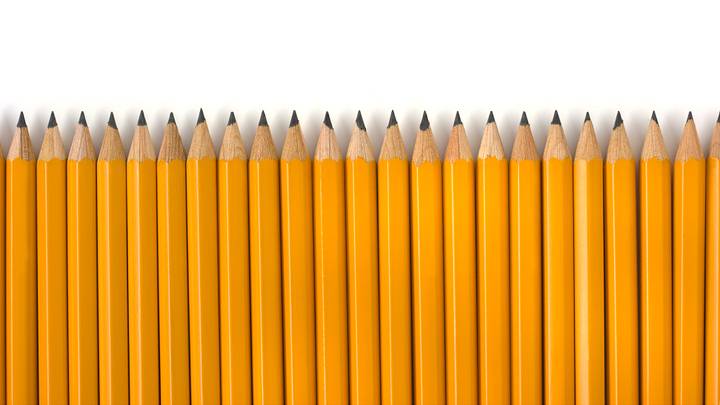
Head to a stationery store, and you’ll doubtless see pencils in all manner of shapes, sizes, and colors. But as many of us will likely remember from our school days, especially, many standard wooden pencils are coated in an eye-catching layer of bright yellow paint.
But why yellow? And why on pencils in particular?
The Pencil That Made Yellow Popular

At least part of the story here begins at the 1889 Exposition Universelle in Paris, better known to English minds as the Paris Exposition (and perhaps ever better known than that as the international fair for which the Eiffel Tower was originally built). Amid all the shows, spectacles, stores, exhibits, and everything else the fair contained, however, was a small Czech stall displaying a new kind of pencil produced by the pencil-manufacturing company Hardtmuth, based in the Bohemian city of České Budějovice.
The Hardtmuth company—originally founded in the late 18th century by its namesake, the Austrian inventor Joseph Hardtmuth—had earlier patented a new type of pencil lead made from a kaolin and graphite mix, and they were now here at the Paris fair to display their world-class stationery to the world.
The company branded this new style of pencil under the suitably luxurious-sounding moniker of the “Koh-i-Noor Hardtmuth,” somewhat shamelessly adopting the name of one of the world’s largest and most famous diamonds (which had, forty years earlier, been incorporated into the British Crown Jewels). The message with this name was clear: the new Hardtmuth pencil was of exceptional diamond-like quality.
It truly was, too. The company’s unique graphite blend was encased in a cedarwood barrel, and given a glossy yellow sheen. It understandably soon proved popular and established itself as the benchmark for writers, artists, and creatives across Europe and beyond; when the Paris Exposition was repeated in 1900 (to coincide with the city’s Olympic Games that year), the iconic Koh-i-Noor Hardtmuth 1500 pencil was awarded a Grand Prix prize.
Why Yellow Was a Status Symbol

The success of the Hardtmuth pencil in Paris understandably established a yellow barrel as a standard feature of many graphite pencils, and other brands soon followed suit. But that still leaves one question unanswered here: why did the Hardtmuth company choose yellow in the first place?
With their choice of the “Koh-i-Noor” name, the Hardtmuth brand was clearly interested in giving their pencils some luxury cachet—but it was this too that led them to opt for yellow paint. At that time, the best graphite was sourced from China, and in Chinese culture, the color yellow—through its own associations with gold—has long been connected to royalty, luxury, prestige, authority, and wealth. By painting their pencils yellow, the Hardmuth company was simply hammering home their luxury branding and sending a clear message to potential customers that they were using only the very best materials.
Far from being a simple aesthetic choice, ultimately, the standard yellow pencil has a long history dating back through fin de siècle Europe to the days of imperial China.