%20%20--%3E%0A%3Csvg%20version%3D%221.1%22%20id%3D%22Layer_1%22%20xmlns%3D%22http%3A%2F%2Fwww.w3.org%2F2000%2Fsvg%22%20xmlns%3Axlink%3D%22http%3A%2F%2Fwww.w3.org%2F1999%2Fxlink%22%20x%3D%220px%22%20y%3D%220px%22%0A%09%20viewBox%3D%220%200%20684.6%2068.1%22%20style%3D%22enable-background%3Anew%200%200%20684.6%2068.1%3B%22%20xml%3Aspace%3D%22preserve%22%3E%0A%3Cg%3E%0A%09%3Cpath%20d%3D%22M444.1%2C29.3h-17.4v14.5h17.4V29.3z%20M36.4%2C68.1l29.3-50.8V0H50.4L32.9%2C36.8L15.5%2C0H0v68.1h16.7V45.8l12.4%2C22.3H36.4z%0A%09%09%20M49.1%2C68.1h16.6V23.4L49.1%2C52.1V68.1z%20M76.6%2C68.1h45V53.8H93.3V41.6h21V27.1h-21V14.8h28.3V0.1h-45V68.1z%20M175.6%2C68.1h17.3v-68%0A%09%09h-16.5v40.3L150%2C0.1h-17.6v68h16.7V27.7L175.6%2C68.1z%20M235.8%2C14.8h15.4V0.1h-47.4v14.7H219v53.2h16.8V14.8z%20M290.3%2C45.9h-17.1%0A%09%09l7.5-15.6h2L290.3%2C45.9z%20M298.7%2C68.1h18l-32.2-68h-5.7l-32%2C68h18l3.3-7.1h27.1L298.7%2C68.1z%20M325.2%2C68.1h46.2V53.8h-29.6V0.1h-16.7%0A%09%09V68.1z%20M423.7%2C14.8h27.2V0.1H407v68h16.7V14.8z%20M462%2C68.1h46.2V53.8h-29.6V0.1H462V68.1z%20M564.8%2C34.1c0%2C10.7-7.2%2C19.2-18.5%2C19.2%0A%09%09c-11.4%2C0-18.5-8.5-18.5-19.2s7.1-19.2%2C18.5-19.2C557.6%2C14.9%2C564.8%2C23.4%2C564.8%2C34.1%20M580.6%2C34.1c0-19-14.2-34-34.3-34%0A%09%09c-20.2%2C0-34.3%2C15-34.3%2C34c0%2C19%2C14.1%2C34%2C34.3%2C34C566.4%2C68.1%2C580.6%2C53.1%2C580.6%2C34.1%20M604.8%2C20.5c0-4.1%2C3.3-6.2%2C6.7-6.2%0A%09%09c4.4%2C0%2C6.6%2C3%2C6.6%2C6.6h14.7C631.8%2C9.1%2C625.1%2C0.1%2C611%2C0.1c-12%2C0-21.7%2C9.3-21.7%2C20.6c0%2C10.9%2C5.9%2C15.9%2C16.7%2C19.8%0A%09%09c5.2%2C1.8%2C11.5%2C3.2%2C11.5%2C8c0%2C3.3-2.4%2C5.5-6.4%2C5.5c-3.6%2C0-6.6-3-6.6-6.7h-15.2c0%2C11.5%2C7.9%2C20.8%2C21.8%2C20.8c12%2C0%2C21.6-9.3%2C21.6-20.6%0A%09%09c0-10-5.3-16.4-16.7-19.8C610.6%2C26.1%2C604.8%2C25.3%2C604.8%2C20.5%20M670%2C20.9h14.7C683.8%2C9.1%2C677.1%2C0.1%2C663%2C0.1c-12%2C0-21.7%2C9.3-21.7%2C20.6%0A%09%09c0%2C10.9%2C5.9%2C15.9%2C16.7%2C19.8c5.2%2C1.8%2C11.5%2C3.2%2C11.5%2C8c0%2C3.3-2.4%2C5.5-6.4%2C5.5c-3.6%2C0-6.6-3-6.6-6.7h-15.2c0%2C11.5%2C7.9%2C20.8%2C21.8%2C20.8%0A%09%09c12%2C0%2C21.6-9.3%2C21.6-20.6c0-10-5.3-16.4-16.7-19.8c-5.4-1.6-11.3-2.4-11.3-7.2c0-4.1%2C3.3-6.2%2C6.7-6.2C667.7%2C14.4%2C670%2C17.3%2C670%2C20.9%0A%09%09%22%2F%3E%0A%3C%2Fg%3E%0A%3C%2Fsvg%3E%0A)

On the night of November 4, 1605, Guy Fawkes was guarding 36 barrels of gunpowder in a storeroom under the House of Lords when the king’s men found him. He and his fellow conspirators, a group of English Catholics led by Robert Catesby, had planned to blow up Parliament at its opening and kill the Protestant King James I.
Mental Floss has the full story of the plot, but the stuffed figure that gets thrown on the bonfire every November 5 has a weirder backstory than the night it commemorates.
A Holiday by Act of Parliament

The celebration started almost immediately: people lit bonfires to mark the king’s survival, and Parliament made it official with the Observance of 5th November Act, better known as the Thanksgiving Act, which ordered prayers and church bells every year on the anniversary. The first official Gunpowder Treason Day was held in November 1606, and fireworks had joined the bonfires by at least the 1650s.
The man people wanted to see burn, though, wasn’t Fawkes: according to the London Museum, models of him have been burned since at least 1790, and before that the effigy on the fire was usually the Pope. Anti-Catholic feeling ran through the whole holiday. In the late 1670s, London held huge pope-burning pageants every November 17, the anniversary of Elizabeth I’s accession, and one contemporary guessed that 200,000 people watched in 1679. In 1677, the Pope’s effigy appeared to scream as it burned, because the organizers had shut live cats inside it.
Pope Night Goes to America

Colonists brought the holiday with them, and in New England it was called Pope’s Day or Pope Night. A Boston notebook entry for November 5, 1745, copied from the Boston Evening-Post, describes how “Two Popes were made & carried thro the streets in the evening 1 from the N. & ye other from ye S.,” and when the North End and South End crowds met, “their followers fell upon one another w/ ye utmost rage & fury.” George Washington in 1775, calling it a ridiculous and childish custom.
How Guy Became the Guy

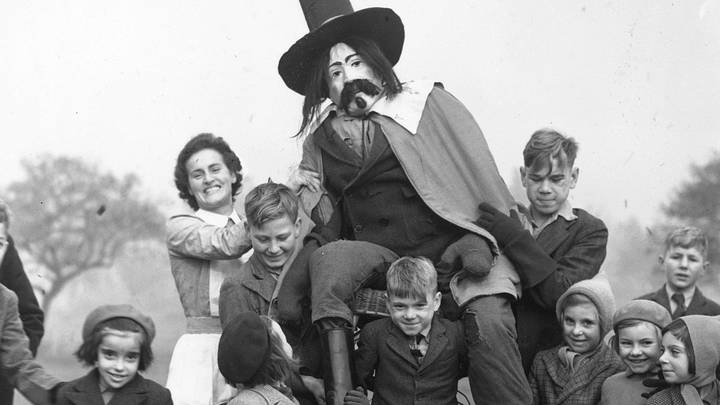
Back in Britain, Fawkes slowly took the Pope’s place on top of the pile, partly thanks to kids. In the weeks before November 5, children stuffed old clothes into a homemade Fawkes and wheeled him around the neighborhood in a pram or wheelbarrow, asking passersby for “a penny for the Guy” to spend on fireworks. Not everyone loved it: in a 1957 BBC report, one woman complained that parents should give their kids enough pocket money “not to start Guy Fawksing about at the end of August.” The custom gave English a word, too: “guy” became slang for a badly dressed person, and eventually for any man at all.
Parliament repealed the Thanksgiving Act in 1859, and the penny-for-the-Guy tradition had mostly faded by the end of the 20th century, but the bonfires stayed. In Lewes, East Sussex, where 17 Protestant martyrs were burned at the stake between 1555 and 1557, bonfire societies still burn an effigy of Pope Paul V every year, who held the job at the time of the Gunpowder Plot, and parade topical effigies of figures like Vladimir Putin and Donald Trump.