%20%20--%3E%0A%3Csvg%20version%3D%221.1%22%20id%3D%22Layer_1%22%20xmlns%3D%22http%3A%2F%2Fwww.w3.org%2F2000%2Fsvg%22%20xmlns%3Axlink%3D%22http%3A%2F%2Fwww.w3.org%2F1999%2Fxlink%22%20x%3D%220px%22%20y%3D%220px%22%0A%09%20viewBox%3D%220%200%20684.6%2068.1%22%20style%3D%22enable-background%3Anew%200%200%20684.6%2068.1%3B%22%20xml%3Aspace%3D%22preserve%22%3E%0A%3Cg%3E%0A%09%3Cpath%20d%3D%22M444.1%2C29.3h-17.4v14.5h17.4V29.3z%20M36.4%2C68.1l29.3-50.8V0H50.4L32.9%2C36.8L15.5%2C0H0v68.1h16.7V45.8l12.4%2C22.3H36.4z%0A%09%09%20M49.1%2C68.1h16.6V23.4L49.1%2C52.1V68.1z%20M76.6%2C68.1h45V53.8H93.3V41.6h21V27.1h-21V14.8h28.3V0.1h-45V68.1z%20M175.6%2C68.1h17.3v-68%0A%09%09h-16.5v40.3L150%2C0.1h-17.6v68h16.7V27.7L175.6%2C68.1z%20M235.8%2C14.8h15.4V0.1h-47.4v14.7H219v53.2h16.8V14.8z%20M290.3%2C45.9h-17.1%0A%09%09l7.5-15.6h2L290.3%2C45.9z%20M298.7%2C68.1h18l-32.2-68h-5.7l-32%2C68h18l3.3-7.1h27.1L298.7%2C68.1z%20M325.2%2C68.1h46.2V53.8h-29.6V0.1h-16.7%0A%09%09V68.1z%20M423.7%2C14.8h27.2V0.1H407v68h16.7V14.8z%20M462%2C68.1h46.2V53.8h-29.6V0.1H462V68.1z%20M564.8%2C34.1c0%2C10.7-7.2%2C19.2-18.5%2C19.2%0A%09%09c-11.4%2C0-18.5-8.5-18.5-19.2s7.1-19.2%2C18.5-19.2C557.6%2C14.9%2C564.8%2C23.4%2C564.8%2C34.1%20M580.6%2C34.1c0-19-14.2-34-34.3-34%0A%09%09c-20.2%2C0-34.3%2C15-34.3%2C34c0%2C19%2C14.1%2C34%2C34.3%2C34C566.4%2C68.1%2C580.6%2C53.1%2C580.6%2C34.1%20M604.8%2C20.5c0-4.1%2C3.3-6.2%2C6.7-6.2%0A%09%09c4.4%2C0%2C6.6%2C3%2C6.6%2C6.6h14.7C631.8%2C9.1%2C625.1%2C0.1%2C611%2C0.1c-12%2C0-21.7%2C9.3-21.7%2C20.6c0%2C10.9%2C5.9%2C15.9%2C16.7%2C19.8%0A%09%09c5.2%2C1.8%2C11.5%2C3.2%2C11.5%2C8c0%2C3.3-2.4%2C5.5-6.4%2C5.5c-3.6%2C0-6.6-3-6.6-6.7h-15.2c0%2C11.5%2C7.9%2C20.8%2C21.8%2C20.8c12%2C0%2C21.6-9.3%2C21.6-20.6%0A%09%09c0-10-5.3-16.4-16.7-19.8C610.6%2C26.1%2C604.8%2C25.3%2C604.8%2C20.5%20M670%2C20.9h14.7C683.8%2C9.1%2C677.1%2C0.1%2C663%2C0.1c-12%2C0-21.7%2C9.3-21.7%2C20.6%0A%09%09c0%2C10.9%2C5.9%2C15.9%2C16.7%2C19.8c5.2%2C1.8%2C11.5%2C3.2%2C11.5%2C8c0%2C3.3-2.4%2C5.5-6.4%2C5.5c-3.6%2C0-6.6-3-6.6-6.7h-15.2c0%2C11.5%2C7.9%2C20.8%2C21.8%2C20.8%0A%09%09c12%2C0%2C21.6-9.3%2C21.6-20.6c0-10-5.3-16.4-16.7-19.8c-5.4-1.6-11.3-2.4-11.3-7.2c0-4.1%2C3.3-6.2%2C6.7-6.2C667.7%2C14.4%2C670%2C17.3%2C670%2C20.9%0A%09%09%22%2F%3E%0A%3C%2Fg%3E%0A%3C%2Fsvg%3E%0A)

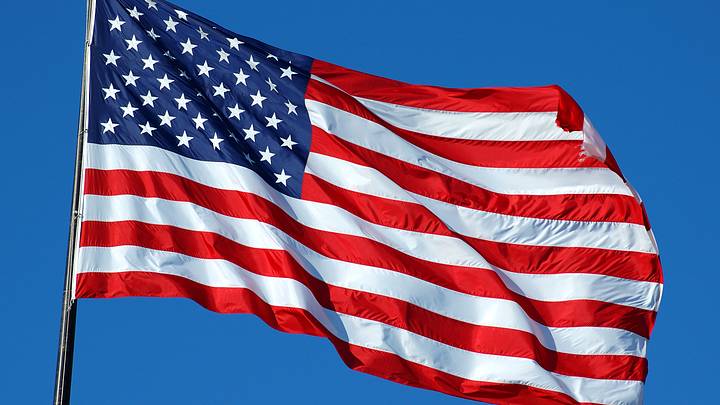
There are certain symbols that are quintessentially American, like the American bald eagle, the Constitution, and the Liberty Bell. And of course, there's the American flag.
The American flag was first adopted as a symbol of the country in 1777 and has since undergone a variety of changes. Stars are added for each state that becomes part of the union, and there have been additions and subtractions of stripes since the first American flag was created.
But one thing has stayed the same: the colors. The stars and stripes have always been red, white, and blue, no matter how many changes have been made over the years. And while Americans celebrate the country's independence every year on July Fourth, the flag's roots may still have a connection to the country that once claimed the United States as its colonies.
Old Glory Has Old Origins

Before the stars and stripes were officially put in place, the flag that represented the United States also featured the Union Jack, which symbolized its role as colonies to the Great Britain. The Union Jack was featured in the top left corner of the flag where today's field of stars sits. It also had 13 red-and-white stripes to represent the 13 colonies—a feature that exists on the current American flag.
So even before the Revolutionary War, the American flag was red, white, and blue, representing its connection to Great Britain.
When the very young country had the chance to change its colors after declaring its independence, it ended up sticking with the same red, white, and blue. The Flag Resolution passed by the Continental Congress on June 14, 1777, stated, "Resolved, That the flag of the United States be thirteen stripes, alternate red and white; that the union be thirteen stars, white in a blue field, representing a new constellation."
Today, the United States celebrates Flag Day on June 14 each year in honor of the date the Flag Resolution was adopted.
What the Colors Symbolize
While the flag's resolution didn't specify the symbolism of the colors, subsequent decisions about the symbols of the United States in the following years give a glimpse of why those colors are still on the flag today.
Charles Thomson served as the secretary of the Continental Congress, which was finalizing the design for the Great Seal of the United States in 1782, which also includes the colors red, white, and blue. It was Thomson who assigned the meaning of the colors at the time that were adopted to convey their symbolism on the flag.
So the United States flag has red to represent valor and bravery, white to represent purity and innocence, and blue to represent vigilance, perseverance, and justice.
The Flag's Variations Over 250 Years

The colors red, white, and blue have always been on the American flag, but the flag's design has actually changed since it was first adopted on June 14, 1777.
As states became part of the union, stars and stripes were added to the flag, with 15 stars and 15 stripes making up the flag in 1795. This version inspired Francis Scott Key to write the Star-Spangled Banner based on the flag with 15 stars and 15 stripes flying over Fort McHenry in 1814.
But adding a star and stripe for each new state seemed to be impractical as the country grew. The Flag Act of 1818 set the 13 stripes in place that we still know today while allowing the field of blue to change the number of stars as new states were added.
The flag was last changed in 1960 when Hawaii became the last state to join the union. As with other states, the flag was officially changed on the first Independence Day after the state's induction.
The current red, white, and blue flag with 13 stripes and 50 stars is the longest-serving flag design in the nation's history after being adopted more than 60 years ago.