%20%20--%3E%0A%3Csvg%20version%3D%221.1%22%20id%3D%22Layer_1%22%20xmlns%3D%22http%3A%2F%2Fwww.w3.org%2F2000%2Fsvg%22%20xmlns%3Axlink%3D%22http%3A%2F%2Fwww.w3.org%2F1999%2Fxlink%22%20x%3D%220px%22%20y%3D%220px%22%0A%09%20viewBox%3D%220%200%20684.6%2068.1%22%20style%3D%22enable-background%3Anew%200%200%20684.6%2068.1%3B%22%20xml%3Aspace%3D%22preserve%22%3E%0A%3Cg%3E%0A%09%3Cpath%20d%3D%22M444.1%2C29.3h-17.4v14.5h17.4V29.3z%20M36.4%2C68.1l29.3-50.8V0H50.4L32.9%2C36.8L15.5%2C0H0v68.1h16.7V45.8l12.4%2C22.3H36.4z%0A%09%09%20M49.1%2C68.1h16.6V23.4L49.1%2C52.1V68.1z%20M76.6%2C68.1h45V53.8H93.3V41.6h21V27.1h-21V14.8h28.3V0.1h-45V68.1z%20M175.6%2C68.1h17.3v-68%0A%09%09h-16.5v40.3L150%2C0.1h-17.6v68h16.7V27.7L175.6%2C68.1z%20M235.8%2C14.8h15.4V0.1h-47.4v14.7H219v53.2h16.8V14.8z%20M290.3%2C45.9h-17.1%0A%09%09l7.5-15.6h2L290.3%2C45.9z%20M298.7%2C68.1h18l-32.2-68h-5.7l-32%2C68h18l3.3-7.1h27.1L298.7%2C68.1z%20M325.2%2C68.1h46.2V53.8h-29.6V0.1h-16.7%0A%09%09V68.1z%20M423.7%2C14.8h27.2V0.1H407v68h16.7V14.8z%20M462%2C68.1h46.2V53.8h-29.6V0.1H462V68.1z%20M564.8%2C34.1c0%2C10.7-7.2%2C19.2-18.5%2C19.2%0A%09%09c-11.4%2C0-18.5-8.5-18.5-19.2s7.1-19.2%2C18.5-19.2C557.6%2C14.9%2C564.8%2C23.4%2C564.8%2C34.1%20M580.6%2C34.1c0-19-14.2-34-34.3-34%0A%09%09c-20.2%2C0-34.3%2C15-34.3%2C34c0%2C19%2C14.1%2C34%2C34.3%2C34C566.4%2C68.1%2C580.6%2C53.1%2C580.6%2C34.1%20M604.8%2C20.5c0-4.1%2C3.3-6.2%2C6.7-6.2%0A%09%09c4.4%2C0%2C6.6%2C3%2C6.6%2C6.6h14.7C631.8%2C9.1%2C625.1%2C0.1%2C611%2C0.1c-12%2C0-21.7%2C9.3-21.7%2C20.6c0%2C10.9%2C5.9%2C15.9%2C16.7%2C19.8%0A%09%09c5.2%2C1.8%2C11.5%2C3.2%2C11.5%2C8c0%2C3.3-2.4%2C5.5-6.4%2C5.5c-3.6%2C0-6.6-3-6.6-6.7h-15.2c0%2C11.5%2C7.9%2C20.8%2C21.8%2C20.8c12%2C0%2C21.6-9.3%2C21.6-20.6%0A%09%09c0-10-5.3-16.4-16.7-19.8C610.6%2C26.1%2C604.8%2C25.3%2C604.8%2C20.5%20M670%2C20.9h14.7C683.8%2C9.1%2C677.1%2C0.1%2C663%2C0.1c-12%2C0-21.7%2C9.3-21.7%2C20.6%0A%09%09c0%2C10.9%2C5.9%2C15.9%2C16.7%2C19.8c5.2%2C1.8%2C11.5%2C3.2%2C11.5%2C8c0%2C3.3-2.4%2C5.5-6.4%2C5.5c-3.6%2C0-6.6-3-6.6-6.7h-15.2c0%2C11.5%2C7.9%2C20.8%2C21.8%2C20.8%0A%09%09c12%2C0%2C21.6-9.3%2C21.6-20.6c0-10-5.3-16.4-16.7-19.8c-5.4-1.6-11.3-2.4-11.3-7.2c0-4.1%2C3.3-6.2%2C6.7-6.2C667.7%2C14.4%2C670%2C17.3%2C670%2C20.9%0A%09%09%22%2F%3E%0A%3C%2Fg%3E%0A%3C%2Fsvg%3E%0A)

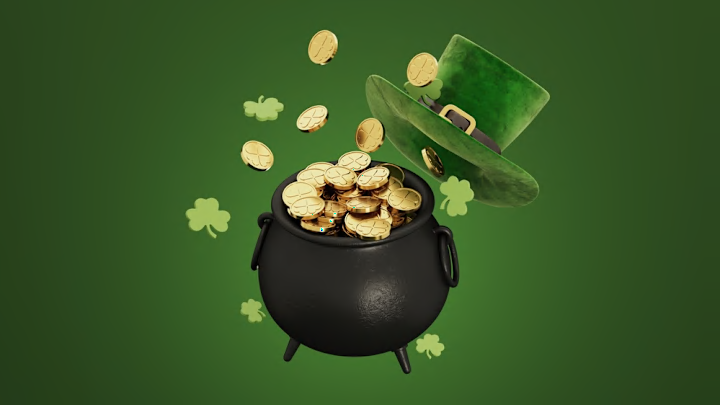
May 13 marks the annual celebration of Leprechaun Day, a date dedicated to honoring the legendary small creatures from Irish mythology that have become intertwined with the country’s folklore over the years.
Today there is even a National Leprechaun Museum located in Dublin, which tells visitors about the history surrounding these iconic figures. Leprechauns continue to generate great interest outside of Ireland too, as confirmed by a 2012 interview with the museum’s founder that indicated that three out of four visitors were from outside the country.
Leprechauns are usually said to be smaller than humans, sometimes as short as a few inches while other times as tall as two feet. They are often dressed in meticulously buttoned coats and quirky hats, and sometimes are engaged in mending a shoe.
However, one of the things most commonly associated with leprechauns is the substance of gold, a connection that occurs across the country’s folklore. One leprechaun legend says that these creatures may lead you to a hidden pot of gold, but may try to trick you by making it incredibly difficult to reach—perhaps by telling you that they will tie a ribbon around the tree where the gold is, but then tying ribbons around all the nearby trees.
The trope of the elusive treasure-hider has become a common one in tales of leprechauns around the world. But why did these diminutive creatures come to be associated with gold in the first place? The evolution of this connection is rooted in centuries of Irish cultural history and literary traditions.
The Archaeological Origins of the Leprechaun-Gold Connection

One of the most important reasons leprechauns are connected to gold is related to the importance of gold itself in Ireland’s history. Archaeological research has confirmed that Ireland has been rich in gold since ancient times. As a result, the country has been described as the “El Dorado of Western Europe,” a reference to the mythical South American city of El Dorado, which was said to be adorned with the substance.
Many of the gold artifacts unearthed by archaeologists can be found today in the country’s National Museum of Ireland. Over the years, gold became a symbol of Ireland, and this helped it to become intertwined with other aspects of the country’s culture and folklore, including the mythical leprechaun.
Leprechauns and Gold in Literature and Folklore

Early links between leprechauns and gold likely developed in folktales, which would have been passed down orally and thus are difficult to trace. Some literary links between leprechauns and gold have also strengthened the connection between the two in the public's eyes.
W. B. Yeats highlighted this association in his 1892 collection Irish Fairy Tales, in which leprechauns are discussed in the book’s appendix “A Classification of Irish Fairies” under the alternative spelling of “lepricaun.” In Yeats’ words: “This creature is seen sitting under a hedge mending a shoe, and one who catches him can make him deliver up his crocks of gold, for he is a miser of great wealth.”
This intertwining of leprechauns with gold was further enhanced by the popularity of the 1912 novel The Crock of Gold by James Stephens, which became such a success that the author himself became associated with the stereotype of a leprechaun. And a popular folktale of unknown authorship tells the tale of how leprechauns became specifically linked to pots of gold at the ends of rainbows.
In the story, two farmers capture a leprechaun that they find hiding in their garden, who tries to bargain for his freedom by saying he will grant them a wish if they let him go. But the couple’s wishes are too numerous and greedy, which the leprechaun finds distasteful, and he responds to them by saying they can have everything they want if they can locate his pot of gold at the end of a rainbow, which is obviously an impossible task.
Through cultural history, novels, and folktales, we can see how the link between leprechauns and Irish gold has solidified and circulated over time. And so, when people go out to celebrate these creatures on May 13, we should also remember how the power of storytelling has shaped the enduring image of the well-dressed little man who offers the most precious of metals to those who are willing to take on the challenge of looking for it.