%20%20--%3E%0A%3Csvg%20version%3D%221.1%22%20id%3D%22Layer_1%22%20xmlns%3D%22http%3A%2F%2Fwww.w3.org%2F2000%2Fsvg%22%20xmlns%3Axlink%3D%22http%3A%2F%2Fwww.w3.org%2F1999%2Fxlink%22%20x%3D%220px%22%20y%3D%220px%22%0A%09%20viewBox%3D%220%200%20684.6%2068.1%22%20style%3D%22enable-background%3Anew%200%200%20684.6%2068.1%3B%22%20xml%3Aspace%3D%22preserve%22%3E%0A%3Cg%3E%0A%09%3Cpath%20d%3D%22M444.1%2C29.3h-17.4v14.5h17.4V29.3z%20M36.4%2C68.1l29.3-50.8V0H50.4L32.9%2C36.8L15.5%2C0H0v68.1h16.7V45.8l12.4%2C22.3H36.4z%0A%09%09%20M49.1%2C68.1h16.6V23.4L49.1%2C52.1V68.1z%20M76.6%2C68.1h45V53.8H93.3V41.6h21V27.1h-21V14.8h28.3V0.1h-45V68.1z%20M175.6%2C68.1h17.3v-68%0A%09%09h-16.5v40.3L150%2C0.1h-17.6v68h16.7V27.7L175.6%2C68.1z%20M235.8%2C14.8h15.4V0.1h-47.4v14.7H219v53.2h16.8V14.8z%20M290.3%2C45.9h-17.1%0A%09%09l7.5-15.6h2L290.3%2C45.9z%20M298.7%2C68.1h18l-32.2-68h-5.7l-32%2C68h18l3.3-7.1h27.1L298.7%2C68.1z%20M325.2%2C68.1h46.2V53.8h-29.6V0.1h-16.7%0A%09%09V68.1z%20M423.7%2C14.8h27.2V0.1H407v68h16.7V14.8z%20M462%2C68.1h46.2V53.8h-29.6V0.1H462V68.1z%20M564.8%2C34.1c0%2C10.7-7.2%2C19.2-18.5%2C19.2%0A%09%09c-11.4%2C0-18.5-8.5-18.5-19.2s7.1-19.2%2C18.5-19.2C557.6%2C14.9%2C564.8%2C23.4%2C564.8%2C34.1%20M580.6%2C34.1c0-19-14.2-34-34.3-34%0A%09%09c-20.2%2C0-34.3%2C15-34.3%2C34c0%2C19%2C14.1%2C34%2C34.3%2C34C566.4%2C68.1%2C580.6%2C53.1%2C580.6%2C34.1%20M604.8%2C20.5c0-4.1%2C3.3-6.2%2C6.7-6.2%0A%09%09c4.4%2C0%2C6.6%2C3%2C6.6%2C6.6h14.7C631.8%2C9.1%2C625.1%2C0.1%2C611%2C0.1c-12%2C0-21.7%2C9.3-21.7%2C20.6c0%2C10.9%2C5.9%2C15.9%2C16.7%2C19.8%0A%09%09c5.2%2C1.8%2C11.5%2C3.2%2C11.5%2C8c0%2C3.3-2.4%2C5.5-6.4%2C5.5c-3.6%2C0-6.6-3-6.6-6.7h-15.2c0%2C11.5%2C7.9%2C20.8%2C21.8%2C20.8c12%2C0%2C21.6-9.3%2C21.6-20.6%0A%09%09c0-10-5.3-16.4-16.7-19.8C610.6%2C26.1%2C604.8%2C25.3%2C604.8%2C20.5%20M670%2C20.9h14.7C683.8%2C9.1%2C677.1%2C0.1%2C663%2C0.1c-12%2C0-21.7%2C9.3-21.7%2C20.6%0A%09%09c0%2C10.9%2C5.9%2C15.9%2C16.7%2C19.8c5.2%2C1.8%2C11.5%2C3.2%2C11.5%2C8c0%2C3.3-2.4%2C5.5-6.4%2C5.5c-3.6%2C0-6.6-3-6.6-6.7h-15.2c0%2C11.5%2C7.9%2C20.8%2C21.8%2C20.8%0A%09%09c12%2C0%2C21.6-9.3%2C21.6-20.6c0-10-5.3-16.4-16.7-19.8c-5.4-1.6-11.3-2.4-11.3-7.2c0-4.1%2C3.3-6.2%2C6.7-6.2C667.7%2C14.4%2C670%2C17.3%2C670%2C20.9%0A%09%09%22%2F%3E%0A%3C%2Fg%3E%0A%3C%2Fsvg%3E%0A)

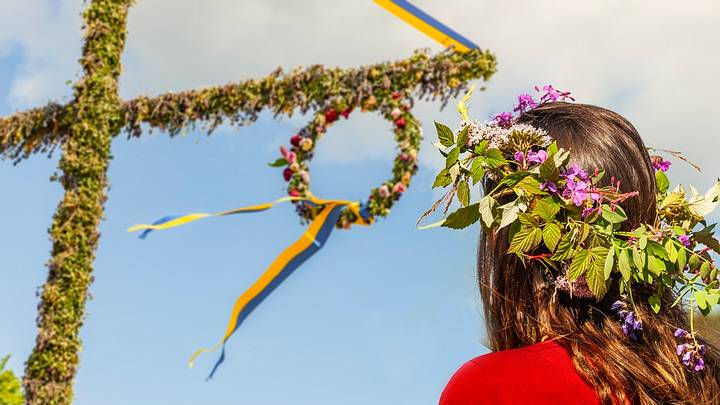
The summer solstice marks the longest day of the year. For millennia, humans have been honoring this day through rituals, archaeological design, and various traditions, revealing an occasion that spans cultures and eras and remains one of the most unifying occasions in human history.
In general, the summer solstice is traditionally associated with light, fertility, and abundance, thanks to its association with sunlight, the height of nature’s strength, and often the peak of the agricultural season. Yet each culture has its own unique way of honoring this special time, when the sun radiates its glow long into the night and—at least according to some stories—mystical creatures walk among us.
- Midsommar // Sweden
- Sunrise at Stonehenge // England
- Kronia // Greece
- Solstice Bonfires // Austria
- Juhannus // Finland
- Midnight Sun Festival // Fairbanks, Alaska
- Mayan Solstice // Guatemala
- Midsummer // Scotland
- Slinningsbålet // Norway
- Celebration of Yang // China
- Chichén Itzá // Mexico
Midsommar // Sweden

Sweden’s Midsommar celebration is one of the nation’s most important festivals of the year. Celebrated in late June, it often involves dancing around maypoles, wearing flower crowns, and staying up late dancing and singing. People also generally gather together for a feast that includes pickled herring, a spirit called akvavit, and sponge cake topped with strawberries. Typically, people leave cities at this time and spend time in nature, where they frequently gather to wear traditional outfits, to play music and dance, and to celebrate the magic of summer.
Sunrise at Stonehenge // England

In England, tens of thousands of people gather every year to celebrate the solstice at Stonehenge, which famously aligns perfectly with the sun on the winter and summer solstices.
No one is exactly sure why Stonehenge was built or how it was constructed to align so perfectly with the movement of the sun, but that mystery has made it even more alluring for visitors today.
Many pagans from around the world gather here each solstice to celebrate, hold pagan and Druidic ceremonies, and watch the sun rise along the monument's solstitial axis, which was built sometime between 3,000 BCE and 1,600 BCE.
Kronia // Greece
In ancient Greece, the summertime festival of Kronia honored Cronos, a god connected to agriculture and the harvest. On this day, which typically fell in early July, work was suspended, and slaves were freed from their duties and allowed to participate in the festivities with their masters. Sometimes, the roles would even reverse entirely and masters would serve slaves. While Kronia is no longer a major holiday in Greece, some modern practitioners of Hellenistic Paganism have attempted to revive the holiday, this time honoring it as a celebration of equality.
Solstice Bonfires // Austria

In Tirol, Austria, the solstice is celebrated with a dazzling array of bonfires. Each summer solstice, volunteers hike up the Alps and light dozens of torches on mountain ridges, creating a display that’s been recognized by UNESCO for its beauty. Called “Sacred Heart of Jesus Fires,” this tradition dates back centuries. The torches are often arranged in special shapes, such as flowers or doves, creating a majestic light show.
Juhannus // Finland

The sun barely sets at all on the summer solstice in northern Finland, and this longest day has long been revered as Midsummer there. This occasion still often marks the beginning of the summer holidays today, and many Finns vacation in cabins with family and friends, bathe in saunas, barbecue, and light bonfires to honor it.
Historically, the pagan holiday of Midsummer was seen as a time for weddings and fertility and love spells. Old pagan beliefs common across Europe claimed that if you gathered flowers under your pillow on the solstice night, you’d dream of your future spouse, and if you peered into a pond, you might see their face. In Finland, the holiday was renamed Juhannus after John the Baptist following the arrival of Christianity, but its pagan roots long predate this moniker.
Midnight Sun Festival // Fairbanks, Alaska

In Fairbanks, Alaska, people gather from all over to celebrate the solstice with the state’s biggest party—the Midnight Sun Festival, a 12-hour celebration of sunlight. Featuring live music and a massive street fair, the occasion is also celebrated by a special Midnight Sun baseball game. It begins at 10 p.m. on the evening of the solstice and is played all throughout the night with no artificial lighting, thanks to the fact that the sun remains up for almost 24 hours on this day.
Mayan Solstice // Guatemala

Guatemala’s Tikal is an archaeological site consisting of ancient temples that rest in the nation’s northern jungles. Once a hub of Mayan civilization, these temples have been reclaimed as sites of celebration in modern times.
On the summer solstice, the light hits the temples in a way that could only have been specifically engineered. Today, the solstice is celebrated with festivals and celebrations held at Tikal’s Temple of the Moon and the Temple of the Grand Jaguar. Mixing astronomy with cultural traditions, many of the festivities here are deeply rooted in the Mayan calendar and spirituality.
Midsummer // Scotland
Midsummer celebrations have long been honored across Scotland, which has a rich history of Celtic paganism. Here, the holiday was typically honored with fire, blessings, and specific traditions said to bring good luck to the year’s harvest. Branches of birch were hung over doors, and heads of households would walk around with torches, praying for their crops and cattle. Herbs were also traditionally gathered on this day.
Typically, midsummer fell between the planting time and the harvest, making it possibly one of the only times people could relax during the season. Many people often believed that the fairies were especially active during this time, and people often held vigils that lasted until dawn.
Today, some people have continued to carry on or revive these ancient Midsummer traditions in Scotland. They are especially prominent in Shetland, an archipelago located about 130 miles north of the Scottish mainland.
There, locals have long revered “da simmer dim,” or “the twilight of a Shetland summer evening,” which refers to the time around Midsummer when the sun shines long into the night. Today, many people visit there to soak in the strange, gorgeous late-night light around the solstice.
Slinningsbålet // Norway

In Norway, people gather every year on the solstice to build some of the tallest bonfires in the world. Bonfires emerge all over the country in the days surrounding the solstice, but in Ålesund, a particularly behemothic bonfire is lit on St. John’s Eve, celebrated on June 23.
The bonfire stretched a whopping 47.4 meters high in 2016, netting it a Guinness World Record. These fires are built by local youth who slowly construct them across many days using only recycled and natural materials, making their heights a particularly towering achievement.
Celebration of Yang // China
The Chinese lunar calendar separates the year into 24 solar terms, and the summer solstice falls on or around June 21 and marks the year’s 10th solar term. The solstice was a public holiday in ancient times, with records showing that people had one to three days off in honor of the occasion. Women often gifted each other colorful fans at this time, and some people held rituals and celebrations in honor of the sun.
Today, many ancient traditions—such as eating lychees and noodles, and attending festivals—have made their way into modern times. In Traditional Chinese Medicine, the summer solstice is also said to represent the height of “yang” energy, or masculine energies. It is also associated with fire and the heart, and the summer solstice is generally said to be a potent time to go outside and participate in activities that promote vitality and strength.
Chichén Itzá // Mexico

At the Mayan temple of Chichén Itzá in Mexico, the sun aligns perfectly with the Temple of Kukulcán as well as observatories at the site, and the Maya used these alignments to track solar cycles.
Today, many people pay a visit to these temples at the summer solstice, where Mayan descendants and visitors hold rituals and ceremonies, pray, burn incense, and give thanks to the sun. While these temples may be more famous for their equinox light-and-shadow displays, the solstices provide quieter but still potent and reverential times to visit these ancient sacred sites.
Additionally, many people across Mexico celebrate the solstice with pilgrimages to sacred sites such as this one, or through ceremonies, festivals, and celebrations of all kinds that honor the Mayan reverence for the summer solstice and the power of the sun.