%20%20--%3E%0A%3Csvg%20version%3D%221.1%22%20id%3D%22Layer_1%22%20xmlns%3D%22http%3A%2F%2Fwww.w3.org%2F2000%2Fsvg%22%20xmlns%3Axlink%3D%22http%3A%2F%2Fwww.w3.org%2F1999%2Fxlink%22%20x%3D%220px%22%20y%3D%220px%22%0A%09%20viewBox%3D%220%200%20684.6%2068.1%22%20style%3D%22enable-background%3Anew%200%200%20684.6%2068.1%3B%22%20xml%3Aspace%3D%22preserve%22%3E%0A%3Cg%3E%0A%09%3Cpath%20d%3D%22M444.1%2C29.3h-17.4v14.5h17.4V29.3z%20M36.4%2C68.1l29.3-50.8V0H50.4L32.9%2C36.8L15.5%2C0H0v68.1h16.7V45.8l12.4%2C22.3H36.4z%0A%09%09%20M49.1%2C68.1h16.6V23.4L49.1%2C52.1V68.1z%20M76.6%2C68.1h45V53.8H93.3V41.6h21V27.1h-21V14.8h28.3V0.1h-45V68.1z%20M175.6%2C68.1h17.3v-68%0A%09%09h-16.5v40.3L150%2C0.1h-17.6v68h16.7V27.7L175.6%2C68.1z%20M235.8%2C14.8h15.4V0.1h-47.4v14.7H219v53.2h16.8V14.8z%20M290.3%2C45.9h-17.1%0A%09%09l7.5-15.6h2L290.3%2C45.9z%20M298.7%2C68.1h18l-32.2-68h-5.7l-32%2C68h18l3.3-7.1h27.1L298.7%2C68.1z%20M325.2%2C68.1h46.2V53.8h-29.6V0.1h-16.7%0A%09%09V68.1z%20M423.7%2C14.8h27.2V0.1H407v68h16.7V14.8z%20M462%2C68.1h46.2V53.8h-29.6V0.1H462V68.1z%20M564.8%2C34.1c0%2C10.7-7.2%2C19.2-18.5%2C19.2%0A%09%09c-11.4%2C0-18.5-8.5-18.5-19.2s7.1-19.2%2C18.5-19.2C557.6%2C14.9%2C564.8%2C23.4%2C564.8%2C34.1%20M580.6%2C34.1c0-19-14.2-34-34.3-34%0A%09%09c-20.2%2C0-34.3%2C15-34.3%2C34c0%2C19%2C14.1%2C34%2C34.3%2C34C566.4%2C68.1%2C580.6%2C53.1%2C580.6%2C34.1%20M604.8%2C20.5c0-4.1%2C3.3-6.2%2C6.7-6.2%0A%09%09c4.4%2C0%2C6.6%2C3%2C6.6%2C6.6h14.7C631.8%2C9.1%2C625.1%2C0.1%2C611%2C0.1c-12%2C0-21.7%2C9.3-21.7%2C20.6c0%2C10.9%2C5.9%2C15.9%2C16.7%2C19.8%0A%09%09c5.2%2C1.8%2C11.5%2C3.2%2C11.5%2C8c0%2C3.3-2.4%2C5.5-6.4%2C5.5c-3.6%2C0-6.6-3-6.6-6.7h-15.2c0%2C11.5%2C7.9%2C20.8%2C21.8%2C20.8c12%2C0%2C21.6-9.3%2C21.6-20.6%0A%09%09c0-10-5.3-16.4-16.7-19.8C610.6%2C26.1%2C604.8%2C25.3%2C604.8%2C20.5%20M670%2C20.9h14.7C683.8%2C9.1%2C677.1%2C0.1%2C663%2C0.1c-12%2C0-21.7%2C9.3-21.7%2C20.6%0A%09%09c0%2C10.9%2C5.9%2C15.9%2C16.7%2C19.8c5.2%2C1.8%2C11.5%2C3.2%2C11.5%2C8c0%2C3.3-2.4%2C5.5-6.4%2C5.5c-3.6%2C0-6.6-3-6.6-6.7h-15.2c0%2C11.5%2C7.9%2C20.8%2C21.8%2C20.8%0A%09%09c12%2C0%2C21.6-9.3%2C21.6-20.6c0-10-5.3-16.4-16.7-19.8c-5.4-1.6-11.3-2.4-11.3-7.2c0-4.1%2C3.3-6.2%2C6.7-6.2C667.7%2C14.4%2C670%2C17.3%2C670%2C20.9%0A%09%09%22%2F%3E%0A%3C%2Fg%3E%0A%3C%2Fsvg%3E%0A)

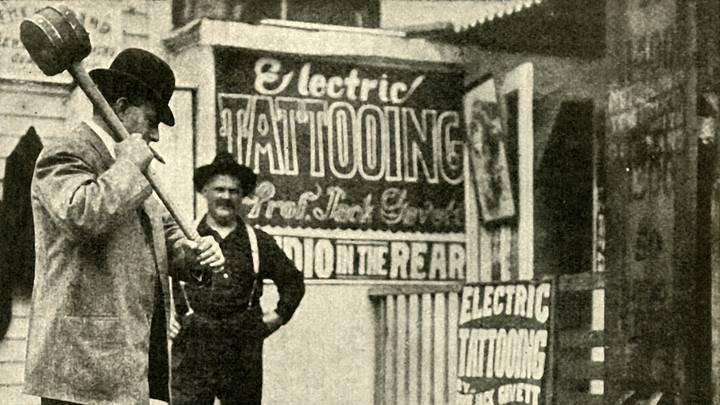
Ask where “close, but no cigar” comes from and you’re likely to get the same answer every time: carnival midways handed out cigars as prizes, and when a player came up short, the barker hollered this phrase after him. Only one half of that is documented, though—and the other half is the actual wording of this famous expression, which has a slightly murkier origin story.
Did people really win cigars at fairgrounds?

The cigars in this expression are real, and you can read about somebody failing to win one at a fair in 1902. In the book The Night Side of London, the journalist Robert Machray walks a reader through a fairground yard stall by stall; a penny buys three rings to pitch over a knife handle stuck in a wall, and the next penny buys three balls to roll into numbered holes. “Should you score twenty you will win a cigar,” he writes. “But you do no more than score nine.” You spend another penny, and another, and you still don’t come away with the cigar, which Machray counts as a lucky escape, since “there are cigars and cigars.”
Three years later, according to the etymologist Dave Wilton’s Wordorigins.org, the Evening World in New York was writing about cigars won at a rifle range. Clearly, the custom of offering cigars as prizes existed on both sides of the Atlantic. What remains elusive is substantial evidence of a barker actually saying the famous “close, but no cigar” line. The documented prize and the earliest documented uses of the phrase sit decades apart, and when the line finally surfaces, it isn’t on a midway at all.
The actual origins of “close, but no cigar”

The earliest place that Wilton identifies evidence of this phrase is in a Yale Daily News headline from May 28, 1927. It appeared in the context of an intramural baseball rout in which Psi Upsilon beat Delta Kappa Epsilon 25 to 1, which is not close, and that was the joke. Seven months later, the Daily Princetonian mentioned a professor scrawling the phrase on student essays, and in 1929 it turned up several more times: as a Long Island Daily Press headline in May about a man who kept losing the presidency of his community association, and in Princeton Alumni Weekly that July, this time aimed at reunion classmates who had traveled a long way but not the longest. The first people we can prove wrote it down, therefore, were sarcastic Ivy League undergraduates.
Not every authority accepts those citations. Gary Martin’s Phrase Finder dates the phrase to eight years later still, with the 1935 screenplay for Annie Oakley—Joel Sayre and John Twist’s script hands the line to a character addressing a colonel—and describes it as one that only really began spreading in newspapers after 1949. So the honest answer on a date is somewhere between 1927 and 1935, depending on which reference book you happen to be holding.
Meanwhile, the first documented mention of the phrase in the context of the fairground origin story can be found in a December 1929 Long Island Daily Press column. While describing a Christmas fund drive that fell short, the writer uses the phrase “close, but no cigar,” which he calls it the “refrain of the 'knock-’em-down-and-win-a-smoke barker.'” Clearly, the phrase and the midway were already fused by 1929, though this doesn’t definitively indicate that midways are where it began. A real prize on one end, a real association on the other, and a hole in the middle exactly where the barker is supposed to be standing.
Close, in other words. But no cigar.