%20%20--%3E%0A%3Csvg%20version%3D%221.1%22%20id%3D%22Layer_1%22%20xmlns%3D%22http%3A%2F%2Fwww.w3.org%2F2000%2Fsvg%22%20xmlns%3Axlink%3D%22http%3A%2F%2Fwww.w3.org%2F1999%2Fxlink%22%20x%3D%220px%22%20y%3D%220px%22%0A%09%20viewBox%3D%220%200%20684.6%2068.1%22%20style%3D%22enable-background%3Anew%200%200%20684.6%2068.1%3B%22%20xml%3Aspace%3D%22preserve%22%3E%0A%3Cg%3E%0A%09%3Cpath%20d%3D%22M444.1%2C29.3h-17.4v14.5h17.4V29.3z%20M36.4%2C68.1l29.3-50.8V0H50.4L32.9%2C36.8L15.5%2C0H0v68.1h16.7V45.8l12.4%2C22.3H36.4z%0A%09%09%20M49.1%2C68.1h16.6V23.4L49.1%2C52.1V68.1z%20M76.6%2C68.1h45V53.8H93.3V41.6h21V27.1h-21V14.8h28.3V0.1h-45V68.1z%20M175.6%2C68.1h17.3v-68%0A%09%09h-16.5v40.3L150%2C0.1h-17.6v68h16.7V27.7L175.6%2C68.1z%20M235.8%2C14.8h15.4V0.1h-47.4v14.7H219v53.2h16.8V14.8z%20M290.3%2C45.9h-17.1%0A%09%09l7.5-15.6h2L290.3%2C45.9z%20M298.7%2C68.1h18l-32.2-68h-5.7l-32%2C68h18l3.3-7.1h27.1L298.7%2C68.1z%20M325.2%2C68.1h46.2V53.8h-29.6V0.1h-16.7%0A%09%09V68.1z%20M423.7%2C14.8h27.2V0.1H407v68h16.7V14.8z%20M462%2C68.1h46.2V53.8h-29.6V0.1H462V68.1z%20M564.8%2C34.1c0%2C10.7-7.2%2C19.2-18.5%2C19.2%0A%09%09c-11.4%2C0-18.5-8.5-18.5-19.2s7.1-19.2%2C18.5-19.2C557.6%2C14.9%2C564.8%2C23.4%2C564.8%2C34.1%20M580.6%2C34.1c0-19-14.2-34-34.3-34%0A%09%09c-20.2%2C0-34.3%2C15-34.3%2C34c0%2C19%2C14.1%2C34%2C34.3%2C34C566.4%2C68.1%2C580.6%2C53.1%2C580.6%2C34.1%20M604.8%2C20.5c0-4.1%2C3.3-6.2%2C6.7-6.2%0A%09%09c4.4%2C0%2C6.6%2C3%2C6.6%2C6.6h14.7C631.8%2C9.1%2C625.1%2C0.1%2C611%2C0.1c-12%2C0-21.7%2C9.3-21.7%2C20.6c0%2C10.9%2C5.9%2C15.9%2C16.7%2C19.8%0A%09%09c5.2%2C1.8%2C11.5%2C3.2%2C11.5%2C8c0%2C3.3-2.4%2C5.5-6.4%2C5.5c-3.6%2C0-6.6-3-6.6-6.7h-15.2c0%2C11.5%2C7.9%2C20.8%2C21.8%2C20.8c12%2C0%2C21.6-9.3%2C21.6-20.6%0A%09%09c0-10-5.3-16.4-16.7-19.8C610.6%2C26.1%2C604.8%2C25.3%2C604.8%2C20.5%20M670%2C20.9h14.7C683.8%2C9.1%2C677.1%2C0.1%2C663%2C0.1c-12%2C0-21.7%2C9.3-21.7%2C20.6%0A%09%09c0%2C10.9%2C5.9%2C15.9%2C16.7%2C19.8c5.2%2C1.8%2C11.5%2C3.2%2C11.5%2C8c0%2C3.3-2.4%2C5.5-6.4%2C5.5c-3.6%2C0-6.6-3-6.6-6.7h-15.2c0%2C11.5%2C7.9%2C20.8%2C21.8%2C20.8%0A%09%09c12%2C0%2C21.6-9.3%2C21.6-20.6c0-10-5.3-16.4-16.7-19.8c-5.4-1.6-11.3-2.4-11.3-7.2c0-4.1%2C3.3-6.2%2C6.7-6.2C667.7%2C14.4%2C670%2C17.3%2C670%2C20.9%0A%09%09%22%2F%3E%0A%3C%2Fg%3E%0A%3C%2Fsvg%3E%0A)

No one is entirely sure why an unmarried man is known as a bachelor. The word was borrowed into English from French in medieval times, and was once used as a far more general term for a young man (or, in particular, a novice knight) before coming to be used all but exclusively of an unattached young man in the 14th century. It would take another 500 years or so for the female bachelorette to be invented in the late Victorian era.
Elsewhere in the dictionary, though, there are a handful of words for unattached people that haven’t quite stood the same test of time, or else remain too obscure to be much used today.
AGAMIST

From the same clutch of words that includes the likes of bigamist and polygamist, an agamist is someone who is not married, or who actively chooses not to marry. All these words (alongside monogamy and monogamist) derived from the Greek word for marriage, gamos—which is also the origin of the genetic term gamete.
APE-LEADER
If you know your Shakespeare, this might be a familiar one. “Leading apes in Hell,” a phrase Shakespeare alluded to in The Taming of the Shrew, was once the supposed proverbial punishment for a woman who had died without having children (and had therefore not done as God commanded in the Book of Genesis and gone forth and multiplied). As a result, ape-leader emerged as a jokey nickname for a single woman in 17th century English.
CATHERINETTE
Although not much used in English, a catherinette is a popular term in France referring explicitly to a young woman of 25 years old, who remains unmarried in her 25th year by the time of St. Catherine’s Day, on November 25.
St. Catherine is the patron saint of unwed or engaged young women, having supposedly been romantically pursued by the Roman emperor Maxentius, but always turning down his advances. For her refusal, the emperor had Catherine imprisoned and tortured, but still she stood her ground and was eventually martyred for her refusal to wed.
DAMSEL
The quintessential “damsel in distress” is, by definition, an unmarried young woman (often with the implication that she was also of noble birth). Damsel comes from the same root as the French mademoiselle, and was adopted into English in medieval times.
PUSSOCK

Dating back to the 17th century, a pussock is a proverbial “old maid,” or a single woman who is now widely considered too old to be of marriageable age. It’s one of a handful of feline-derived terms relating to aged or unmarried women that emerged around the same time; in the 1700s, for instance, a tabby was an old woman who lived on her own.
OLD BACH
In the 17th century, “old bachelor” specifically became an established phrase for an older gentleman who has explicitly chosen to live a single life—especially if such a man is seen to have grown to have extremely fussy or fastidious habits from such a long time on his own. In the 19th century, “old bachelor” was cut down to “old bach,” which remained in use until the early 1900s.
SOLITUDINARIAN
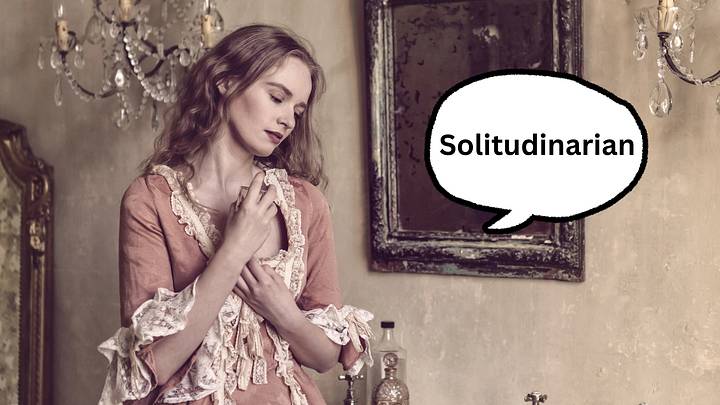
Less so someone who is single and more so someone who just wants to be left alone in life, the term solitudinarian was coined in the 17th century and is first recorded as far back as 1691. It has remained in albeit infrequent use ever since, largely in formal or literary contexts.
SPIN
Although the term spinster dates back to medieval times, by the 1600s a popular image had emerged of unmarried women who were expected to pass their single life by spinning and weaving. It’s from that rather old-fashioned image that the term spinster came to be attached to unmarried or single women, and it’s spinster that was ultimately cut down to spin in the Victorian era.
TEA-BOTTLE
If spinning was once seen as the typical activity of a single or unmarried woman, then tea was seen as their drink of choice. From the notion of an unattached woman ultimately drinking large quantities of tea, tea-bottle—literally a kind of tea flask—came to be used as a nickname for an unmarried older woman in the early 1900s.
THORNBACK

The name thornback has been used since medieval times to refer to any one of a number of creatures with a noticeably prickly or spiny back, including a species of ray or skate, a kind of spider crab, and the stickleback fish. A young stickleback, entirely coincidentally, is called a maid—and as a punning reference to an “old maid” being an old unmarried woman, in the 1600s thornback came to be joking attached to single women too.