%20%20--%3E%0A%3Csvg%20version%3D%221.1%22%20id%3D%22Layer_1%22%20xmlns%3D%22http%3A%2F%2Fwww.w3.org%2F2000%2Fsvg%22%20xmlns%3Axlink%3D%22http%3A%2F%2Fwww.w3.org%2F1999%2Fxlink%22%20x%3D%220px%22%20y%3D%220px%22%0A%09%20viewBox%3D%220%200%20684.6%2068.1%22%20style%3D%22enable-background%3Anew%200%200%20684.6%2068.1%3B%22%20xml%3Aspace%3D%22preserve%22%3E%0A%3Cg%3E%0A%09%3Cpath%20d%3D%22M444.1%2C29.3h-17.4v14.5h17.4V29.3z%20M36.4%2C68.1l29.3-50.8V0H50.4L32.9%2C36.8L15.5%2C0H0v68.1h16.7V45.8l12.4%2C22.3H36.4z%0A%09%09%20M49.1%2C68.1h16.6V23.4L49.1%2C52.1V68.1z%20M76.6%2C68.1h45V53.8H93.3V41.6h21V27.1h-21V14.8h28.3V0.1h-45V68.1z%20M175.6%2C68.1h17.3v-68%0A%09%09h-16.5v40.3L150%2C0.1h-17.6v68h16.7V27.7L175.6%2C68.1z%20M235.8%2C14.8h15.4V0.1h-47.4v14.7H219v53.2h16.8V14.8z%20M290.3%2C45.9h-17.1%0A%09%09l7.5-15.6h2L290.3%2C45.9z%20M298.7%2C68.1h18l-32.2-68h-5.7l-32%2C68h18l3.3-7.1h27.1L298.7%2C68.1z%20M325.2%2C68.1h46.2V53.8h-29.6V0.1h-16.7%0A%09%09V68.1z%20M423.7%2C14.8h27.2V0.1H407v68h16.7V14.8z%20M462%2C68.1h46.2V53.8h-29.6V0.1H462V68.1z%20M564.8%2C34.1c0%2C10.7-7.2%2C19.2-18.5%2C19.2%0A%09%09c-11.4%2C0-18.5-8.5-18.5-19.2s7.1-19.2%2C18.5-19.2C557.6%2C14.9%2C564.8%2C23.4%2C564.8%2C34.1%20M580.6%2C34.1c0-19-14.2-34-34.3-34%0A%09%09c-20.2%2C0-34.3%2C15-34.3%2C34c0%2C19%2C14.1%2C34%2C34.3%2C34C566.4%2C68.1%2C580.6%2C53.1%2C580.6%2C34.1%20M604.8%2C20.5c0-4.1%2C3.3-6.2%2C6.7-6.2%0A%09%09c4.4%2C0%2C6.6%2C3%2C6.6%2C6.6h14.7C631.8%2C9.1%2C625.1%2C0.1%2C611%2C0.1c-12%2C0-21.7%2C9.3-21.7%2C20.6c0%2C10.9%2C5.9%2C15.9%2C16.7%2C19.8%0A%09%09c5.2%2C1.8%2C11.5%2C3.2%2C11.5%2C8c0%2C3.3-2.4%2C5.5-6.4%2C5.5c-3.6%2C0-6.6-3-6.6-6.7h-15.2c0%2C11.5%2C7.9%2C20.8%2C21.8%2C20.8c12%2C0%2C21.6-9.3%2C21.6-20.6%0A%09%09c0-10-5.3-16.4-16.7-19.8C610.6%2C26.1%2C604.8%2C25.3%2C604.8%2C20.5%20M670%2C20.9h14.7C683.8%2C9.1%2C677.1%2C0.1%2C663%2C0.1c-12%2C0-21.7%2C9.3-21.7%2C20.6%0A%09%09c0%2C10.9%2C5.9%2C15.9%2C16.7%2C19.8c5.2%2C1.8%2C11.5%2C3.2%2C11.5%2C8c0%2C3.3-2.4%2C5.5-6.4%2C5.5c-3.6%2C0-6.6-3-6.6-6.7h-15.2c0%2C11.5%2C7.9%2C20.8%2C21.8%2C20.8%0A%09%09c12%2C0%2C21.6-9.3%2C21.6-20.6c0-10-5.3-16.4-16.7-19.8c-5.4-1.6-11.3-2.4-11.3-7.2c0-4.1%2C3.3-6.2%2C6.7-6.2C667.7%2C14.4%2C670%2C17.3%2C670%2C20.9%0A%09%09%22%2F%3E%0A%3C%2Fg%3E%0A%3C%2Fsvg%3E%0A)

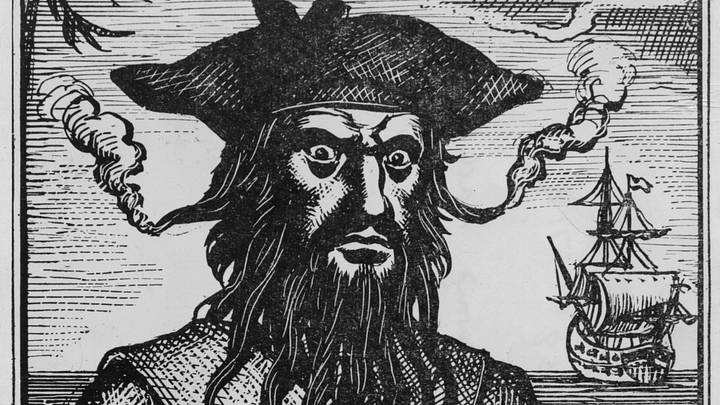
Picture a pirate in your head, and chances are you’ll imagine a surly looking man with a black skull-and-crossbones hat, eyepatch, wooden leg, a parrot perched on his shoulder, and a cutlass or flintlock pistol in hand. Much of that stereotype comes from the long-lasting popularity of Robert Louis Stevenson’s 1883 novel Treasure Island (and its innumerable big-screen adaptations), which have established the gruff captain Long John Silver as the archetypal pirate.
But what about a buccaneer? Or a swashbuckler? Or a freebooter? Words like these often get lumped into the same genre as pirate, and are all but thought of as straightforward synonyms.
Dig into these words’ histories and true meanings, though, and some subtle differences start to emerge that show our piratical vocabulary is not quite as interchangeable as it might seem.
PIRATE

Let’s start at the very beginning here. The word pirate was borrowed into English from French (apparently first as a surname) back in medieval times, with the surname recorded from the 1200s and the noun from the 1400s, if not slightly earlier. Etymologically, it can be traced back through French and Latin to Greek, where it is related to an ancient verb, peiran, that literally means to attack or to assault. A pirate, therefore, can be somewhat loosely defined as any seafarer who engages in similarly violent conduct on the ocean—attacking other vessels, assaulting their crew, stealing their cargo, and so on. So this is essentially a kind of umbrella term: all the other words on this list could arguably be described as pirates, but a pirate need not necessarily be equivalent to all the other words.
BUCCANEER

If pirate is the oldest and most loosely defined word on this list, then here is where we start to get a little more specific, and a little bit closer to the modern day. The word buccaneer was adopted into English (again from French) in the late 1600s. It originally referred specifically to the pirates who operated off the coast of Spanish-controlled South America during the so-called Golden Age of Piracy; in fact, etymologically, it can be traced even further back to a native South American word—mukem, a Tupi word for a kind of meat-roasting griddle.
The very first buccaneers, ultimately, weren’t pirates at all, but French-origin settlers, hunters, woodsmen, and other similar workers who relocated to the fringes of the West Indies in the 17th century—and apparently had a habit of roasting the meat and fish they caught on a native griddle. Over time, as these groups became increasingly lawless, they took to the high seas and began operating as pirates, and simply took the word with them.
CORSAIR

While the original buccaneers were pirates operating off the coast of South America, the first corsairs—literally “runners”—operated 6,000 miles away in the Mediterranean. Emerging in late medieval times, corsairs were originally hired seafaring fighters or bandits who were employed by the Ottoman Empire to attack any vessels from the Christian nations of Europe, chiefly along the so-called Barbary Coast of western and central North Africa, during the two sides’ long-running battle for maritime supremacy in the Mediterranean Sea. As essentially employees of the Ottoman cause, many of the earliest corsairs were not technically pirates, but privateers (more on which in a moment), yet over time their conduct turned increasingly violent and unrestrained, and less allied to the Ottomans’ ultimate cause. By the 17th century, for instance, dozens of Muslim corsair ships were sailing as far north as the British Isles and even Iceland, patrolling the waters of the North Atlantic and raiding coastal towns and cities to kidnap locals to sell as slaves when back in Africa.
PRIVATEER

As the Encyclopaedia Britannica puts it, a privateer is essentially “a pirate with papers.” As the word itself suggests, privateers were private individuals, sailing privately-owned vessels, who were hired by their respective countries to attack and plunder any vessels aligned with rival countries. As piratical as that might sound, privateering was state-sanctioned, with those involved granted official “letters of marque” that allowed them to seize enemy ships and carry out their raids within the bounds of the law. Many famous seafarers from history made a living as privateers; in fact, with the Elizabethan admiral and explorer Sir Francis Drake among them.
FREEBOOTER

Etymologically, the origins of freebooting lie in Dutch, with the word’s Dutch equivalent, vrijbuiter, bringing together the local words for “free” and “booty” (in the sense of a pirate’s plunder). Adopted into English in the 1500s, historically freebooter was sometimes applied to privateers and seafaring mercenaries, and sometimes applied to true pirates, and so could be said to operate somewhere in the gray area in between the two. Perhaps oddest of all in the history of this word, though, is its political twin.
While on the one hand vrijbuiter was adopted directly into English and became freebooter, the word also took a different root and was adopted into French and Spanish before somewhat later finding its way into English as the word filibuster. Like freebooter, this word too was originally used of pirates and privateers, but in 19th-century America it became especially attached to the lawless forays of various American adventurers into Central America and the Caribbean. Their behavior later brought the word into the political sphere too, with filibustering coming to be used for the act of piratically commandeering or capturing the debate floor.