%20%20--%3E%0A%3Csvg%20version%3D%221.1%22%20id%3D%22Layer_1%22%20xmlns%3D%22http%3A%2F%2Fwww.w3.org%2F2000%2Fsvg%22%20xmlns%3Axlink%3D%22http%3A%2F%2Fwww.w3.org%2F1999%2Fxlink%22%20x%3D%220px%22%20y%3D%220px%22%0A%09%20viewBox%3D%220%200%20684.6%2068.1%22%20style%3D%22enable-background%3Anew%200%200%20684.6%2068.1%3B%22%20xml%3Aspace%3D%22preserve%22%3E%0A%3Cg%3E%0A%09%3Cpath%20d%3D%22M444.1%2C29.3h-17.4v14.5h17.4V29.3z%20M36.4%2C68.1l29.3-50.8V0H50.4L32.9%2C36.8L15.5%2C0H0v68.1h16.7V45.8l12.4%2C22.3H36.4z%0A%09%09%20M49.1%2C68.1h16.6V23.4L49.1%2C52.1V68.1z%20M76.6%2C68.1h45V53.8H93.3V41.6h21V27.1h-21V14.8h28.3V0.1h-45V68.1z%20M175.6%2C68.1h17.3v-68%0A%09%09h-16.5v40.3L150%2C0.1h-17.6v68h16.7V27.7L175.6%2C68.1z%20M235.8%2C14.8h15.4V0.1h-47.4v14.7H219v53.2h16.8V14.8z%20M290.3%2C45.9h-17.1%0A%09%09l7.5-15.6h2L290.3%2C45.9z%20M298.7%2C68.1h18l-32.2-68h-5.7l-32%2C68h18l3.3-7.1h27.1L298.7%2C68.1z%20M325.2%2C68.1h46.2V53.8h-29.6V0.1h-16.7%0A%09%09V68.1z%20M423.7%2C14.8h27.2V0.1H407v68h16.7V14.8z%20M462%2C68.1h46.2V53.8h-29.6V0.1H462V68.1z%20M564.8%2C34.1c0%2C10.7-7.2%2C19.2-18.5%2C19.2%0A%09%09c-11.4%2C0-18.5-8.5-18.5-19.2s7.1-19.2%2C18.5-19.2C557.6%2C14.9%2C564.8%2C23.4%2C564.8%2C34.1%20M580.6%2C34.1c0-19-14.2-34-34.3-34%0A%09%09c-20.2%2C0-34.3%2C15-34.3%2C34c0%2C19%2C14.1%2C34%2C34.3%2C34C566.4%2C68.1%2C580.6%2C53.1%2C580.6%2C34.1%20M604.8%2C20.5c0-4.1%2C3.3-6.2%2C6.7-6.2%0A%09%09c4.4%2C0%2C6.6%2C3%2C6.6%2C6.6h14.7C631.8%2C9.1%2C625.1%2C0.1%2C611%2C0.1c-12%2C0-21.7%2C9.3-21.7%2C20.6c0%2C10.9%2C5.9%2C15.9%2C16.7%2C19.8%0A%09%09c5.2%2C1.8%2C11.5%2C3.2%2C11.5%2C8c0%2C3.3-2.4%2C5.5-6.4%2C5.5c-3.6%2C0-6.6-3-6.6-6.7h-15.2c0%2C11.5%2C7.9%2C20.8%2C21.8%2C20.8c12%2C0%2C21.6-9.3%2C21.6-20.6%0A%09%09c0-10-5.3-16.4-16.7-19.8C610.6%2C26.1%2C604.8%2C25.3%2C604.8%2C20.5%20M670%2C20.9h14.7C683.8%2C9.1%2C677.1%2C0.1%2C663%2C0.1c-12%2C0-21.7%2C9.3-21.7%2C20.6%0A%09%09c0%2C10.9%2C5.9%2C15.9%2C16.7%2C19.8c5.2%2C1.8%2C11.5%2C3.2%2C11.5%2C8c0%2C3.3-2.4%2C5.5-6.4%2C5.5c-3.6%2C0-6.6-3-6.6-6.7h-15.2c0%2C11.5%2C7.9%2C20.8%2C21.8%2C20.8%0A%09%09c12%2C0%2C21.6-9.3%2C21.6-20.6c0-10-5.3-16.4-16.7-19.8c-5.4-1.6-11.3-2.4-11.3-7.2c0-4.1%2C3.3-6.2%2C6.7-6.2C667.7%2C14.4%2C670%2C17.3%2C670%2C20.9%0A%09%09%22%2F%3E%0A%3C%2Fg%3E%0A%3C%2Fsvg%3E%0A)

It's often said that there are no original ideas and that all content is merely recycled and repackaged. Stories, art, and music are all inspired by something that came before them. We can see this even in the work of one of the greatest writers of all time: William Shakespeare.
Shakespeare's genius in writing and storytelling leads many to assume that the ideas behind his creations sprang up like the goddess Athena, fully formed and ready to take on the world. But even the great bard himself had to find inspiration from other sources before he could pen the incredible plays we know today.

Star-Crossed Lovers
It's understandable if you thought that one of Shakespeare's most famous plays, Romeo and Juliet, was his sole idea. After all, the tragic tale of the star-crossed lovers would not be known today without Shakespeare popularizing it. But Shakespeare was not the first to tell the story of lovers from rival families. His play actually draws heavily on a French poem from 1562.
William Shakespeare's Romeo and Juliet took inspiration from Arthur Brooke's poem, The Tragicall Historye of Romeus and Juliet (sic). Brooke based his poem on the French translation of an Italian story written by the monk Matteo Bandello. And Bandello wasn't the first to create a story of two ill-fated lovers. That story goes all the way back to the Ancient Latin poem, Metamorphoses.

The Tragicall Historye of Romeus and Juliet (1562)
Shakespeare may have used Arthur Brooke's The Tragicall Historye of Romeus and Juliet as the primary source for his play, but that doesn't mean his talent for drama and writing can be minimized. Brooke's poem was well-known during Shakespeare's time, but it wasn't well-thought-of. Shakespeare took the wearisome and tedious poem and molded it into one of the most famous plays of all time.
Aside from changing the male lead's name from Romeus to Romeo, Shakespeare also compressed the lovers' relationship from months to days. Brooke's poem gives the couple time to be newlyweds, with much of the action happening farther apart. Plus, Shakespeare's blank verse writing style made the story flow better than Brooke's poem. But Brooke did have key differences from earlier versions: the characters of Juliet's nurse and the idea that Fate was always against them.

Novelle (1544-1573)
While Arthur Brooke's poem was Shakespeare's primary source, it was inspired by a story in Matteo Bandello's collection of short stories, Novelle. Matteo Bandello was an Italian monk and writer whose stories were so popular that they were translated into French and English to be shared throughout Europe. Arthur Brooke used the French translation of Bandello's story for his poem.
Within Novelle, the ideas for several of Shakespeare's plays emerged. In addition to Romeo and Juliet, Twelfth Night and Much Ado About Nothing can also trace plot points and characters back to Bandello's works. But Bandello wasn't the first to write of Romeo and Juliet either. He based his story on Luigi da Porto's Historia novellamente ritrovata di due nobili amanti (a newly discovered story of two noble lovers), in which the setting of Verona and the names Romeo (Romeus) and Juliet first appeared.

Pyramus and Thisbe
We would be remiss to stop at Bandello and da Porto because the idea of the tragic couple extends much further back. Several versions of ill-fated lovers appear centuries before Luigi da Porto, drawing their characters, plots, and themes from a story told in Ovid's Metamorphoses.
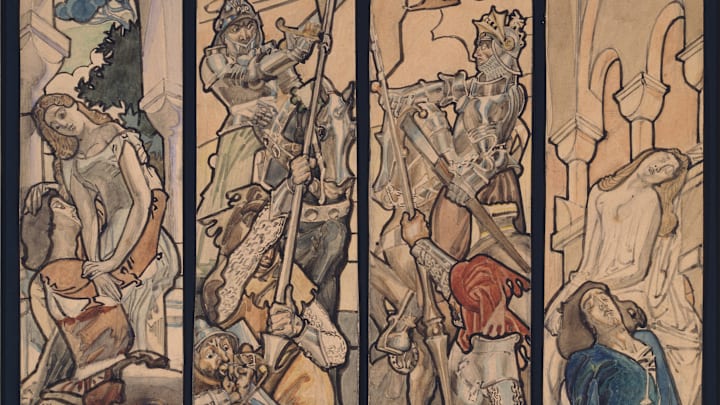
Ovid was a Roman poet who wrote in the first century and gleaned many ideas for his verse from Greek myths. In his poem Metamorphoses, Ovid tells the story of Pyramus and Thisbe, two lovers from feuding families who planned to run away together. They were thwarted by circumstance: Pyramus killed himself after believing Thisbe was dead, and when Thisbe found him, she took her own life as well.
The tale of two lovers doomed to tragedy is an ancient one, not something Shakespeare invented. Nevertheless, that doesn't diminish the achievements and the legacy of Romeo and Juliet. Its enduring success proves just how timeless a good story with a competent writer really is.