%20%20--%3E%0A%3Csvg%20version%3D%221.1%22%20id%3D%22Layer_1%22%20xmlns%3D%22http%3A%2F%2Fwww.w3.org%2F2000%2Fsvg%22%20xmlns%3Axlink%3D%22http%3A%2F%2Fwww.w3.org%2F1999%2Fxlink%22%20x%3D%220px%22%20y%3D%220px%22%0A%09%20viewBox%3D%220%200%20684.6%2068.1%22%20style%3D%22enable-background%3Anew%200%200%20684.6%2068.1%3B%22%20xml%3Aspace%3D%22preserve%22%3E%0A%3Cg%3E%0A%09%3Cpath%20d%3D%22M444.1%2C29.3h-17.4v14.5h17.4V29.3z%20M36.4%2C68.1l29.3-50.8V0H50.4L32.9%2C36.8L15.5%2C0H0v68.1h16.7V45.8l12.4%2C22.3H36.4z%0A%09%09%20M49.1%2C68.1h16.6V23.4L49.1%2C52.1V68.1z%20M76.6%2C68.1h45V53.8H93.3V41.6h21V27.1h-21V14.8h28.3V0.1h-45V68.1z%20M175.6%2C68.1h17.3v-68%0A%09%09h-16.5v40.3L150%2C0.1h-17.6v68h16.7V27.7L175.6%2C68.1z%20M235.8%2C14.8h15.4V0.1h-47.4v14.7H219v53.2h16.8V14.8z%20M290.3%2C45.9h-17.1%0A%09%09l7.5-15.6h2L290.3%2C45.9z%20M298.7%2C68.1h18l-32.2-68h-5.7l-32%2C68h18l3.3-7.1h27.1L298.7%2C68.1z%20M325.2%2C68.1h46.2V53.8h-29.6V0.1h-16.7%0A%09%09V68.1z%20M423.7%2C14.8h27.2V0.1H407v68h16.7V14.8z%20M462%2C68.1h46.2V53.8h-29.6V0.1H462V68.1z%20M564.8%2C34.1c0%2C10.7-7.2%2C19.2-18.5%2C19.2%0A%09%09c-11.4%2C0-18.5-8.5-18.5-19.2s7.1-19.2%2C18.5-19.2C557.6%2C14.9%2C564.8%2C23.4%2C564.8%2C34.1%20M580.6%2C34.1c0-19-14.2-34-34.3-34%0A%09%09c-20.2%2C0-34.3%2C15-34.3%2C34c0%2C19%2C14.1%2C34%2C34.3%2C34C566.4%2C68.1%2C580.6%2C53.1%2C580.6%2C34.1%20M604.8%2C20.5c0-4.1%2C3.3-6.2%2C6.7-6.2%0A%09%09c4.4%2C0%2C6.6%2C3%2C6.6%2C6.6h14.7C631.8%2C9.1%2C625.1%2C0.1%2C611%2C0.1c-12%2C0-21.7%2C9.3-21.7%2C20.6c0%2C10.9%2C5.9%2C15.9%2C16.7%2C19.8%0A%09%09c5.2%2C1.8%2C11.5%2C3.2%2C11.5%2C8c0%2C3.3-2.4%2C5.5-6.4%2C5.5c-3.6%2C0-6.6-3-6.6-6.7h-15.2c0%2C11.5%2C7.9%2C20.8%2C21.8%2C20.8c12%2C0%2C21.6-9.3%2C21.6-20.6%0A%09%09c0-10-5.3-16.4-16.7-19.8C610.6%2C26.1%2C604.8%2C25.3%2C604.8%2C20.5%20M670%2C20.9h14.7C683.8%2C9.1%2C677.1%2C0.1%2C663%2C0.1c-12%2C0-21.7%2C9.3-21.7%2C20.6%0A%09%09c0%2C10.9%2C5.9%2C15.9%2C16.7%2C19.8c5.2%2C1.8%2C11.5%2C3.2%2C11.5%2C8c0%2C3.3-2.4%2C5.5-6.4%2C5.5c-3.6%2C0-6.6-3-6.6-6.7h-15.2c0%2C11.5%2C7.9%2C20.8%2C21.8%2C20.8%0A%09%09c12%2C0%2C21.6-9.3%2C21.6-20.6c0-10-5.3-16.4-16.7-19.8c-5.4-1.6-11.3-2.4-11.3-7.2c0-4.1%2C3.3-6.2%2C6.7-6.2C667.7%2C14.4%2C670%2C17.3%2C670%2C20.9%0A%09%09%22%2F%3E%0A%3C%2Fg%3E%0A%3C%2Fsvg%3E%0A)

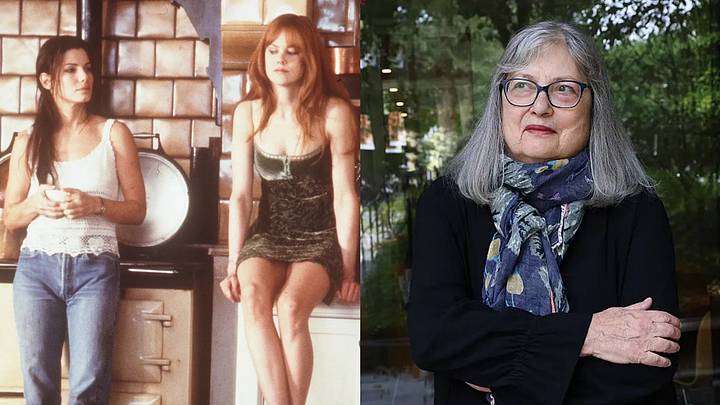
Certainly, it’s not too hard to imagine that a little pinch of real magic may have been involved in the creation of Alice Hoffman’s Practical Magic. This 1995 novel follows two sisters, Gillian and Sally Owens, as they navigate the trials and tribulations of both love and witchcraft. It was soon adapted into a beloved 1998 film starring Nicole Kidman and Sandra Bullock.
Yet it all began with two words that, not unlike a spell, brought the book to life: its title.
How Alice Hoffman came up with the idea for Practical Magic
Inspiration can be a flighty, mysterious thing, and every author has a different way of courting it. For author Alice Hoffman, the idea for Practical Magic started with its name. “I came up with the idea of Practical Magic because I thought it would be a great title,” the author wrote in a Reddit AMA. “I keep a list of titles. I thought I would eventually find a book that fit with that title and I did!”
Once the idea materialized, the story flowed in a way that, to Hoffman, felt almost enchanted. “When I first started Practical Magic, I just had the title,” she said in an interview with Simon & Schuster. “I was working in a little shed, and I walked in there, and by the time the summer ended and I walked out, I had the book. I’d never experienced that before. The book just came to me. I felt so lucky that these women just appeared. It was like magic for me, and never before or since have I had that experience. I just feel very lucky that the Owens women came to me.”
Yet despite the way the story seemed to take on a life of its own, it ran into some barriers during the editing process. Witchcraft wasn’t considered “literary” at the time Hoffman wrote Practical Magic, she told The New York Times, and her editor had a lot of suggestions. “She and the copy editor wanted me to change everything—every single word was circled, including the last paragraph,” Hoffman said. “It was the moment when I thought, you know what? I didn’t become a writer to do this.” So she began looking for alternate representation opportunities. Fortunately for the book and film's many fans, she found them.
Practical Magic tells the story of the Owens sisters as they navigate losing their parents and growing up in a town that has ostracized their family for generations. Born into a family of witches, the women at first try to flee from their magical origins—and a curse that dooms any man they fall in love with to die. But when Gillian’s abusive boyfriend begins causing trouble, the pair must turn to magic to save themselves, and hopefully end the curse once and for all.
The film based on the book received a lukewarm reception when it premiered, with critics taking issue with its tonal shifts and its female-heavy cast. Yet over the years, it has become a beloved cult classic that has united generations of fans.
The story behind the sequels
Over two decades after the publication of Practical Magic, Hoffman revisited the story with the 2018 book The Rules of Magic, which follows an earlier generation of Owens siblings living in 1960s New York. In 2020, she published Magic Lessons, an origin story that explores the start of the Owens family curse.
Finally, 2021 saw the arrival of The Book of Magic, which brings back three generations of Owens women—including Sally and Gillian—as they try to finally end the curse. This book provided the basis for the film Practical Magic 2, which premieres September 10, 2026.
Hoffman never expected to write any follow-ups to Practical Magic. But readers’ interest changed her mind and inspired her to revisit the story. “I didn’t think of it as a series until my readers started to write to me,” she told Vanity Fair, “and say they really wanted to know what had happened to the aunts and what their life had been like before Sally and Gillian came into their lives.”
Ultimately, the inspiration for Hoffman’s tales of magic and covens of women comes from a very personal place—a truth that took the author a long time to uncover. “I don’t think I’ve realized until very recently that I’m writing about witches because I was an outsider, and that’s the way I felt my whole life,” she told The New York Times. “I didn’t want to be that person. I wanted to have a normal life. But what’s a normal life?”