%20%20--%3E%0A%3Csvg%20version%3D%221.1%22%20id%3D%22Layer_1%22%20xmlns%3D%22http%3A%2F%2Fwww.w3.org%2F2000%2Fsvg%22%20xmlns%3Axlink%3D%22http%3A%2F%2Fwww.w3.org%2F1999%2Fxlink%22%20x%3D%220px%22%20y%3D%220px%22%0A%09%20viewBox%3D%220%200%20684.6%2068.1%22%20style%3D%22enable-background%3Anew%200%200%20684.6%2068.1%3B%22%20xml%3Aspace%3D%22preserve%22%3E%0A%3Cg%3E%0A%09%3Cpath%20d%3D%22M444.1%2C29.3h-17.4v14.5h17.4V29.3z%20M36.4%2C68.1l29.3-50.8V0H50.4L32.9%2C36.8L15.5%2C0H0v68.1h16.7V45.8l12.4%2C22.3H36.4z%0A%09%09%20M49.1%2C68.1h16.6V23.4L49.1%2C52.1V68.1z%20M76.6%2C68.1h45V53.8H93.3V41.6h21V27.1h-21V14.8h28.3V0.1h-45V68.1z%20M175.6%2C68.1h17.3v-68%0A%09%09h-16.5v40.3L150%2C0.1h-17.6v68h16.7V27.7L175.6%2C68.1z%20M235.8%2C14.8h15.4V0.1h-47.4v14.7H219v53.2h16.8V14.8z%20M290.3%2C45.9h-17.1%0A%09%09l7.5-15.6h2L290.3%2C45.9z%20M298.7%2C68.1h18l-32.2-68h-5.7l-32%2C68h18l3.3-7.1h27.1L298.7%2C68.1z%20M325.2%2C68.1h46.2V53.8h-29.6V0.1h-16.7%0A%09%09V68.1z%20M423.7%2C14.8h27.2V0.1H407v68h16.7V14.8z%20M462%2C68.1h46.2V53.8h-29.6V0.1H462V68.1z%20M564.8%2C34.1c0%2C10.7-7.2%2C19.2-18.5%2C19.2%0A%09%09c-11.4%2C0-18.5-8.5-18.5-19.2s7.1-19.2%2C18.5-19.2C557.6%2C14.9%2C564.8%2C23.4%2C564.8%2C34.1%20M580.6%2C34.1c0-19-14.2-34-34.3-34%0A%09%09c-20.2%2C0-34.3%2C15-34.3%2C34c0%2C19%2C14.1%2C34%2C34.3%2C34C566.4%2C68.1%2C580.6%2C53.1%2C580.6%2C34.1%20M604.8%2C20.5c0-4.1%2C3.3-6.2%2C6.7-6.2%0A%09%09c4.4%2C0%2C6.6%2C3%2C6.6%2C6.6h14.7C631.8%2C9.1%2C625.1%2C0.1%2C611%2C0.1c-12%2C0-21.7%2C9.3-21.7%2C20.6c0%2C10.9%2C5.9%2C15.9%2C16.7%2C19.8%0A%09%09c5.2%2C1.8%2C11.5%2C3.2%2C11.5%2C8c0%2C3.3-2.4%2C5.5-6.4%2C5.5c-3.6%2C0-6.6-3-6.6-6.7h-15.2c0%2C11.5%2C7.9%2C20.8%2C21.8%2C20.8c12%2C0%2C21.6-9.3%2C21.6-20.6%0A%09%09c0-10-5.3-16.4-16.7-19.8C610.6%2C26.1%2C604.8%2C25.3%2C604.8%2C20.5%20M670%2C20.9h14.7C683.8%2C9.1%2C677.1%2C0.1%2C663%2C0.1c-12%2C0-21.7%2C9.3-21.7%2C20.6%0A%09%09c0%2C10.9%2C5.9%2C15.9%2C16.7%2C19.8c5.2%2C1.8%2C11.5%2C3.2%2C11.5%2C8c0%2C3.3-2.4%2C5.5-6.4%2C5.5c-3.6%2C0-6.6-3-6.6-6.7h-15.2c0%2C11.5%2C7.9%2C20.8%2C21.8%2C20.8%0A%09%09c12%2C0%2C21.6-9.3%2C21.6-20.6c0-10-5.3-16.4-16.7-19.8c-5.4-1.6-11.3-2.4-11.3-7.2c0-4.1%2C3.3-6.2%2C6.7-6.2C667.7%2C14.4%2C670%2C17.3%2C670%2C20.9%0A%09%09%22%2F%3E%0A%3C%2Fg%3E%0A%3C%2Fsvg%3E%0A)

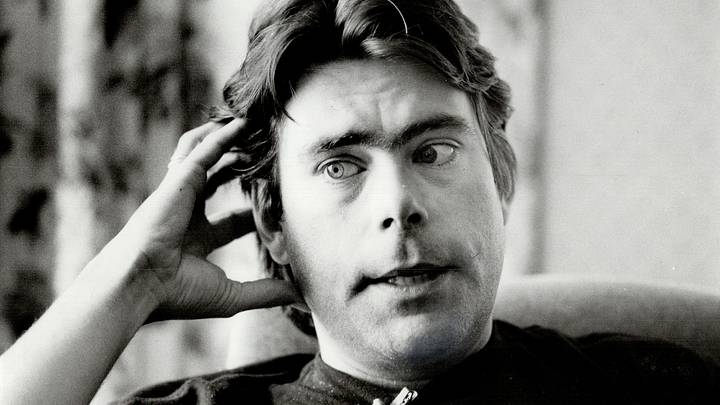
Stephen King has published more than 60 novels and novellas, but the weightiest of them all is his book The Stand, originally published in 1978 and then in extended form in 1990. It tells the story of how humanity struggles to deal with the threat of a flu pandemic threatening to wipe out almost everyone on Earth, and the extended version would ultimately make it the longest of all of King’s published works. However, its inspiration might come as a surprise: a key influence on King’s writing of the book was J. R. R. Tolkien’s fantasy epic The Lord of the Rings. Here’s a look at how this trilogy influenced King’s dystopian story.
Bringing Tolkien to America

The Lord of the Rings is a series of novels focusing on the quest of a hobbit named Frodo to destroy a powerful ring before it can be used to control humankind by the dark lord Sauron (the titular “Lord of the Rings”). It comprises three books that explore different stages in Frodo’s journey and the people and creatures he meets along the way: The Fellowship of the Ring, The Two Towers, and The Return of the King. The first two novels in the trilogy were published in 1954 and the third in 1955. More than 20 years later, King decided to write a fantasy epic on a similarly wide scale, with characters facing great peril, but this time it would be set in America in the real world.
King created intentional parallels between the heroes and villains in each story: in The Stand, the equivalent character to Frodo in The Lord of the Rings is Stu Redman, while the antagonist in place of Sauron is Randall Flagg, with the land of Mordor (where Sauron resides) being represented in King’s novel by the city of Las Vegas in Nevada. What the stories also had in common was their exploration of something that presents an existential threat to a whole world of people (the ring in Tolkien’s trilogy, and the flu pandemic in The Stand), and what happens when power falls into the wrong hands in the world.
The Next Chapter

The Lord of the Rings has also influenced subsequent onscreen adaptations of The Stand. While the novel itself tells the story in a chronologically straightforward style, the 2020 limited series adaptation took a non-linear path because the story in Tolkien’s trilogy likewise moves back and forward in time as the plot unfolds, as the series’ showrunner Benjamin Cavell explained in an interview at the time of the series premiere.
Both fictional works also have upcoming cinematic adaptations in development. In 2025, it was announced that The Stand would be adapted as a film to be directed by Doug Liman, which will also be the first time the novel has been adapted as a single theatrical film (its length has made it a challenging work to condense into the boundaries of one movie, which is why past adaptations had used the multiple-episode format of a TV series to tell the story).
Meanwhile, The Lord of the Rings continues to inspire onscreen adaptations too: following the 2000s adaptation of the original trilogy, and the later adaptation of The Hobbit, Tolkien will again be adapted for cinema in the form of the upcoming The Hunt for Gollum. It therefore looks like both Tolkien’s work and King’s work will continue to inspire filmmakers for the foreseeable future.