%20%20--%3E%0A%3Csvg%20version%3D%221.1%22%20id%3D%22Layer_1%22%20xmlns%3D%22http%3A%2F%2Fwww.w3.org%2F2000%2Fsvg%22%20xmlns%3Axlink%3D%22http%3A%2F%2Fwww.w3.org%2F1999%2Fxlink%22%20x%3D%220px%22%20y%3D%220px%22%0A%09%20viewBox%3D%220%200%20684.6%2068.1%22%20style%3D%22enable-background%3Anew%200%200%20684.6%2068.1%3B%22%20xml%3Aspace%3D%22preserve%22%3E%0A%3Cg%3E%0A%09%3Cpath%20d%3D%22M444.1%2C29.3h-17.4v14.5h17.4V29.3z%20M36.4%2C68.1l29.3-50.8V0H50.4L32.9%2C36.8L15.5%2C0H0v68.1h16.7V45.8l12.4%2C22.3H36.4z%0A%09%09%20M49.1%2C68.1h16.6V23.4L49.1%2C52.1V68.1z%20M76.6%2C68.1h45V53.8H93.3V41.6h21V27.1h-21V14.8h28.3V0.1h-45V68.1z%20M175.6%2C68.1h17.3v-68%0A%09%09h-16.5v40.3L150%2C0.1h-17.6v68h16.7V27.7L175.6%2C68.1z%20M235.8%2C14.8h15.4V0.1h-47.4v14.7H219v53.2h16.8V14.8z%20M290.3%2C45.9h-17.1%0A%09%09l7.5-15.6h2L290.3%2C45.9z%20M298.7%2C68.1h18l-32.2-68h-5.7l-32%2C68h18l3.3-7.1h27.1L298.7%2C68.1z%20M325.2%2C68.1h46.2V53.8h-29.6V0.1h-16.7%0A%09%09V68.1z%20M423.7%2C14.8h27.2V0.1H407v68h16.7V14.8z%20M462%2C68.1h46.2V53.8h-29.6V0.1H462V68.1z%20M564.8%2C34.1c0%2C10.7-7.2%2C19.2-18.5%2C19.2%0A%09%09c-11.4%2C0-18.5-8.5-18.5-19.2s7.1-19.2%2C18.5-19.2C557.6%2C14.9%2C564.8%2C23.4%2C564.8%2C34.1%20M580.6%2C34.1c0-19-14.2-34-34.3-34%0A%09%09c-20.2%2C0-34.3%2C15-34.3%2C34c0%2C19%2C14.1%2C34%2C34.3%2C34C566.4%2C68.1%2C580.6%2C53.1%2C580.6%2C34.1%20M604.8%2C20.5c0-4.1%2C3.3-6.2%2C6.7-6.2%0A%09%09c4.4%2C0%2C6.6%2C3%2C6.6%2C6.6h14.7C631.8%2C9.1%2C625.1%2C0.1%2C611%2C0.1c-12%2C0-21.7%2C9.3-21.7%2C20.6c0%2C10.9%2C5.9%2C15.9%2C16.7%2C19.8%0A%09%09c5.2%2C1.8%2C11.5%2C3.2%2C11.5%2C8c0%2C3.3-2.4%2C5.5-6.4%2C5.5c-3.6%2C0-6.6-3-6.6-6.7h-15.2c0%2C11.5%2C7.9%2C20.8%2C21.8%2C20.8c12%2C0%2C21.6-9.3%2C21.6-20.6%0A%09%09c0-10-5.3-16.4-16.7-19.8C610.6%2C26.1%2C604.8%2C25.3%2C604.8%2C20.5%20M670%2C20.9h14.7C683.8%2C9.1%2C677.1%2C0.1%2C663%2C0.1c-12%2C0-21.7%2C9.3-21.7%2C20.6%0A%09%09c0%2C10.9%2C5.9%2C15.9%2C16.7%2C19.8c5.2%2C1.8%2C11.5%2C3.2%2C11.5%2C8c0%2C3.3-2.4%2C5.5-6.4%2C5.5c-3.6%2C0-6.6-3-6.6-6.7h-15.2c0%2C11.5%2C7.9%2C20.8%2C21.8%2C20.8%0A%09%09c12%2C0%2C21.6-9.3%2C21.6-20.6c0-10-5.3-16.4-16.7-19.8c-5.4-1.6-11.3-2.4-11.3-7.2c0-4.1%2C3.3-6.2%2C6.7-6.2C667.7%2C14.4%2C670%2C17.3%2C670%2C20.9%0A%09%09%22%2F%3E%0A%3C%2Fg%3E%0A%3C%2Fsvg%3E%0A)

Classic literature is full of stock characters and literary devices, of which the trope of the deranged madwoman—often portrayed as somehow set aside from the action of the story, and often locked in an attic or an isolated house—is one of the most popular, evocative, and controversial. So where did this particular trope come from?
HOW MAD ARE WE TALKING?
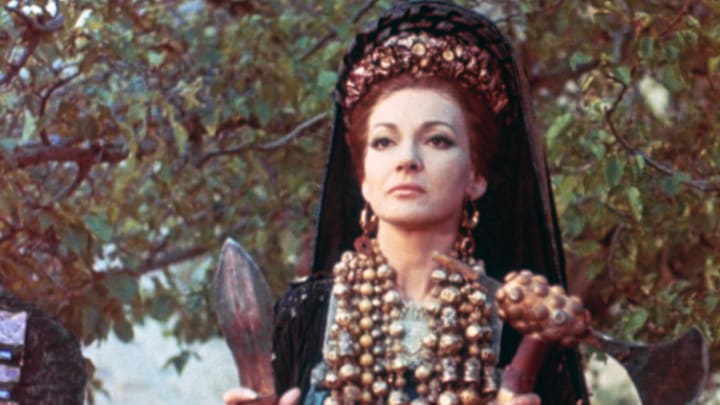
Female characters acting in some kind of deranged, hysterical, or illogical manner have long been a feature of literature and drama, with the murderous Medea in Euripides classic 5th-century-BCE play of the same name often held up as one of the first major examples of the literary madwoman.
Many classic and early portrayals of madness, however, aren’t quite in the same league as the stock “madwoman in the attic” trope. Yes, Euripides’ Medea becomes murderously unbalanced after being betrayed by her husband, Jason, and eventually kills not only his new wife, but her own sons too in a chilling act of revenge intended to end her husband’s bloodline.
But it could be argued that in the play, Medea never truly loses her mind; she knows full well what she is doing, and in fact is seen reasoning and wrangling over it for much of the play. Ultimately, we as the audience are compelled to find other explanations for her actions, with her transformation from loyal, care-giving wife and mother to bloodthirsty murderer often viewed instead as a transformation from traditional femininity to traditional masculinity. (What’s more, it seems Euripides may have agreed with this interpretation: rather than have Medea divinely punished for her actions in the play’s conclusion, as audiences might expect from a Greek tragedy, she instead rides off in a chariot sent by the sun god Helios, having regained her power and authority over her husband.)
Other famous literary “madwomen” are likewise given a full transformation throughout the course of their stories, and provided with deep context to justify or account for their madness. Shakespeare’s Lady Macbeth, for instance, is seen to be driven mad by grief and past trauma, taking her from the cool-headed, gear-turning overseer of her husband’s blood-stained ascent to the throne, to a deranged and doomed sleepwalker, assailed by visions and hallucinations. Hamlet’s Ophelia, meanwhile, is understandably left in an overwhelmed daze after the double whammy of her father Polonius’ murder at the hands of her would-be boyfriend, and ultimately Hamlet’s heartless rejection of her.
Many famous later literary madwomen, however, weren’t quite given the same in-depth treatment.
“THE MADWOMAN IN THE ATTIC”

The more modern “madwoman in the attic” trope emerged in the novels of the early 1800s. In fact, this expression itself alludes to Charlotte Brontë’s 1847 novel Jane Eyre, in which Mr. Rochester’s first wife, Bertha Mason, is kept secretly locked away in the attic of his home, Thornfield Hall, having long ago lost her mind.
Inspired by Brontë, the literary critics and feminist writers Sandra Gilbert and Susan Gubar famously used Madwoman in the Attic as the title of their landmark 1979 work, which explored the portrayal of women in Victorian literature. Authors like Charlotte Brontë—as well as her sister Emily, Jane Austen, and Mary Shelley, the pair argued—typically featured women in their novels that were either idealized ingenues or grotesque monsters, a dichotomy that naturally emerged in response to the distorted literary landscape (long shaped by male writers) into which their work was being taken.
Given the understanding of mental illness at the time in the 1800s, consequently, having a female character who had lost her mind was an easy way of providing a story with a dangerous and unpredictable “monster” character—the perfect antagonist for the ingenue heroine, and a literary creation with which the reader was unlikely to sympathize. Charlotte Brontë, for instance, portrays Bertha as little more than a monstrous threat, with little agency nor much in the way of an explanation for her madness, leaving the reader to sympathize with Mr. Rochester instead.
THE MODERN MADWOMAN

Understandably, though, times have changed—and so too has our approach and interpretation of the literary madwoman.
Spurred on by more radical female writers and literary critics, such as Virginia Woolf, as well as a greater understanding and empathy for mental illness, modern spins on the traditional “madwoman” trope have trodden new and unconventional ground. Today, female characters’ maddened actions in some stories are portrayed as righteous responses to oppression or harassment. Other female characters are first portrayed as mad, often having uncovered some mystery or conspiracy that all other characters refuse to believe, before finally being vindicated when their “madness” is found to be grounded in reality.
Reinventions of the “madwoman” trope like these, moreover, have led to many of the literary madwomen of the past being themselves reinvented and reinterpreted, with many modern readers—as well as modern productions and literary adaptations—often finding sympathy with the “monsters” of the past, like Bertha Mason, Dickens’ Miss Havisham, and even Euripides’ infanticidal Medea. Every madwoman, ultimately, has her day.