%20%20--%3E%0A%3Csvg%20version%3D%221.1%22%20id%3D%22Layer_1%22%20xmlns%3D%22http%3A%2F%2Fwww.w3.org%2F2000%2Fsvg%22%20xmlns%3Axlink%3D%22http%3A%2F%2Fwww.w3.org%2F1999%2Fxlink%22%20x%3D%220px%22%20y%3D%220px%22%0A%09%20viewBox%3D%220%200%20684.6%2068.1%22%20style%3D%22enable-background%3Anew%200%200%20684.6%2068.1%3B%22%20xml%3Aspace%3D%22preserve%22%3E%0A%3Cg%3E%0A%09%3Cpath%20d%3D%22M444.1%2C29.3h-17.4v14.5h17.4V29.3z%20M36.4%2C68.1l29.3-50.8V0H50.4L32.9%2C36.8L15.5%2C0H0v68.1h16.7V45.8l12.4%2C22.3H36.4z%0A%09%09%20M49.1%2C68.1h16.6V23.4L49.1%2C52.1V68.1z%20M76.6%2C68.1h45V53.8H93.3V41.6h21V27.1h-21V14.8h28.3V0.1h-45V68.1z%20M175.6%2C68.1h17.3v-68%0A%09%09h-16.5v40.3L150%2C0.1h-17.6v68h16.7V27.7L175.6%2C68.1z%20M235.8%2C14.8h15.4V0.1h-47.4v14.7H219v53.2h16.8V14.8z%20M290.3%2C45.9h-17.1%0A%09%09l7.5-15.6h2L290.3%2C45.9z%20M298.7%2C68.1h18l-32.2-68h-5.7l-32%2C68h18l3.3-7.1h27.1L298.7%2C68.1z%20M325.2%2C68.1h46.2V53.8h-29.6V0.1h-16.7%0A%09%09V68.1z%20M423.7%2C14.8h27.2V0.1H407v68h16.7V14.8z%20M462%2C68.1h46.2V53.8h-29.6V0.1H462V68.1z%20M564.8%2C34.1c0%2C10.7-7.2%2C19.2-18.5%2C19.2%0A%09%09c-11.4%2C0-18.5-8.5-18.5-19.2s7.1-19.2%2C18.5-19.2C557.6%2C14.9%2C564.8%2C23.4%2C564.8%2C34.1%20M580.6%2C34.1c0-19-14.2-34-34.3-34%0A%09%09c-20.2%2C0-34.3%2C15-34.3%2C34c0%2C19%2C14.1%2C34%2C34.3%2C34C566.4%2C68.1%2C580.6%2C53.1%2C580.6%2C34.1%20M604.8%2C20.5c0-4.1%2C3.3-6.2%2C6.7-6.2%0A%09%09c4.4%2C0%2C6.6%2C3%2C6.6%2C6.6h14.7C631.8%2C9.1%2C625.1%2C0.1%2C611%2C0.1c-12%2C0-21.7%2C9.3-21.7%2C20.6c0%2C10.9%2C5.9%2C15.9%2C16.7%2C19.8%0A%09%09c5.2%2C1.8%2C11.5%2C3.2%2C11.5%2C8c0%2C3.3-2.4%2C5.5-6.4%2C5.5c-3.6%2C0-6.6-3-6.6-6.7h-15.2c0%2C11.5%2C7.9%2C20.8%2C21.8%2C20.8c12%2C0%2C21.6-9.3%2C21.6-20.6%0A%09%09c0-10-5.3-16.4-16.7-19.8C610.6%2C26.1%2C604.8%2C25.3%2C604.8%2C20.5%20M670%2C20.9h14.7C683.8%2C9.1%2C677.1%2C0.1%2C663%2C0.1c-12%2C0-21.7%2C9.3-21.7%2C20.6%0A%09%09c0%2C10.9%2C5.9%2C15.9%2C16.7%2C19.8c5.2%2C1.8%2C11.5%2C3.2%2C11.5%2C8c0%2C3.3-2.4%2C5.5-6.4%2C5.5c-3.6%2C0-6.6-3-6.6-6.7h-15.2c0%2C11.5%2C7.9%2C20.8%2C21.8%2C20.8%0A%09%09c12%2C0%2C21.6-9.3%2C21.6-20.6c0-10-5.3-16.4-16.7-19.8c-5.4-1.6-11.3-2.4-11.3-7.2c0-4.1%2C3.3-6.2%2C6.7-6.2C667.7%2C14.4%2C670%2C17.3%2C670%2C20.9%0A%09%09%22%2F%3E%0A%3C%2Fg%3E%0A%3C%2Fsvg%3E%0A)

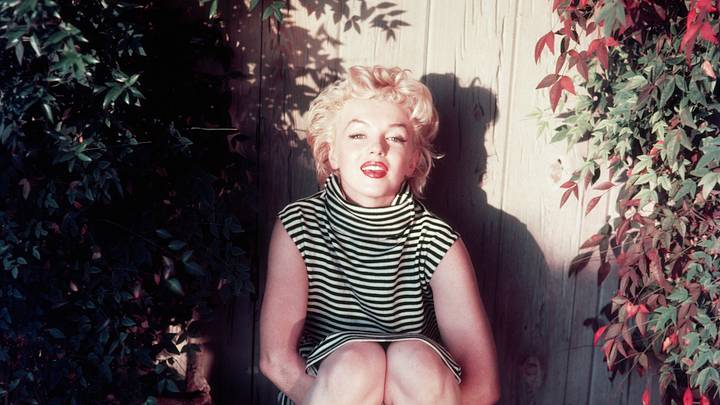
Marilyn Monroe was an avid reader, often seen with a book in her hands while on set, traveling, or at home. Once, a director famously spotted her with a copy of Rainer Maria Rilke’s Letters to a Young Poet in her hand and asked her why she’d chosen that particular book.
“On nights when I’ve got nothing else to do, I go to the Pickwick bookstore on Hollywood Boulevard and just open books at random,” she said. “When I come to a page or a paragraph I like, I buy that book. So last night I bought this one. Is that wrong?”
Monroe wasn’t frequently asked by interviewers about her love of books, so there isn’t too much information about which books she loved and found solace in. But we do know that at the time of her death, her library contained over 400 books that ranged from Karl Marx’s Das Kapital to biographies of Albert Einstein and J. Robert Oppenheimer.
She did occasionally comment on texts that moved her, and that—along with historical research and fan speculation—has given us some idea of the books she may have particularly enjoyed.
The Prophet, Khalil Gibran

One of the books most strongly associated with Monroe’s reading life is The Prophet by Khalil Gibran. According to the author’s estate's website, Monroe had four copies of her own and was often seen reading this book on movie sets, and sometimes gave copies out to friends.
During the filming of the movie Gentlemen Prefer Blondes, Monroe read a passage from the book’s section on marriage out loud to her costar Jane Russell. “...and stand together yet not too near together: For the pillars of the temple stand apart, and the oak tree and the cypress grow not in each other’s shadow,” she read.
Afterwards, the actress, who was married to Joe DiMaggio at the time, mused about Gibran’s meaning. “Is it true?” she asked. “I mean, do you have to keep yourself apart? I mean if a woman loves a man, does she have to give up her own individuality? Do we have to give our own identity up?”
Later, in an interview with literary critic Bob Slatzer—a source whose later claims about Monroe have been disputed—Monroe reportedly reflected on the book’s meaning. “The Prophet…It is very inspiring,” Monroe said. “It is more or less a pattern for everyday living.”
Gibran was a Lebanese-American poet who published The Prophet in 1923. The book is a collection of poetic essays that reflect on life’s deepest questions, and it remains one of the best-known and most popular spiritual texts of the 20th century.
Ulysses, James Joyce

Monroe was famously photographed with a copy of Ulysses by James Joyce in a 1955 shoot by photographer Eve Arnold. The photographs were taken while Monroe and Arnold were visiting Monroe’s friend Norman Rosten. According to Arnold, the duo stopped at a beach, where Monroe took out the book as Arnold was preparing to snap some photos.
Monroe read parts of the book out loud as the photos were being taken, and explained that she found the text challenging and preferred to read sections of the book non-chronologically—a method used by many scholars and fans of Joyce’s famously abstract and nonlinear novel.
Many people later suggested that the photoshoot had been staged, unable to believe Monroe could actually be reading one of the most notoriously confusing literary classics ever written. But Arnold herself said Monroe had been carrying the copy around in her car, and had been reading the book for “a long time” when the photos were taken.
“Eve wouldn’t have set this up,” argued Brigitte Lardinois, who wrote several books on Arnold. “Maybe if she had been sitting in a demure dress on an antique chair, it would have had a different effect.”
Many fans have since gone on to suggest that Ulysses might have been Monroe’s favorite book. While we don’t know this for sure, we do know that the book is now part of Monroe’s legacy thanks to Arnold’s photographs.
Ulysses is one of the major works of modernist fiction. Published in 1922, it retells Homer's Odyssey in a series of literary styles and is known for its extremely experimental stream-of-consciousness style. It follows three people in Dublin over the course of a single day—June 16, 1904. The question of what, exactly, the book is about has maddened literary critics for over a century now.
Leaves of Grass by Walt Whitman

Monroe was known to love poetry, and she also wrote some of it herself. In a fictional account written by biographer Sam Stagg, the author imagines that the actress may have loved one poet above all the rest. “Walt Whitman was her favorite poet…She often read Whitman for relaxation,” Stagg wrote. “The rhythm of his long free verse lulled and stimulated her at the same time.”
In reality, Monroe was photographed twice with copies of Whitman’s Leaves of Grass, and according to editor Bernard Comment, she had a "fascination" with the poet.
There is another story that offers another side to all this. According to an anecdote told by actress Arlene Dahl, Monroe once heard men discussing Whitman at a party. She walked over and said, “Oh! Whitman! I just love his chocolates!”
Was Monroe simply playing into stereotypes about her supposed lack of intelligence, or did she really not know who Whitman was at the time? Did this even happen at all? It’s hard to say. Either way, if Monroe had lived longer—her 100th birthday would have been June 1, 2026—we might have gotten to know more about, and maybe even to read, her literary efforts.
Instead, we have fragments in the form of interviews, memories that may or may not be accurate, and photographs that provide small windows into the mind and world of one of the most enigmatic yet surveilled women ever to haunt the American imagination.
Leaves of Grass, meanwhile, was Whitman's first collection of poetry. It is known for its emphasis on reverence for the body and the natural world and its portrayal of finding divinity through direct individual experience of these things.
At risk of more excessive speculation, it is easy to imagine Monroe—who struggled with maintaining autonomy and control over her life—finding solace in Whitman's depiction of complete freedom and internal peace in the world, as so many have found in those poems over the years.