%20%20--%3E%0A%3Csvg%20version%3D%221.1%22%20id%3D%22Layer_1%22%20xmlns%3D%22http%3A%2F%2Fwww.w3.org%2F2000%2Fsvg%22%20xmlns%3Axlink%3D%22http%3A%2F%2Fwww.w3.org%2F1999%2Fxlink%22%20x%3D%220px%22%20y%3D%220px%22%0A%09%20viewBox%3D%220%200%20684.6%2068.1%22%20style%3D%22enable-background%3Anew%200%200%20684.6%2068.1%3B%22%20xml%3Aspace%3D%22preserve%22%3E%0A%3Cg%3E%0A%09%3Cpath%20d%3D%22M444.1%2C29.3h-17.4v14.5h17.4V29.3z%20M36.4%2C68.1l29.3-50.8V0H50.4L32.9%2C36.8L15.5%2C0H0v68.1h16.7V45.8l12.4%2C22.3H36.4z%0A%09%09%20M49.1%2C68.1h16.6V23.4L49.1%2C52.1V68.1z%20M76.6%2C68.1h45V53.8H93.3V41.6h21V27.1h-21V14.8h28.3V0.1h-45V68.1z%20M175.6%2C68.1h17.3v-68%0A%09%09h-16.5v40.3L150%2C0.1h-17.6v68h16.7V27.7L175.6%2C68.1z%20M235.8%2C14.8h15.4V0.1h-47.4v14.7H219v53.2h16.8V14.8z%20M290.3%2C45.9h-17.1%0A%09%09l7.5-15.6h2L290.3%2C45.9z%20M298.7%2C68.1h18l-32.2-68h-5.7l-32%2C68h18l3.3-7.1h27.1L298.7%2C68.1z%20M325.2%2C68.1h46.2V53.8h-29.6V0.1h-16.7%0A%09%09V68.1z%20M423.7%2C14.8h27.2V0.1H407v68h16.7V14.8z%20M462%2C68.1h46.2V53.8h-29.6V0.1H462V68.1z%20M564.8%2C34.1c0%2C10.7-7.2%2C19.2-18.5%2C19.2%0A%09%09c-11.4%2C0-18.5-8.5-18.5-19.2s7.1-19.2%2C18.5-19.2C557.6%2C14.9%2C564.8%2C23.4%2C564.8%2C34.1%20M580.6%2C34.1c0-19-14.2-34-34.3-34%0A%09%09c-20.2%2C0-34.3%2C15-34.3%2C34c0%2C19%2C14.1%2C34%2C34.3%2C34C566.4%2C68.1%2C580.6%2C53.1%2C580.6%2C34.1%20M604.8%2C20.5c0-4.1%2C3.3-6.2%2C6.7-6.2%0A%09%09c4.4%2C0%2C6.6%2C3%2C6.6%2C6.6h14.7C631.8%2C9.1%2C625.1%2C0.1%2C611%2C0.1c-12%2C0-21.7%2C9.3-21.7%2C20.6c0%2C10.9%2C5.9%2C15.9%2C16.7%2C19.8%0A%09%09c5.2%2C1.8%2C11.5%2C3.2%2C11.5%2C8c0%2C3.3-2.4%2C5.5-6.4%2C5.5c-3.6%2C0-6.6-3-6.6-6.7h-15.2c0%2C11.5%2C7.9%2C20.8%2C21.8%2C20.8c12%2C0%2C21.6-9.3%2C21.6-20.6%0A%09%09c0-10-5.3-16.4-16.7-19.8C610.6%2C26.1%2C604.8%2C25.3%2C604.8%2C20.5%20M670%2C20.9h14.7C683.8%2C9.1%2C677.1%2C0.1%2C663%2C0.1c-12%2C0-21.7%2C9.3-21.7%2C20.6%0A%09%09c0%2C10.9%2C5.9%2C15.9%2C16.7%2C19.8c5.2%2C1.8%2C11.5%2C3.2%2C11.5%2C8c0%2C3.3-2.4%2C5.5-6.4%2C5.5c-3.6%2C0-6.6-3-6.6-6.7h-15.2c0%2C11.5%2C7.9%2C20.8%2C21.8%2C20.8%0A%09%09c12%2C0%2C21.6-9.3%2C21.6-20.6c0-10-5.3-16.4-16.7-19.8c-5.4-1.6-11.3-2.4-11.3-7.2c0-4.1%2C3.3-6.2%2C6.7-6.2C667.7%2C14.4%2C670%2C17.3%2C670%2C20.9%0A%09%09%22%2F%3E%0A%3C%2Fg%3E%0A%3C%2Fsvg%3E%0A)

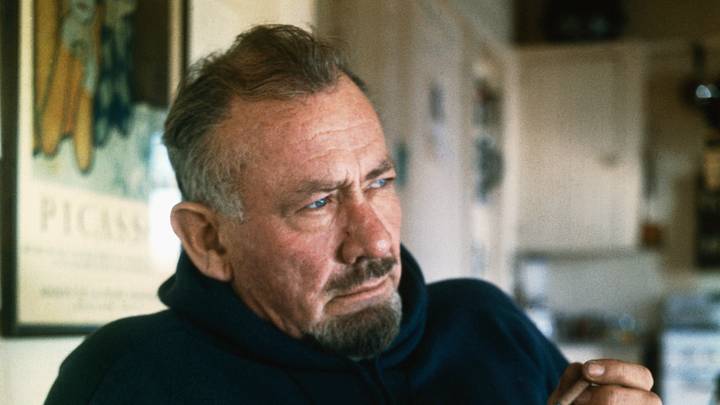
John Steinbeck’s East of Eden was the author’s most ambitious work, and remains a seminal contribution to 20th-century literature. “I think everything else I have written has been, in a sense, practice for this,” he said of the novel.
Set in California’s Salinas Valley, the book is a sweeping tale of good and evil that superimposes elements of the story of Adam and Eve and their sons, Cain and Abel, onto the backdrop of the 20th century. Steinbeck wrote the book with his own young sons, Thom and John, in mind. Originally, he planned to write the novel on the left page of a notebook while filling the right page with letters to them.
He envisioned the book as a gift for his children that also contained universal truths. “[I] try to relate the reader to the book,” he wrote in his journal on his first day of working on the novel, “so that, while I am talking to the boys actually, I am relating every reader to the story as though he were reading about his own background… Everyone wants to have a family. Maybe I can create a universal family living next to a universal neighbor.”
Steinbeck continued to write a letter each morning throughout his entire writing process, which lasted from January 29 to November 1, 1951, though he soon began addressing his letters to his editor, Pascal Covici, instead of his sons. He never actually sent any of the letters, but they were finally published after his death in the compilation Journal of a Novel: The East of Eden Letters.
Steinbeck’s East of Eden writing process

Steinbeck had long been plagued by self-doubt and insecurity about his writing abilities. The diaries he kept while writing his book The Grapes of Wrath reveal a fixation on his own shortcomings.
“My many weaknesses are beginning to show their heads. I simply must get this thing out of my system. I’m not a writer. I’ve been fooling myself and other people. I wish I were,” he wrote in one entry. Still, he never wavered in his commitment to his craft, despite the throes of anxiety it seemed to induce. “This success will ruin me as sure as hell. It probably won’t last, and that will be all right. I’ll try to go on with work now,” he continued. “Just a stint every day does it. I keep forgetting.”
Thirteen years after completing The Grapes of Wrath, he set out to write East of Eden. Each morning before he wrote, he penned a long letter in which he reflected on everything from his ongoing anxieties about writing to his struggles with being separated from his sons, Thom and John, who were in the custody of his ex-wife.
“They have no background in the world of literature, they don’t know the great stories of the world as we do. And so I will tell them one of the greatest, perhaps the greatest story of all—the story of good and evil, of strength and weakness, of love and hate, of beauty and ugliness,” he wrote in one. “I shall try to demonstrate to them how these doubles are inseparable—how neither can exist without the other and how out of their groupings creativeness is born.”
Steinbeck often wrote over 1,000 words in these early-morning writing practices before spending four or five hours working on East of Eden. He wrote longhand, in pencil.
A daily writing ritual's modern counterpart
The practice of writing a daily, stream-of-consciousness journal entry first thing in the morning is also a seminal part of Julia Cameron’s The Artist’s Way, a popular self-help book designed to help artists reconnect to their creativity. Cameron recommends writing a three-page longhand journal entry as close to waking up as possible, every single day.
“Pages clarify our yearnings. They keep an eye on our goals. They may provoke us, coax us, comfort us, even cajole us, as well as prioritize and synchronize the day at hand,” Cameron writes in The Miracle of Morning Pages: Everything You Always Wanted to Know About the Most Important Artist's Way Tool. “If we are drifting, the pages will point that out. They will point the way True North. Each morning, as we face the page, we meet ourselves. The pages give us a place to vent and a place to dream. They are intended for no eyes but our own.”
It’s easy to see the parallels between this process and Steinbeck’s daily letter-writing ritual. In his missives, Steinbeck shared many personal reflections, as well as deep and inspiring insights into the creative process that are sure to resonate with any artist who stumbles upon them.
“The craft or art of writing is the clumsy attempt to find symbols for the wordlessness. In utter loneliness the writer tries to explain the inexplicable,” he wrote in one letter. “And sometimes if he is very fortunate and if the time is right, a very little of what he is trying to do trickles through—not ever much. And if he is a writer wise enough to know it can't be done, then he is not a writer at all. A good writer always works at the impossible. “