%20%20--%3E%0A%3Csvg%20version%3D%221.1%22%20id%3D%22Layer_1%22%20xmlns%3D%22http%3A%2F%2Fwww.w3.org%2F2000%2Fsvg%22%20xmlns%3Axlink%3D%22http%3A%2F%2Fwww.w3.org%2F1999%2Fxlink%22%20x%3D%220px%22%20y%3D%220px%22%0A%09%20viewBox%3D%220%200%20684.6%2068.1%22%20style%3D%22enable-background%3Anew%200%200%20684.6%2068.1%3B%22%20xml%3Aspace%3D%22preserve%22%3E%0A%3Cg%3E%0A%09%3Cpath%20d%3D%22M444.1%2C29.3h-17.4v14.5h17.4V29.3z%20M36.4%2C68.1l29.3-50.8V0H50.4L32.9%2C36.8L15.5%2C0H0v68.1h16.7V45.8l12.4%2C22.3H36.4z%0A%09%09%20M49.1%2C68.1h16.6V23.4L49.1%2C52.1V68.1z%20M76.6%2C68.1h45V53.8H93.3V41.6h21V27.1h-21V14.8h28.3V0.1h-45V68.1z%20M175.6%2C68.1h17.3v-68%0A%09%09h-16.5v40.3L150%2C0.1h-17.6v68h16.7V27.7L175.6%2C68.1z%20M235.8%2C14.8h15.4V0.1h-47.4v14.7H219v53.2h16.8V14.8z%20M290.3%2C45.9h-17.1%0A%09%09l7.5-15.6h2L290.3%2C45.9z%20M298.7%2C68.1h18l-32.2-68h-5.7l-32%2C68h18l3.3-7.1h27.1L298.7%2C68.1z%20M325.2%2C68.1h46.2V53.8h-29.6V0.1h-16.7%0A%09%09V68.1z%20M423.7%2C14.8h27.2V0.1H407v68h16.7V14.8z%20M462%2C68.1h46.2V53.8h-29.6V0.1H462V68.1z%20M564.8%2C34.1c0%2C10.7-7.2%2C19.2-18.5%2C19.2%0A%09%09c-11.4%2C0-18.5-8.5-18.5-19.2s7.1-19.2%2C18.5-19.2C557.6%2C14.9%2C564.8%2C23.4%2C564.8%2C34.1%20M580.6%2C34.1c0-19-14.2-34-34.3-34%0A%09%09c-20.2%2C0-34.3%2C15-34.3%2C34c0%2C19%2C14.1%2C34%2C34.3%2C34C566.4%2C68.1%2C580.6%2C53.1%2C580.6%2C34.1%20M604.8%2C20.5c0-4.1%2C3.3-6.2%2C6.7-6.2%0A%09%09c4.4%2C0%2C6.6%2C3%2C6.6%2C6.6h14.7C631.8%2C9.1%2C625.1%2C0.1%2C611%2C0.1c-12%2C0-21.7%2C9.3-21.7%2C20.6c0%2C10.9%2C5.9%2C15.9%2C16.7%2C19.8%0A%09%09c5.2%2C1.8%2C11.5%2C3.2%2C11.5%2C8c0%2C3.3-2.4%2C5.5-6.4%2C5.5c-3.6%2C0-6.6-3-6.6-6.7h-15.2c0%2C11.5%2C7.9%2C20.8%2C21.8%2C20.8c12%2C0%2C21.6-9.3%2C21.6-20.6%0A%09%09c0-10-5.3-16.4-16.7-19.8C610.6%2C26.1%2C604.8%2C25.3%2C604.8%2C20.5%20M670%2C20.9h14.7C683.8%2C9.1%2C677.1%2C0.1%2C663%2C0.1c-12%2C0-21.7%2C9.3-21.7%2C20.6%0A%09%09c0%2C10.9%2C5.9%2C15.9%2C16.7%2C19.8c5.2%2C1.8%2C11.5%2C3.2%2C11.5%2C8c0%2C3.3-2.4%2C5.5-6.4%2C5.5c-3.6%2C0-6.6-3-6.6-6.7h-15.2c0%2C11.5%2C7.9%2C20.8%2C21.8%2C20.8%0A%09%09c12%2C0%2C21.6-9.3%2C21.6-20.6c0-10-5.3-16.4-16.7-19.8c-5.4-1.6-11.3-2.4-11.3-7.2c0-4.1%2C3.3-6.2%2C6.7-6.2C667.7%2C14.4%2C670%2C17.3%2C670%2C20.9%0A%09%09%22%2F%3E%0A%3C%2Fg%3E%0A%3C%2Fsvg%3E%0A)

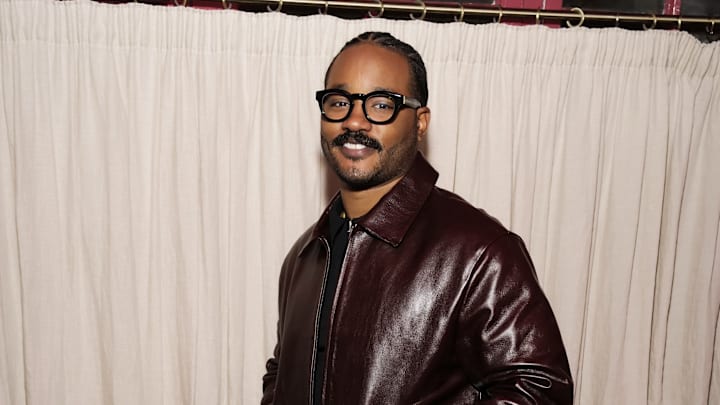
Across barely a decade of feature-filmmaking, Ryan Coogler has established himself as one of the most acclaimed and successful directors in Hollywood. Having burst onto the scene with his feature debut Fruitvale Station in 2013, Coogler has since gone on to earn a slew of awards for his work in both TV and film, and broke box office and filmmaking records when his 2025 horror Sinners picked up 16 Oscar nominations, more than any other film in history.
In several recent interviews and features, Coogler has name-checked some of the films and filmmakers that first inspired him to seek a career in cinema, and continue to influence his work today—ten of which are listed here.
A PROPHET (2009)
In an interview with the British Film Institute in 2018 that celebrated the release of his billion-dollar Marvel blockbuster Black Panther, Coogler named French filmmaker Jacques Audiard’s visceral 2009 crime drama A Prophet as his favorite film of all time. The story follows a young Muslim man who, through connections made (in brutal fashion) while in prison in France, rises through the ranks of the criminal underworld and the Corsican mafia. “Every time I make a movie,” Coogler said to the BFI, “A Prophet is probably the single biggest influence. I make sure everybody who is working on the film has seen it.”
GOLDFINGER (1964)
Alongside the likes of The Lion King, which Coogler described as “Hamlet in Africa but with animals” in the BFI interview, and Blade Runner—which he said helped inspire the futuristic cityscapes of Black Panther—the 1964 Bond movie Goldfinger is perhaps one of the more surprising inspirations Coogler cited in his BFI profile. This film’s draw, he explained, was in the villainous Auric Goldfinger himself, who, unlike so many other Bond antagonists, “had a quality to him that seemed like you would meet him around.” Villains that feel like real people is a theme that has underpinned a number of Coogler’s movies—including, most recently, Jack O’Connell’s Remmick in Sinners. When asked about his tendency to create “relatable” villains in an interview with NPR in 2025, Coogler explained that he thinks it’s “scarier” when villains also connect with the characters they’re up against.
SEVEN SAMURAI (1954)
Coogler picked the 1954 Japanese epic Seven Samurai in his “Closet Picks” interview for the Criterion Collection in 2025. The three-hour epic tells the story of a Japanese village where the locals hire the eponymous fighters to defend themselves from a group of invading bandits. Speaking of how Japanese director Akira Kurosawa’s work influenced his own, Coogler talked of the director’s use of blocking (the staging and composition of scenes and shots) and pathetic fallacy—which involves the use of the elements, such as wind and rain, to mirror a character’s feelings.
MALCOLM X (1992)
Coogler also chose Malcolm X as one of his Criterion Closet picks, and named it as one of his four favorite movies in a red-carpet interview with Letterboxd at the 2026 Directors Guild of America Awards. Spike Lee’s 1992 biopic about the civil rights leader (played by an Oscar-nominated Denzel Washington) had such a profound effect on Coogler when his father took him to see it at the cinema as a child that he later described it as “more than a movie,” adding that he had “never seen a Black man that powerful” on screen before.
BOYZ N THE HOOD (1991)
John Singleton became the first African American filmmaker (and, at just 24 years old, the youngest filmmaker in history) to be nominated for the Best Director Oscar for his 1991 feature debut Boyz N the Hood. Coogler both chose the film in his Letterboxd interview and shouted it out as one of his favorite movies of all time at a 2018 screening of Black Panther at the Brooklyn Academy of Music, explaining that “it wasn’t a movie to me—I was seeing Black folks on a hundred-foot screen.”
DO THE RIGHT THING (1989)
Another film Coogler namechecked at the BAM screening was Do the Right Thing, the 1989 masterpiece by Spike Lee (who was in the audience that evening). In particular, Coogler called out Lee’s ability to bring New York to life onscreen, saying, “When I wanted to make movies, I wanted to make a movie that felt like home and felt as real as Do the Right Thing.”
DEVIL IN A BLUE DRESS (1995)
Another movie Coogler singled out in his Criterion interview was Carl Franklin’s neo-noir thriller Devil in a Blue Dress, which starred Denzel Washington and which Coogler cited as a major influence on Sinners. The movie tells the story of a postwar private detective who becomes embroiled in an ever-deepening mystery when investigating the disappearance of a former mayoral candidate's fiancée.
FOLLOWING (1998)
Long before he became attached to high-concept, big-budget epics like Inception, The Dark Knight trilogy, and the upcoming Odyssey, Christopher Nolan—who Coogler described as a “mentor” in his Criterion interview—made his feature debut with a 70-minute British independent film, Following, that told the story of a writer whose habit of tailing strangers around inner-city London for inspiration for his writing lands him in trouble when one of the people he follows turns out to be a criminal. Despite the low budget and relatively small scale of the story, Coogler explained that “a lot of the Christopher Nolan trademarks are in this movie” all the same, making it a great film to “get a little taste” of where Nolan’s work would end up.
THIEF (1981)
One more of Coogler’s Criterion picks was Michael Mann’s 1981 feature debut, Thief, starring James Caan as a safecracker and small-time thief trying to turn his back on his criminal past after one final job. In the interview, Coogler commended the film’s noirish style and rain-soaked, neon-lit appearance, as well as the slow onion-peel reveal of the true nature of the film’s villain.
FISH TANK (2009)
Perhaps best known to audiences today for her work on TV drama Big Little Lies, British Oscar-winner Andrea Arnold’s 2009 coming-of-age drama Fish Tank told the story of an isolated and disaffected teenager (played by Katie Jarvis) and the volatile relationship that she develops with her mother’s new boyfriend (played by Michael Fassbender). Coogler singled the film out as “a rallying cry of why the world needs women filmmakers” at the 2018 BAM screening of Black Panther.