%20%20--%3E%0A%3Csvg%20version%3D%221.1%22%20id%3D%22Layer_1%22%20xmlns%3D%22http%3A%2F%2Fwww.w3.org%2F2000%2Fsvg%22%20xmlns%3Axlink%3D%22http%3A%2F%2Fwww.w3.org%2F1999%2Fxlink%22%20x%3D%220px%22%20y%3D%220px%22%0A%09%20viewBox%3D%220%200%20684.6%2068.1%22%20style%3D%22enable-background%3Anew%200%200%20684.6%2068.1%3B%22%20xml%3Aspace%3D%22preserve%22%3E%0A%3Cg%3E%0A%09%3Cpath%20d%3D%22M444.1%2C29.3h-17.4v14.5h17.4V29.3z%20M36.4%2C68.1l29.3-50.8V0H50.4L32.9%2C36.8L15.5%2C0H0v68.1h16.7V45.8l12.4%2C22.3H36.4z%0A%09%09%20M49.1%2C68.1h16.6V23.4L49.1%2C52.1V68.1z%20M76.6%2C68.1h45V53.8H93.3V41.6h21V27.1h-21V14.8h28.3V0.1h-45V68.1z%20M175.6%2C68.1h17.3v-68%0A%09%09h-16.5v40.3L150%2C0.1h-17.6v68h16.7V27.7L175.6%2C68.1z%20M235.8%2C14.8h15.4V0.1h-47.4v14.7H219v53.2h16.8V14.8z%20M290.3%2C45.9h-17.1%0A%09%09l7.5-15.6h2L290.3%2C45.9z%20M298.7%2C68.1h18l-32.2-68h-5.7l-32%2C68h18l3.3-7.1h27.1L298.7%2C68.1z%20M325.2%2C68.1h46.2V53.8h-29.6V0.1h-16.7%0A%09%09V68.1z%20M423.7%2C14.8h27.2V0.1H407v68h16.7V14.8z%20M462%2C68.1h46.2V53.8h-29.6V0.1H462V68.1z%20M564.8%2C34.1c0%2C10.7-7.2%2C19.2-18.5%2C19.2%0A%09%09c-11.4%2C0-18.5-8.5-18.5-19.2s7.1-19.2%2C18.5-19.2C557.6%2C14.9%2C564.8%2C23.4%2C564.8%2C34.1%20M580.6%2C34.1c0-19-14.2-34-34.3-34%0A%09%09c-20.2%2C0-34.3%2C15-34.3%2C34c0%2C19%2C14.1%2C34%2C34.3%2C34C566.4%2C68.1%2C580.6%2C53.1%2C580.6%2C34.1%20M604.8%2C20.5c0-4.1%2C3.3-6.2%2C6.7-6.2%0A%09%09c4.4%2C0%2C6.6%2C3%2C6.6%2C6.6h14.7C631.8%2C9.1%2C625.1%2C0.1%2C611%2C0.1c-12%2C0-21.7%2C9.3-21.7%2C20.6c0%2C10.9%2C5.9%2C15.9%2C16.7%2C19.8%0A%09%09c5.2%2C1.8%2C11.5%2C3.2%2C11.5%2C8c0%2C3.3-2.4%2C5.5-6.4%2C5.5c-3.6%2C0-6.6-3-6.6-6.7h-15.2c0%2C11.5%2C7.9%2C20.8%2C21.8%2C20.8c12%2C0%2C21.6-9.3%2C21.6-20.6%0A%09%09c0-10-5.3-16.4-16.7-19.8C610.6%2C26.1%2C604.8%2C25.3%2C604.8%2C20.5%20M670%2C20.9h14.7C683.8%2C9.1%2C677.1%2C0.1%2C663%2C0.1c-12%2C0-21.7%2C9.3-21.7%2C20.6%0A%09%09c0%2C10.9%2C5.9%2C15.9%2C16.7%2C19.8c5.2%2C1.8%2C11.5%2C3.2%2C11.5%2C8c0%2C3.3-2.4%2C5.5-6.4%2C5.5c-3.6%2C0-6.6-3-6.6-6.7h-15.2c0%2C11.5%2C7.9%2C20.8%2C21.8%2C20.8%0A%09%09c12%2C0%2C21.6-9.3%2C21.6-20.6c0-10-5.3-16.4-16.7-19.8c-5.4-1.6-11.3-2.4-11.3-7.2c0-4.1%2C3.3-6.2%2C6.7-6.2C667.7%2C14.4%2C670%2C17.3%2C670%2C20.9%0A%09%09%22%2F%3E%0A%3C%2Fg%3E%0A%3C%2Fsvg%3E%0A)

It’s only natural that things change over time, but the pace of change over the last few decades has been head-spinningly quick.
In many ways, that’s made the world easier; staying and getting in touch with people, finding your way around, learning and finding things out, and even shopping and ordering what you want are all now far simpler and more readily available than they were in the past.
But that has had the somewhat less pleasant and more jarring consequence of consigning many of the technologies and experiences of yesterday to history, especially those from the 1970s. Here are 20 that have all but disappeared.
LANDLINE TELEPHONE CORDS

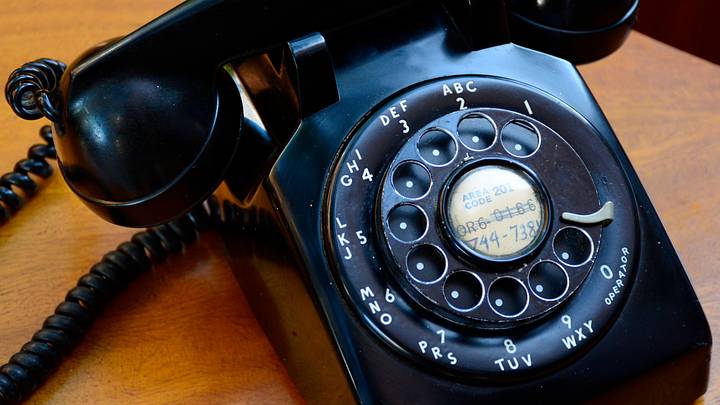
Long before cell phones became a thing, every house had a landline, which was really the only way of keeping in touch with friends and family. Thankfully, the cord on some landline telephones was so long that if you needed a quiet conversation away from your parents, you could take the handset in another room and close the door without stretching it too far.
CALLING THE HOUSE TO SPEAK TO ONE PERSON (WHO MIGHT NOT EVEN BE IN)
Unfortunately, having a landline meant you couldn’t get in touch with one person specifically, but had to call the entire house before narrowing it down to the one member of the household you wanted to reach. (Cue lots of awkward conversations between you and your best friends’ parents—especially if your friend didn’t happen to be in at the time…)
CALL CHARGES
One aspect of the telephones of the past that won’t be missed, however, is the often eye-watering difference between local and long-distance calls. Want to talk to your friend a few streets over? You could talk for hours for a pittance. Want to speak to your aunt or uncle two countries away? Give it ten seconds, tops.
KEEPING THE PHONE OFF THE HOOK
One more telephone-related aspect of the past that’s a little less simple these days? If you didn’t want to be disturbed, you could just take the phone off the hook and be uncontactable for however long you wanted. (These days, the best you can do is a do-not-disturb setting, or just turning your phone off altogether!)
RETURNING REUSABLES (IN EXCHANGE FOR HARD CASH)

These days, we all have household trash cans for recyclables, and recycling centers will handle most of your reusables cleanly and easily. In the past, though, it wasn’t uncommon for stores and restaurants to have their own in-house schemes for reducing waste, with stores often holding a few cents’ deposit on glass bottles and glasses, or giving a few cents back for returned cans. Some states have taken over these measures themselves, of course, but the days of taking them back to the stores you bought them from are largely long gone.
LASERDISCS
Watching films on discs is by no means anything new—it’s just the DVDs and BluRays of the 21st century are a lot smaller than the LP-sized LaserDiscs of the late 1970s.
CB RADIO SLANG
There was a time when CB radio was so widely used (one in five Americans owned a short-distance radio in the mid 1970s) that the chatter and slang you’d hear over them began to slip into everyday parlance. Whether that’s a “10-4,” a “meat wagon,” or a “good buddy,” many of these snapping turns of phrase have sadly fallen by the wayside.
TV ANTENNAE

On the subject of sending messages over the airwaves, there was a time when television sets came with movable antennae, Simpsons-style. In the era of smart TVs, though, these have largely become a thing of the past (so no need to wrap your TV aerial in aluminum foil anymore to improve the signal…)
CHANGING TV CHANNELS AT THE SET
Speaking of TVs, although the first commercial television remote control was made available back in 1950, by the 1970s many homes’ television sets still required manual channel-changing—variously achieved by either pressing, turning, or switching a series of (often rather noisy) control buttons or dials on the set itself. The technology might have changed, but we still talk of “tuning in” to television shows today even in the digital age.
APPOINTMENT TV
Digital and cable television, as well as streaming and catch-up services, have also done away with the so-called “appointment TV” era of the past too. There was a time when missing your favorite show meant precisely that—you’d missed your one chance to watch it, and would be left scouring the TV guide for weeks to come hoping to catch a rerun.
TV GUIDE MAGAZINES
With that last one in mind, TV guides are gradually disappearing too. Why pick up a printed magazine listing each and every show when you can watch whatever you want, whenever you want it—or, failing that, just surf the in-build TV guide at the bottom of the screen until you come across something you want to watch.
TELEPHONE DIRECTORIES

Not that TV shows were the only thing you had to browse by hand in weighty, information-heavy printed guides in the 70s, either. Business directories like the Yellow Pages listed every business in town across hundreds of pages, while the domestic phone directory did precisely that for home addresses. Want to know anything along those lines today, and it’s all online.
ROAD MAPS
Another printed resource that’s all but vanished today are road maps. Once the staple of every long-distance trip, and of every car glove compartment, these are becoming increasingly rare (outside of rural walks and hikes where mobile coverage and internet access might not be guaranteed!)
TRAVELER’S CHECKS
Another vacation staple of the 70s was the traveler’s check, which, unlike cash, had the added safety net of being reimbursable if lost or stolen. Ever more commonplace technologies like credit and debit cards, PIN numbers, and wireless payments have made these once widely used exchanges a thing of the past.
HITCHHIKING
Once a staple of many a cross-country trip (and many a movie based around it), hitchhiking reached peak popularity in the 1960s and 1970s, when someone thumbing a lift (or at least, trying to) was a common sight at practically every highway on-ramp.
SMOKING ON PLANES

Going on an overseas vacation in the 1970s, meanwhile, often meant enduring the smell of cigarette smoke on the long plane journey too. Not that airplanes were the only place where smoking was once tolerated—back in the seventies, smoking was all but universal, and you’d see people lighting up everywhere from shopping malls to (ironically enough) hospitals.
CIGARETTE VENDING MACHINES
In fact, smoking was once so widespread that these were all but universal too.
CHRISTMAS CATALOG SURFING
Wintertime, of course, means Christmas—and there was a time when Christmas meant perusing department store catalogs and circling everything that you’d like Santa to bring you. (These days, you’re perhaps more likely to drop it all in an online shopping cart and sit back and wait for it to be delivered.)
SEASONAL FRUIT

At the slightly healthier end of the seventies scale, however, the seasonality of fruits, vegetables and other produce was once far more widely followed than it is today. Nowadays, with industrial greenhouses, climate-controlled polytunnels and GM foods engineering ever-hardier varieties, even the softest of summer berries are often still available in the depths of winter.
HAVING NOTHING TO DO (OR ANYTHING TO PLAY WITH)
One of the effects of all this click-and-buy consumerism, however, is that real, genuine downtime seems to be a thing of the past. In an era of endless scrolling, streaming, and messaging, few of us find ourselves without anything to do and end up having to make our own fun armed with whatever toys, paper, and coloring pens we might have once had at our disposal.