%20%20--%3E%0A%3Csvg%20version%3D%221.1%22%20id%3D%22Layer_1%22%20xmlns%3D%22http%3A%2F%2Fwww.w3.org%2F2000%2Fsvg%22%20xmlns%3Axlink%3D%22http%3A%2F%2Fwww.w3.org%2F1999%2Fxlink%22%20x%3D%220px%22%20y%3D%220px%22%0A%09%20viewBox%3D%220%200%20684.6%2068.1%22%20style%3D%22enable-background%3Anew%200%200%20684.6%2068.1%3B%22%20xml%3Aspace%3D%22preserve%22%3E%0A%3Cg%3E%0A%09%3Cpath%20d%3D%22M444.1%2C29.3h-17.4v14.5h17.4V29.3z%20M36.4%2C68.1l29.3-50.8V0H50.4L32.9%2C36.8L15.5%2C0H0v68.1h16.7V45.8l12.4%2C22.3H36.4z%0A%09%09%20M49.1%2C68.1h16.6V23.4L49.1%2C52.1V68.1z%20M76.6%2C68.1h45V53.8H93.3V41.6h21V27.1h-21V14.8h28.3V0.1h-45V68.1z%20M175.6%2C68.1h17.3v-68%0A%09%09h-16.5v40.3L150%2C0.1h-17.6v68h16.7V27.7L175.6%2C68.1z%20M235.8%2C14.8h15.4V0.1h-47.4v14.7H219v53.2h16.8V14.8z%20M290.3%2C45.9h-17.1%0A%09%09l7.5-15.6h2L290.3%2C45.9z%20M298.7%2C68.1h18l-32.2-68h-5.7l-32%2C68h18l3.3-7.1h27.1L298.7%2C68.1z%20M325.2%2C68.1h46.2V53.8h-29.6V0.1h-16.7%0A%09%09V68.1z%20M423.7%2C14.8h27.2V0.1H407v68h16.7V14.8z%20M462%2C68.1h46.2V53.8h-29.6V0.1H462V68.1z%20M564.8%2C34.1c0%2C10.7-7.2%2C19.2-18.5%2C19.2%0A%09%09c-11.4%2C0-18.5-8.5-18.5-19.2s7.1-19.2%2C18.5-19.2C557.6%2C14.9%2C564.8%2C23.4%2C564.8%2C34.1%20M580.6%2C34.1c0-19-14.2-34-34.3-34%0A%09%09c-20.2%2C0-34.3%2C15-34.3%2C34c0%2C19%2C14.1%2C34%2C34.3%2C34C566.4%2C68.1%2C580.6%2C53.1%2C580.6%2C34.1%20M604.8%2C20.5c0-4.1%2C3.3-6.2%2C6.7-6.2%0A%09%09c4.4%2C0%2C6.6%2C3%2C6.6%2C6.6h14.7C631.8%2C9.1%2C625.1%2C0.1%2C611%2C0.1c-12%2C0-21.7%2C9.3-21.7%2C20.6c0%2C10.9%2C5.9%2C15.9%2C16.7%2C19.8%0A%09%09c5.2%2C1.8%2C11.5%2C3.2%2C11.5%2C8c0%2C3.3-2.4%2C5.5-6.4%2C5.5c-3.6%2C0-6.6-3-6.6-6.7h-15.2c0%2C11.5%2C7.9%2C20.8%2C21.8%2C20.8c12%2C0%2C21.6-9.3%2C21.6-20.6%0A%09%09c0-10-5.3-16.4-16.7-19.8C610.6%2C26.1%2C604.8%2C25.3%2C604.8%2C20.5%20M670%2C20.9h14.7C683.8%2C9.1%2C677.1%2C0.1%2C663%2C0.1c-12%2C0-21.7%2C9.3-21.7%2C20.6%0A%09%09c0%2C10.9%2C5.9%2C15.9%2C16.7%2C19.8c5.2%2C1.8%2C11.5%2C3.2%2C11.5%2C8c0%2C3.3-2.4%2C5.5-6.4%2C5.5c-3.6%2C0-6.6-3-6.6-6.7h-15.2c0%2C11.5%2C7.9%2C20.8%2C21.8%2C20.8%0A%09%09c12%2C0%2C21.6-9.3%2C21.6-20.6c0-10-5.3-16.4-16.7-19.8c-5.4-1.6-11.3-2.4-11.3-7.2c0-4.1%2C3.3-6.2%2C6.7-6.2C667.7%2C14.4%2C670%2C17.3%2C670%2C20.9%0A%09%09%22%2F%3E%0A%3C%2Fg%3E%0A%3C%2Fsvg%3E%0A)

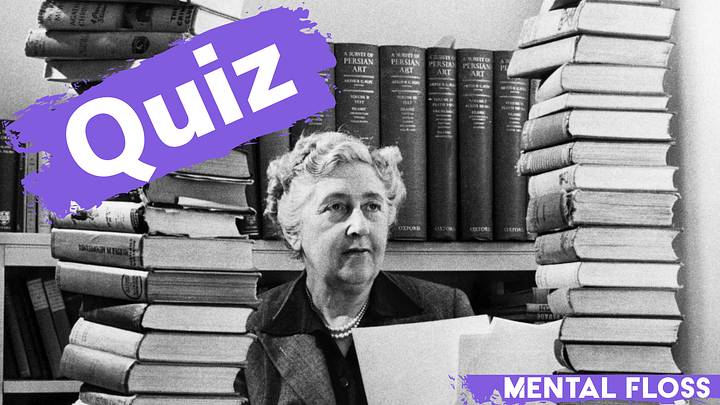
Agatha Christie was born on September 15, 1890. Over the course of her lifetime, she published 66 detective novels and became the best-selling fiction writer of all time.
But how well do you know the full titles of some of her iconic works of fiction? Test your sleuthing skills and see how many of her book titles you can complete with the quiz below.
How many did you get right? Did you successfully solve all of these cases, or is it time to go back to the drawing board and re-examine the evidence at hand? We don’t blame you if your memory for detail isn’t quite Hercule Poirot-level, of course. After all, there’s a reason he’s one of the most legendary detectives of all time.
But either way, read on to learn a bit more about what shaped Christie’s brilliant way of writing capers, crime thrillers, and murder mysteries steeped in glamour, scandal, and intrigue.
Agatha Christie’s early life shapes her work

Christie was born to a well-to-do family in Devon, England, and spent her early years in comfort. A precocious child, she taught herself to read at age 5. When she was eleven, her family’s finances took a turn for the worse and disintegrated after her father’s death when she was 11.
Christie’s mother sold their family estate and moved the family to Cairo, Egypt, where Christie found herself at the center of a lively social scene. After receiving a number of marriage proposals, she accepted one from the airman Archie Christie, whom she married when he was home from service during World War I.
Christie served as a nurse during the war and later worked as a pharmaceutical apprentice at the hospital pharmacy in her town. This position gave her an in-depth knowledge of poisons like arsenic and cyanide, which would later come in handy in her novels. While working in the apothecary, she began penning The Mysterious Affair at Styles, her first book.
Christie had her first child in 1919, and Styles was published in 1920. However, in 1926 her mother died, and her marriage began to dissolve due to revelations about her husband’s infidelity. Christie famously disappeared for 11 days that December, an event likely related to her mental health struggles during the time. She was eventually found and underwent psychiatric treatment before her divorce in 1928.
A love of archaeology leads to new love—and new ideas

Immediately after her divorce, Christie took her daughter to the Canary Islands and paid a visit to the archaeological site of Ur in southern Iraq. She visited the site again in 1931, and there, the 39-year-old Christie met a 25-year-old archaeologist named Max Mallowan, who was assigned to show her around. The two were married later that year.
From then on, Christie typically accompanied Mallowan on excavations each spring and autumn. She often found a great deal of inspiration in the places she traveled with Mallowan, which informed her books’ many references to ancient civilizations and diverse geographical sites. She spent the time between her travels in London, where she wrote.
In 1930, she joined The Detection Club, a group of mystery writers who would meet for dinner and discuss their storytelling tactics. Christie was president of the club from 1957 until she died in 1976.
Through it all, she continued to produce beloved novels at an impressive clip until her death. The final book published while she was alive was Curtain: Poirot’s Last Case, though a number of additional books were published posthumously, including Sleeping Murder.
She also penned a number of famous plays, including The Mousetrap, which holds the world record as the longest-running show in history, running for 21 years at the Ambassadors Theatre in London before moving to St. Martin’s Theatre in 1974, where it continues to run.