%20%20--%3E%0A%3Csvg%20version%3D%221.1%22%20id%3D%22Layer_1%22%20xmlns%3D%22http%3A%2F%2Fwww.w3.org%2F2000%2Fsvg%22%20xmlns%3Axlink%3D%22http%3A%2F%2Fwww.w3.org%2F1999%2Fxlink%22%20x%3D%220px%22%20y%3D%220px%22%0A%09%20viewBox%3D%220%200%20684.6%2068.1%22%20style%3D%22enable-background%3Anew%200%200%20684.6%2068.1%3B%22%20xml%3Aspace%3D%22preserve%22%3E%0A%3Cg%3E%0A%09%3Cpath%20d%3D%22M444.1%2C29.3h-17.4v14.5h17.4V29.3z%20M36.4%2C68.1l29.3-50.8V0H50.4L32.9%2C36.8L15.5%2C0H0v68.1h16.7V45.8l12.4%2C22.3H36.4z%0A%09%09%20M49.1%2C68.1h16.6V23.4L49.1%2C52.1V68.1z%20M76.6%2C68.1h45V53.8H93.3V41.6h21V27.1h-21V14.8h28.3V0.1h-45V68.1z%20M175.6%2C68.1h17.3v-68%0A%09%09h-16.5v40.3L150%2C0.1h-17.6v68h16.7V27.7L175.6%2C68.1z%20M235.8%2C14.8h15.4V0.1h-47.4v14.7H219v53.2h16.8V14.8z%20M290.3%2C45.9h-17.1%0A%09%09l7.5-15.6h2L290.3%2C45.9z%20M298.7%2C68.1h18l-32.2-68h-5.7l-32%2C68h18l3.3-7.1h27.1L298.7%2C68.1z%20M325.2%2C68.1h46.2V53.8h-29.6V0.1h-16.7%0A%09%09V68.1z%20M423.7%2C14.8h27.2V0.1H407v68h16.7V14.8z%20M462%2C68.1h46.2V53.8h-29.6V0.1H462V68.1z%20M564.8%2C34.1c0%2C10.7-7.2%2C19.2-18.5%2C19.2%0A%09%09c-11.4%2C0-18.5-8.5-18.5-19.2s7.1-19.2%2C18.5-19.2C557.6%2C14.9%2C564.8%2C23.4%2C564.8%2C34.1%20M580.6%2C34.1c0-19-14.2-34-34.3-34%0A%09%09c-20.2%2C0-34.3%2C15-34.3%2C34c0%2C19%2C14.1%2C34%2C34.3%2C34C566.4%2C68.1%2C580.6%2C53.1%2C580.6%2C34.1%20M604.8%2C20.5c0-4.1%2C3.3-6.2%2C6.7-6.2%0A%09%09c4.4%2C0%2C6.6%2C3%2C6.6%2C6.6h14.7C631.8%2C9.1%2C625.1%2C0.1%2C611%2C0.1c-12%2C0-21.7%2C9.3-21.7%2C20.6c0%2C10.9%2C5.9%2C15.9%2C16.7%2C19.8%0A%09%09c5.2%2C1.8%2C11.5%2C3.2%2C11.5%2C8c0%2C3.3-2.4%2C5.5-6.4%2C5.5c-3.6%2C0-6.6-3-6.6-6.7h-15.2c0%2C11.5%2C7.9%2C20.8%2C21.8%2C20.8c12%2C0%2C21.6-9.3%2C21.6-20.6%0A%09%09c0-10-5.3-16.4-16.7-19.8C610.6%2C26.1%2C604.8%2C25.3%2C604.8%2C20.5%20M670%2C20.9h14.7C683.8%2C9.1%2C677.1%2C0.1%2C663%2C0.1c-12%2C0-21.7%2C9.3-21.7%2C20.6%0A%09%09c0%2C10.9%2C5.9%2C15.9%2C16.7%2C19.8c5.2%2C1.8%2C11.5%2C3.2%2C11.5%2C8c0%2C3.3-2.4%2C5.5-6.4%2C5.5c-3.6%2C0-6.6-3-6.6-6.7h-15.2c0%2C11.5%2C7.9%2C20.8%2C21.8%2C20.8%0A%09%09c12%2C0%2C21.6-9.3%2C21.6-20.6c0-10-5.3-16.4-16.7-19.8c-5.4-1.6-11.3-2.4-11.3-7.2c0-4.1%2C3.3-6.2%2C6.7-6.2C667.7%2C14.4%2C670%2C17.3%2C670%2C20.9%0A%09%09%22%2F%3E%0A%3C%2Fg%3E%0A%3C%2Fsvg%3E%0A)

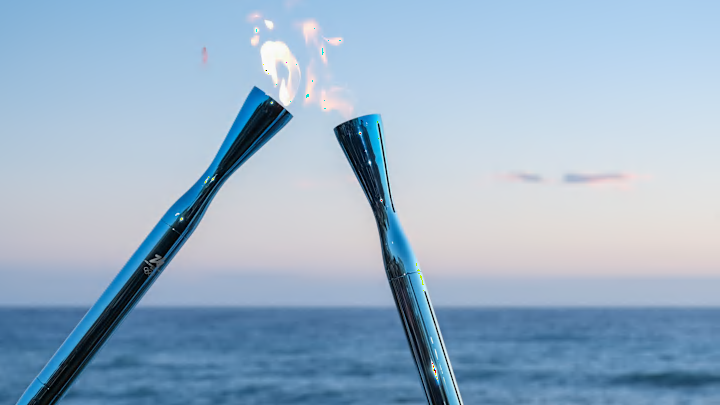
One of the exciting traditions leading up to the Summer and Winter Olympics is the torch relay, when people can go out and see the Olympic torch as it travels from Greece, where it is lit by the sun and a parabolic mirror, to the Olympic flame in the host city.
The relay is prepared for potential bad weather, like rain and wind, or other conditions that could cause the flame to go out. But there are still rare times when the flame does go out. So how do Olympic organizers ensure that the flame lit in Greece is still the same one that arrives in the host city for the Olympics?
From Greece to Gold
The Olympic flame is lit during a traditional ceremony in Greece that includes women dressed as ancient priestesses lighting the first flame with sunlight reflected on a parabolic mirror. That same flame will be carried by torch bearers throughout the torch relay until it makes its way to the Opening Ceremony of the Olympic Games, only to finally be extinguished at the end of the event.

The Olympics make it a point to ensure that the same flame that was ignited during the ceremony in Greece is the one that lights the Olympic flame in the host city, which can be a bit of a challenge when carrying it through a relay with such a large number of participants. In 2024, for example, the torch relay for the Summer Games in Paris included around 10,000 torch bearers.
The flame, however, always travels with a backup just in case. Officials carry specially-designed containers similar to a miner's lamp that house the original flame and a backup for everything from air travel (on a private plane, of course) to get the flame from Greece to the relay and then keep the flame lit throughout its journey. If the flame goes out for a torch bearer during the journey, the backup container is used to relight the flame.
Needing a Backup
The backup flame has actually been important during relays when circumstances caused the flame to go out for a torch bearer during the relay.
In the 1970s, there was a problem with the torch as it made its way to the Summer Olympics in Montreal, Canada. A rainstorm caused the flame to go out during the relay, causing an official along the route to relight it with a cigarette lighter. That's actually not allowed, as it doesn't keep with the tradition of using the original flame. So, the re-lit torch was extinguished and lit again with the backup that started in Greece.

A report during the 2014 Winter Games relay in Russia said the torch had gone out multiple times during its travels. A spokesman for the relay at the time claimed that it was normal to have that number of incidents.
In 2016, a man tried to extinguish the torch during the relay in Brazil by throwing water at it. Luckily, it missed the torch, which stayed lit.
The relay also has typical issues with the flame that could necessitate relighting it during the relay, such as bad weather, of course, or a runner taking too long during the relay and using up all the fuel in a torch before it can be passed on.
The 2026 Winter Games, taking place in Italy, run from February 6 to February 22. See the full schedule here.