%20%20--%3E%0A%3Csvg%20version%3D%221.1%22%20id%3D%22Layer_1%22%20xmlns%3D%22http%3A%2F%2Fwww.w3.org%2F2000%2Fsvg%22%20xmlns%3Axlink%3D%22http%3A%2F%2Fwww.w3.org%2F1999%2Fxlink%22%20x%3D%220px%22%20y%3D%220px%22%0A%09%20viewBox%3D%220%200%20684.6%2068.1%22%20style%3D%22enable-background%3Anew%200%200%20684.6%2068.1%3B%22%20xml%3Aspace%3D%22preserve%22%3E%0A%3Cg%3E%0A%09%3Cpath%20d%3D%22M444.1%2C29.3h-17.4v14.5h17.4V29.3z%20M36.4%2C68.1l29.3-50.8V0H50.4L32.9%2C36.8L15.5%2C0H0v68.1h16.7V45.8l12.4%2C22.3H36.4z%0A%09%09%20M49.1%2C68.1h16.6V23.4L49.1%2C52.1V68.1z%20M76.6%2C68.1h45V53.8H93.3V41.6h21V27.1h-21V14.8h28.3V0.1h-45V68.1z%20M175.6%2C68.1h17.3v-68%0A%09%09h-16.5v40.3L150%2C0.1h-17.6v68h16.7V27.7L175.6%2C68.1z%20M235.8%2C14.8h15.4V0.1h-47.4v14.7H219v53.2h16.8V14.8z%20M290.3%2C45.9h-17.1%0A%09%09l7.5-15.6h2L290.3%2C45.9z%20M298.7%2C68.1h18l-32.2-68h-5.7l-32%2C68h18l3.3-7.1h27.1L298.7%2C68.1z%20M325.2%2C68.1h46.2V53.8h-29.6V0.1h-16.7%0A%09%09V68.1z%20M423.7%2C14.8h27.2V0.1H407v68h16.7V14.8z%20M462%2C68.1h46.2V53.8h-29.6V0.1H462V68.1z%20M564.8%2C34.1c0%2C10.7-7.2%2C19.2-18.5%2C19.2%0A%09%09c-11.4%2C0-18.5-8.5-18.5-19.2s7.1-19.2%2C18.5-19.2C557.6%2C14.9%2C564.8%2C23.4%2C564.8%2C34.1%20M580.6%2C34.1c0-19-14.2-34-34.3-34%0A%09%09c-20.2%2C0-34.3%2C15-34.3%2C34c0%2C19%2C14.1%2C34%2C34.3%2C34C566.4%2C68.1%2C580.6%2C53.1%2C580.6%2C34.1%20M604.8%2C20.5c0-4.1%2C3.3-6.2%2C6.7-6.2%0A%09%09c4.4%2C0%2C6.6%2C3%2C6.6%2C6.6h14.7C631.8%2C9.1%2C625.1%2C0.1%2C611%2C0.1c-12%2C0-21.7%2C9.3-21.7%2C20.6c0%2C10.9%2C5.9%2C15.9%2C16.7%2C19.8%0A%09%09c5.2%2C1.8%2C11.5%2C3.2%2C11.5%2C8c0%2C3.3-2.4%2C5.5-6.4%2C5.5c-3.6%2C0-6.6-3-6.6-6.7h-15.2c0%2C11.5%2C7.9%2C20.8%2C21.8%2C20.8c12%2C0%2C21.6-9.3%2C21.6-20.6%0A%09%09c0-10-5.3-16.4-16.7-19.8C610.6%2C26.1%2C604.8%2C25.3%2C604.8%2C20.5%20M670%2C20.9h14.7C683.8%2C9.1%2C677.1%2C0.1%2C663%2C0.1c-12%2C0-21.7%2C9.3-21.7%2C20.6%0A%09%09c0%2C10.9%2C5.9%2C15.9%2C16.7%2C19.8c5.2%2C1.8%2C11.5%2C3.2%2C11.5%2C8c0%2C3.3-2.4%2C5.5-6.4%2C5.5c-3.6%2C0-6.6-3-6.6-6.7h-15.2c0%2C11.5%2C7.9%2C20.8%2C21.8%2C20.8%0A%09%09c12%2C0%2C21.6-9.3%2C21.6-20.6c0-10-5.3-16.4-16.7-19.8c-5.4-1.6-11.3-2.4-11.3-7.2c0-4.1%2C3.3-6.2%2C6.7-6.2C667.7%2C14.4%2C670%2C17.3%2C670%2C20.9%0A%09%09%22%2F%3E%0A%3C%2Fg%3E%0A%3C%2Fsvg%3E%0A)

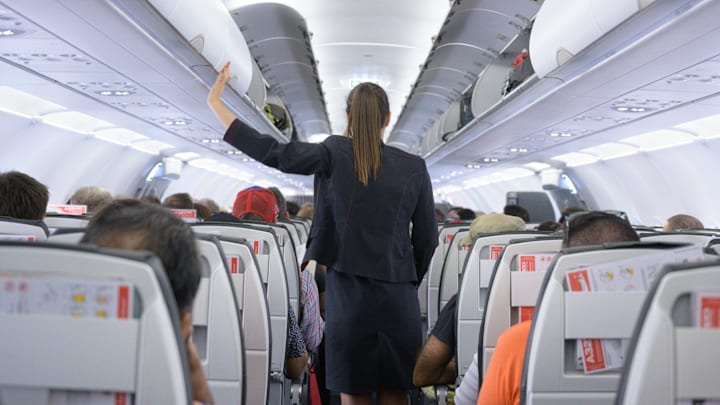
Travel by airplane involves all kinds of routine quirks and idiosyncrasies, from safely stowing your bags to the rigmarole of the cross-body seat belt. But one thing that typically happens on every flight, whether short-haul or long-haul, is perhaps more puzzling than all the others: the fact that flight attendants tend to sit on their hands during takeoff.
Having found your seat and stowed your bags in the overhead compartment, of course, you might have already mentally zoned out by this time. But if your head is still in the game, then chances are you’ll spot your flight’s cabin crew sitting in the aircraft’s jump seats with their hands either palm-down on top of their lap or thighs, or, more often than not, placed out of the way beneath their legs.
Not only that, but they’ll typically be sat bolt upright with their backs held straight against the backs of the seat and their feet braced flat against the floor. As odd a scene as this might make, though, it’s all just another part of the flight’s safety protocol.
It’s All About Safety

The only part of the flight’s safety protocols that you, as a passenger, need to worry about have already been explained in the safety briefing—but just because that’s over and done with (and you’ve already got your noise-cancelling headphones in) doesn’t mean that preparations for the flight are complete. And the cabin crew know it.
Takeoff and landing are famously the most critical and potentially hazardous periods of a flight, and so it’s important for the crew to be ready in case anything goes wrong. This upright, hands-under-the-legs way of sitting therefore ensures that all members of the crew are braced for action. Should anything untoward happen that would cause them to suddenly have to act, the positions of their hands would stabilize their bodies, thereby minimizing the risk of injury due to any unexpected turbulence or movement of the aircraft.
An injured passenger is one thing, ultimately, but if a member of the air crew were to become incapacitated during a flight, the plane would lose one of the few people on board fully trained in what to do in an emergency.
Sitting in the jump seat in this rigidly braced, upright position also helps to keep the aircrew alert and on guard, giving them a clear view of the cabin that allows them to keep an eye on anything untoward while they continue to mentally run through safety checks and practiced evacuation procedures.
Although different airlines tend to recommend different takeoff postures for their crews (and different aircraft often require the crew to take up different positions throughout the plane), the point remains the same: this curious, brace-ready way of sitting is just a continuation of the same safety protocols that you’ve probably already forgotten about as the aircraft takes off and your flight gets underway.