%20%20--%3E%0A%3Csvg%20version%3D%221.1%22%20id%3D%22Layer_1%22%20xmlns%3D%22http%3A%2F%2Fwww.w3.org%2F2000%2Fsvg%22%20xmlns%3Axlink%3D%22http%3A%2F%2Fwww.w3.org%2F1999%2Fxlink%22%20x%3D%220px%22%20y%3D%220px%22%0A%09%20viewBox%3D%220%200%20684.6%2068.1%22%20style%3D%22enable-background%3Anew%200%200%20684.6%2068.1%3B%22%20xml%3Aspace%3D%22preserve%22%3E%0A%3Cg%3E%0A%09%3Cpath%20d%3D%22M444.1%2C29.3h-17.4v14.5h17.4V29.3z%20M36.4%2C68.1l29.3-50.8V0H50.4L32.9%2C36.8L15.5%2C0H0v68.1h16.7V45.8l12.4%2C22.3H36.4z%0A%09%09%20M49.1%2C68.1h16.6V23.4L49.1%2C52.1V68.1z%20M76.6%2C68.1h45V53.8H93.3V41.6h21V27.1h-21V14.8h28.3V0.1h-45V68.1z%20M175.6%2C68.1h17.3v-68%0A%09%09h-16.5v40.3L150%2C0.1h-17.6v68h16.7V27.7L175.6%2C68.1z%20M235.8%2C14.8h15.4V0.1h-47.4v14.7H219v53.2h16.8V14.8z%20M290.3%2C45.9h-17.1%0A%09%09l7.5-15.6h2L290.3%2C45.9z%20M298.7%2C68.1h18l-32.2-68h-5.7l-32%2C68h18l3.3-7.1h27.1L298.7%2C68.1z%20M325.2%2C68.1h46.2V53.8h-29.6V0.1h-16.7%0A%09%09V68.1z%20M423.7%2C14.8h27.2V0.1H407v68h16.7V14.8z%20M462%2C68.1h46.2V53.8h-29.6V0.1H462V68.1z%20M564.8%2C34.1c0%2C10.7-7.2%2C19.2-18.5%2C19.2%0A%09%09c-11.4%2C0-18.5-8.5-18.5-19.2s7.1-19.2%2C18.5-19.2C557.6%2C14.9%2C564.8%2C23.4%2C564.8%2C34.1%20M580.6%2C34.1c0-19-14.2-34-34.3-34%0A%09%09c-20.2%2C0-34.3%2C15-34.3%2C34c0%2C19%2C14.1%2C34%2C34.3%2C34C566.4%2C68.1%2C580.6%2C53.1%2C580.6%2C34.1%20M604.8%2C20.5c0-4.1%2C3.3-6.2%2C6.7-6.2%0A%09%09c4.4%2C0%2C6.6%2C3%2C6.6%2C6.6h14.7C631.8%2C9.1%2C625.1%2C0.1%2C611%2C0.1c-12%2C0-21.7%2C9.3-21.7%2C20.6c0%2C10.9%2C5.9%2C15.9%2C16.7%2C19.8%0A%09%09c5.2%2C1.8%2C11.5%2C3.2%2C11.5%2C8c0%2C3.3-2.4%2C5.5-6.4%2C5.5c-3.6%2C0-6.6-3-6.6-6.7h-15.2c0%2C11.5%2C7.9%2C20.8%2C21.8%2C20.8c12%2C0%2C21.6-9.3%2C21.6-20.6%0A%09%09c0-10-5.3-16.4-16.7-19.8C610.6%2C26.1%2C604.8%2C25.3%2C604.8%2C20.5%20M670%2C20.9h14.7C683.8%2C9.1%2C677.1%2C0.1%2C663%2C0.1c-12%2C0-21.7%2C9.3-21.7%2C20.6%0A%09%09c0%2C10.9%2C5.9%2C15.9%2C16.7%2C19.8c5.2%2C1.8%2C11.5%2C3.2%2C11.5%2C8c0%2C3.3-2.4%2C5.5-6.4%2C5.5c-3.6%2C0-6.6-3-6.6-6.7h-15.2c0%2C11.5%2C7.9%2C20.8%2C21.8%2C20.8%0A%09%09c12%2C0%2C21.6-9.3%2C21.6-20.6c0-10-5.3-16.4-16.7-19.8c-5.4-1.6-11.3-2.4-11.3-7.2c0-4.1%2C3.3-6.2%2C6.7-6.2C667.7%2C14.4%2C670%2C17.3%2C670%2C20.9%0A%09%09%22%2F%3E%0A%3C%2Fg%3E%0A%3C%2Fsvg%3E%0A)

Ask any good dog owner, and they’ll doubtless tell you that after years of ownership they’re now able to interpret every one of their dog’s moods, tell one bark from another, and know exactly what each facial expression or tilt of the head is meant to mean.
Non-dog owners might be a little more skeptical, but there is at least some truth in the idea that certain dog behaviors, movements, and sounds do have underlying meanings that can be interpreted. From moods, sensations, and even underlying health issues, the possible interpretations of 20 common canine behaviors are explored here.
TAIL WAGGING

A wagging tail doesn’t always signal the same thing. A fast-paced, high-held tail wag, for instance, is typically seen as a sign of happiness or excitement in dogs, but a lower, slower tail wag might be better understood as a sign of uncertainty or unease.
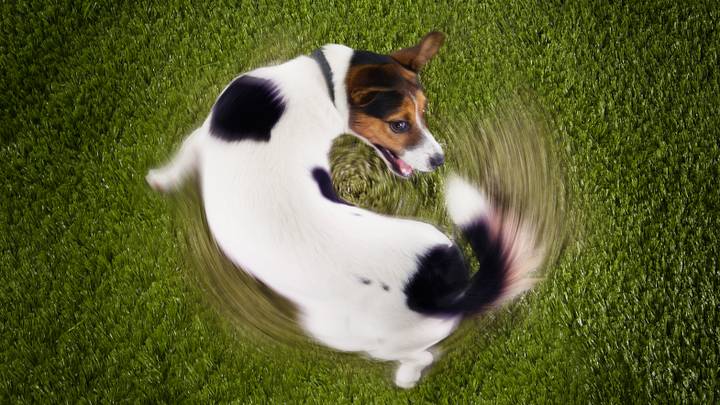
TAIL CHASING
A canine behavior so common (and so unusual) that it’s sparked endless jokes, memes and GIFs, tail chasing is thought to be a playful way of expelling excess energy. It’s one learned in puppyhood, too, when dogs first begin to explore and figure out the world around them with their mouths.
TAIL BITING

If your dog not only chases its own tail but catches it and chews it, that, however, could be a sign of something more untoward. Keep an eye out for skin issues or even fleas, which could be causing the tail to itch and feel uncomfortable, leading to excessive biting.
HEAD TILTING
It might look like your dog is pondering what you’ve just said, but head tilting is thought to be more an aid to hearing and concentration than any kind of quizzical thought process.
Tilting the head helps to adjust the position of the dog’s ears and ear flaps, improving hearing, while simultaneously moving their muzzle from their line of sight to ensure full view of you as you speak.
DIGGING

Although some dogs might dig for practical reasons—such as to unearth cooler ground in hot weather, or to make an outdoor areas for comfortable for lying down—in general digging is just a simple instinctive canine behavior.
In the wild, animals will often dig to mark their territory, or to hide food for later consumption, and domestic dogs have simply inherited this behavior from their wild ancestors. Some dogs, such as terriers that were bred to unearth game, are more prone to digging than other breeds too, and so they might simply dig for the sheer fun of it.
THE PLAY BOW
It might not be a term you’re familiar with, but it’s doubtless a stance you’ve seen your dog take before. As its name suggests, the “play bow” is the half-crouching, lowered-front-legs-raised-back-legs stance that dogs do when they’re happy, excited, or ready to play.
BARKING

In simple terms, barking is a dog’s way of communicating vocally—and just as there’s plenty of things you might want to talk about in a day, there are countless reasons why your dog might want to bark.
The key to understanding barking is context, as dogs might bark with excitement, to attract attention, to defend themselves or their territory, to signal to other dogs, or to call out a threat or a danger.
HOWLING
Some dog species, like hounds, are more prone to howling than to barking, and so it may be the case that howling is just your dogs preferred way of communicating. In other species, however, howling might be a sign of something else—although quite what the purpose might be depends on the context.
Common reasons for howling include attracting attention or signaling their whereabouts (which is why lonely dogs in particular might howl, as a means of attracting fellow dogs), expressing pain, discomfort, anxiety or other emotions, or simply to respond to a trigger noise. Dogs are pack animals, after all, so just as one wolf howling might set off an entire pack, your dog hearing a howl-like police siren might be enough to set it off too.
WHINING

Unlike barking or howling, whining or crying is often more of a sign that something is up. The good news is that as soon as that issue is resolved—a lonely dog is reunited with its owners, its favorite toy is retrieved from under the couch, etc.—then the whining should stop as the dog’s mood improves.
If a dog continues to whine there might be something untoward going on, though, that is worth getting checked out with a vet.
CHEWING
Chewing or gnawing on things is just one of any number of ways in which a puppy explores the world around it—working out textures, tastes, and whether or not something is edible or not. In adulthood, chewing likewise helps dogs figure out unfamiliar things, but it can also help relieve boredom and anxiety, and even clean their teeth.
Beware of excessive chewing, however, especially if your dog isn’t a big chewer to begin with—that can be a sign of digestive troubles or something else going on internally that is worth getting checked out.
LICKING

Like chewing, licking is one way in which dogs explore and figure out the world around them. But this often quite intimate behavior can also be a means of showing affection, bonding, showing submission, cleaning wounds, or relieving stress.
Excessive licking, especially of the same spot, however, could suggest that there is something medical going on, such as an allergy or bug bite.
JUMPING UP
Owners might try to train their dogs out of this one, but jumping up—often in an attempt to nuzzle or lick your face—is an instinctive behavior in dogs, developed when they are puppies trying to attract their mother’s attention. Jumping up to nuzzle this way is a learned means of greeting, showing affection, and requesting food.
HUMPING

Another often-unwanted behavior (that might cause an owner considerable embarrassment, for that matter), humping is not always as sexually charged as it might appear. In fact, dogs can hump for a number of reasons, including merely excitement, or a desire to play.
LEANING ON YOU
Dogs are affectionate creatures, originating in pack animals. Leaning on you is often just a means of reinforcing that group bond; in other words, your dog just wants to be closer to you, both physically and personally.
PANTING

Dogs cannot sweat, and so panting is their go-to method for cooling down and regulating body temperature. Excessive panting, however, can be a sign of something more serious, so if an otherwise healthy dog in an otherwise cool environment continues panting or seems uncomfortable, that’s a sign to seek a vet’s opinion.
ROLLING ONTO THEIR BACK
Go to stroke a chilled-out dog, and before you even get the chance to touch it, it might turn over onto its back and request you rub its belly instead. Rolling over like this is often a sign of comfort and relaxation, and so if the dog looks totally relaxed, feel free to rub away.
But dogs might also roll over as a sign of playfulness or submission, especially when meeting or playing with other dogs, so if you dog scoots over onto its legs or runs away again the minute you go to stroke it, it might want to play rather than receive a good old belly scratch.
SNIFFING BUTTS

There’s often an uncomfortable moment among two dog owners when their dogs meet for the first time and immediately start sniffing each other’s butts. Dogs’ anal glands contain a unique mixture of chemicals and scent markers, and so butt sniffing is essentially just a (fairly unpleasant) way for one dog to greet and get to know the other.
Unfortunately, the same reason why dogs sniff each other’s rear ends is the same reason why some dogs (and in particular, male dogs) will often greet someone they don’t know by burying their head into their crotch. It can be an embarrassing behavior, but it’s all entirely natural and driven by the dog’s desire to read your scent markers (i.e. the sweat glands and other, er, unique parts of your crotch) to figure out who you are.
COCKING A LEG
Male dogs cock their legs to pee as a means of marking their territory with their urine. Lifting their leg, rather than merely squatting, for instance, allows them to direct their jet of urine more accurately, marking their territory in a specific position, and at a specific height, so that it can be more easily picked up on by other dogs.
BUTT SCOOTING

When your dog scoots its butt along the ground (hopefully outdoors), it usually means there’s something going on in that area that needs attention. Although they might just be cleaning themselves, butt scooting in dogs is often a sign of compacted anal glands, or some similar problem in their tail end that it’s perhaps best getting seen to by a veterinarian.
ZOOMIES
That period of suddenly zooming around the house as fast as possible in controllable excitement is properly known as a frenetic random activity period, or FRAP. As common in cats as it is in dogs (as well as other domesticated animals), in essence zoomies are just an animal’s way of letting off steam—playfully burning off energy and just generally having fun.