%20%20--%3E%0A%3Csvg%20version%3D%221.1%22%20id%3D%22Layer_1%22%20xmlns%3D%22http%3A%2F%2Fwww.w3.org%2F2000%2Fsvg%22%20xmlns%3Axlink%3D%22http%3A%2F%2Fwww.w3.org%2F1999%2Fxlink%22%20x%3D%220px%22%20y%3D%220px%22%0A%09%20viewBox%3D%220%200%20684.6%2068.1%22%20style%3D%22enable-background%3Anew%200%200%20684.6%2068.1%3B%22%20xml%3Aspace%3D%22preserve%22%3E%0A%3Cg%3E%0A%09%3Cpath%20d%3D%22M444.1%2C29.3h-17.4v14.5h17.4V29.3z%20M36.4%2C68.1l29.3-50.8V0H50.4L32.9%2C36.8L15.5%2C0H0v68.1h16.7V45.8l12.4%2C22.3H36.4z%0A%09%09%20M49.1%2C68.1h16.6V23.4L49.1%2C52.1V68.1z%20M76.6%2C68.1h45V53.8H93.3V41.6h21V27.1h-21V14.8h28.3V0.1h-45V68.1z%20M175.6%2C68.1h17.3v-68%0A%09%09h-16.5v40.3L150%2C0.1h-17.6v68h16.7V27.7L175.6%2C68.1z%20M235.8%2C14.8h15.4V0.1h-47.4v14.7H219v53.2h16.8V14.8z%20M290.3%2C45.9h-17.1%0A%09%09l7.5-15.6h2L290.3%2C45.9z%20M298.7%2C68.1h18l-32.2-68h-5.7l-32%2C68h18l3.3-7.1h27.1L298.7%2C68.1z%20M325.2%2C68.1h46.2V53.8h-29.6V0.1h-16.7%0A%09%09V68.1z%20M423.7%2C14.8h27.2V0.1H407v68h16.7V14.8z%20M462%2C68.1h46.2V53.8h-29.6V0.1H462V68.1z%20M564.8%2C34.1c0%2C10.7-7.2%2C19.2-18.5%2C19.2%0A%09%09c-11.4%2C0-18.5-8.5-18.5-19.2s7.1-19.2%2C18.5-19.2C557.6%2C14.9%2C564.8%2C23.4%2C564.8%2C34.1%20M580.6%2C34.1c0-19-14.2-34-34.3-34%0A%09%09c-20.2%2C0-34.3%2C15-34.3%2C34c0%2C19%2C14.1%2C34%2C34.3%2C34C566.4%2C68.1%2C580.6%2C53.1%2C580.6%2C34.1%20M604.8%2C20.5c0-4.1%2C3.3-6.2%2C6.7-6.2%0A%09%09c4.4%2C0%2C6.6%2C3%2C6.6%2C6.6h14.7C631.8%2C9.1%2C625.1%2C0.1%2C611%2C0.1c-12%2C0-21.7%2C9.3-21.7%2C20.6c0%2C10.9%2C5.9%2C15.9%2C16.7%2C19.8%0A%09%09c5.2%2C1.8%2C11.5%2C3.2%2C11.5%2C8c0%2C3.3-2.4%2C5.5-6.4%2C5.5c-3.6%2C0-6.6-3-6.6-6.7h-15.2c0%2C11.5%2C7.9%2C20.8%2C21.8%2C20.8c12%2C0%2C21.6-9.3%2C21.6-20.6%0A%09%09c0-10-5.3-16.4-16.7-19.8C610.6%2C26.1%2C604.8%2C25.3%2C604.8%2C20.5%20M670%2C20.9h14.7C683.8%2C9.1%2C677.1%2C0.1%2C663%2C0.1c-12%2C0-21.7%2C9.3-21.7%2C20.6%0A%09%09c0%2C10.9%2C5.9%2C15.9%2C16.7%2C19.8c5.2%2C1.8%2C11.5%2C3.2%2C11.5%2C8c0%2C3.3-2.4%2C5.5-6.4%2C5.5c-3.6%2C0-6.6-3-6.6-6.7h-15.2c0%2C11.5%2C7.9%2C20.8%2C21.8%2C20.8%0A%09%09c12%2C0%2C21.6-9.3%2C21.6-20.6c0-10-5.3-16.4-16.7-19.8c-5.4-1.6-11.3-2.4-11.3-7.2c0-4.1%2C3.3-6.2%2C6.7-6.2C667.7%2C14.4%2C670%2C17.3%2C670%2C20.9%0A%09%09%22%2F%3E%0A%3C%2Fg%3E%0A%3C%2Fsvg%3E%0A)

In the fall of 1900, the young Pablo Picasso and his close friend Carles Casagemas decided to travel to Paris to attend that year's World Fair, and the two men were eager to experience the city and its culture. But for Casagemas, this would be brief: after a turbulent time in his personal life, he died by suicide in 1901, at the age of only 20, leaving Picasso in a state of shock and mourning at the loss of his friend.
The tragedy and its aftermath would overshadow the early 1900s for the artist, and inform the style and subject matter of what would subsequently become known as his "Blue Period," the term used to refer to the years between 1901 and 1904 when he was working on a series of somber paintings in melancholy and muted tones. Here's the story that informed the images created during this time of Picasso's life.
Casagemas and Picasso had first met in 1899 in Barcelona, where they soon became good friends: like Picasso, Casagemas was an artist, and they got on so well that they decided to set up a studio together. Picasso also painted a number of portraits of him, including one in 1900 which is now held by the Metropolitan Museum of Art, which portrays him in shades of brown, green and—in what could be seen as unintentional foreshadowing of his subsequent artistic period—blue.
A Loss in Paris

After traveling to Paris, Casagemas and Picasso both became acquainted with a model known as Germaine (whose real name was Laure Gargallo). Casagemas fell in love with her, and they began a romantic relationship. However, this romance would never be consummated, and as time passed, Casagemas turned to alcohol and the connection between him and Germaine began to collapse. As the situation unravelled, Casagemas threatened to commit suicide, and he also turned against Germaine herself.
The situation came to a head on February 17, 1901, at the Café de l'Hyppodrome in Paris, where Casagemas asked Germaine to marry him, a proposal she declined. He then fired a shot at her, which fortunately missed, but in the mistaken belief that he had actually hurt her, he then turned the gun on himself. He was taken to hospital, but his wounds were fatal, and it was too late for medical intervention.
Shades of Blue
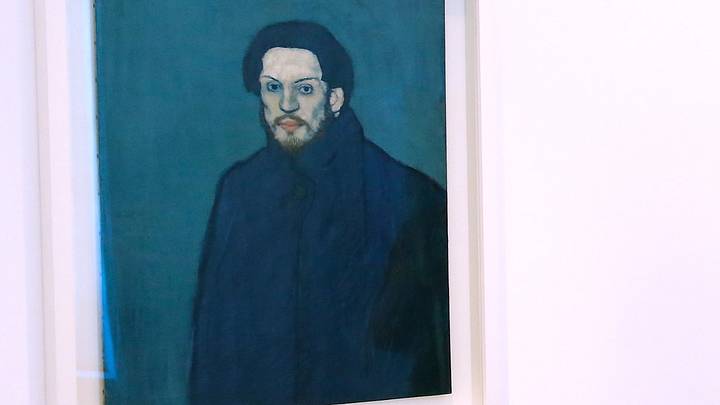
Picasso had been in Spain at the time of these events, and was shocked to the core at the death of Casagemas. It was this grief which led to the time later described as his Blue Period, as he mostly used shades of blue and other melancholy colors in his paintings over the next couple of years. He would later identify the death of Casagemas as the event which triggered this aesthetic change: "It was thinking about Casagemas that got me started painting in blue." Picasso would subsequently have an affair with Germaine himself while simultaneously reflecting on the death of Casagemas, and he would paint a number of portraits of the deceased artist during the Blue Period. He also painted his own self-portrait during this time, likewise in shades of blue.
By 1904, Picasso began to emerge from his time of melancholy and moved into what would become known as his "Rose Period" or "Pink Period," in which he transitioned to painting in warmer tones and pinker shades on his canvases. While he would eventually move on from his Blue Period, the legacy of those years of grief continues to be seen in the paintings inspired by the loss of his fellow artist, which can still be viewed today.