%20%20--%3E%0A%3Csvg%20version%3D%221.1%22%20id%3D%22Layer_1%22%20xmlns%3D%22http%3A%2F%2Fwww.w3.org%2F2000%2Fsvg%22%20xmlns%3Axlink%3D%22http%3A%2F%2Fwww.w3.org%2F1999%2Fxlink%22%20x%3D%220px%22%20y%3D%220px%22%0A%09%20viewBox%3D%220%200%20684.6%2068.1%22%20style%3D%22enable-background%3Anew%200%200%20684.6%2068.1%3B%22%20xml%3Aspace%3D%22preserve%22%3E%0A%3Cg%3E%0A%09%3Cpath%20d%3D%22M444.1%2C29.3h-17.4v14.5h17.4V29.3z%20M36.4%2C68.1l29.3-50.8V0H50.4L32.9%2C36.8L15.5%2C0H0v68.1h16.7V45.8l12.4%2C22.3H36.4z%0A%09%09%20M49.1%2C68.1h16.6V23.4L49.1%2C52.1V68.1z%20M76.6%2C68.1h45V53.8H93.3V41.6h21V27.1h-21V14.8h28.3V0.1h-45V68.1z%20M175.6%2C68.1h17.3v-68%0A%09%09h-16.5v40.3L150%2C0.1h-17.6v68h16.7V27.7L175.6%2C68.1z%20M235.8%2C14.8h15.4V0.1h-47.4v14.7H219v53.2h16.8V14.8z%20M290.3%2C45.9h-17.1%0A%09%09l7.5-15.6h2L290.3%2C45.9z%20M298.7%2C68.1h18l-32.2-68h-5.7l-32%2C68h18l3.3-7.1h27.1L298.7%2C68.1z%20M325.2%2C68.1h46.2V53.8h-29.6V0.1h-16.7%0A%09%09V68.1z%20M423.7%2C14.8h27.2V0.1H407v68h16.7V14.8z%20M462%2C68.1h46.2V53.8h-29.6V0.1H462V68.1z%20M564.8%2C34.1c0%2C10.7-7.2%2C19.2-18.5%2C19.2%0A%09%09c-11.4%2C0-18.5-8.5-18.5-19.2s7.1-19.2%2C18.5-19.2C557.6%2C14.9%2C564.8%2C23.4%2C564.8%2C34.1%20M580.6%2C34.1c0-19-14.2-34-34.3-34%0A%09%09c-20.2%2C0-34.3%2C15-34.3%2C34c0%2C19%2C14.1%2C34%2C34.3%2C34C566.4%2C68.1%2C580.6%2C53.1%2C580.6%2C34.1%20M604.8%2C20.5c0-4.1%2C3.3-6.2%2C6.7-6.2%0A%09%09c4.4%2C0%2C6.6%2C3%2C6.6%2C6.6h14.7C631.8%2C9.1%2C625.1%2C0.1%2C611%2C0.1c-12%2C0-21.7%2C9.3-21.7%2C20.6c0%2C10.9%2C5.9%2C15.9%2C16.7%2C19.8%0A%09%09c5.2%2C1.8%2C11.5%2C3.2%2C11.5%2C8c0%2C3.3-2.4%2C5.5-6.4%2C5.5c-3.6%2C0-6.6-3-6.6-6.7h-15.2c0%2C11.5%2C7.9%2C20.8%2C21.8%2C20.8c12%2C0%2C21.6-9.3%2C21.6-20.6%0A%09%09c0-10-5.3-16.4-16.7-19.8C610.6%2C26.1%2C604.8%2C25.3%2C604.8%2C20.5%20M670%2C20.9h14.7C683.8%2C9.1%2C677.1%2C0.1%2C663%2C0.1c-12%2C0-21.7%2C9.3-21.7%2C20.6%0A%09%09c0%2C10.9%2C5.9%2C15.9%2C16.7%2C19.8c5.2%2C1.8%2C11.5%2C3.2%2C11.5%2C8c0%2C3.3-2.4%2C5.5-6.4%2C5.5c-3.6%2C0-6.6-3-6.6-6.7h-15.2c0%2C11.5%2C7.9%2C20.8%2C21.8%2C20.8%0A%09%09c12%2C0%2C21.6-9.3%2C21.6-20.6c0-10-5.3-16.4-16.7-19.8c-5.4-1.6-11.3-2.4-11.3-7.2c0-4.1%2C3.3-6.2%2C6.7-6.2C667.7%2C14.4%2C670%2C17.3%2C670%2C20.9%0A%09%09%22%2F%3E%0A%3C%2Fg%3E%0A%3C%2Fsvg%3E%0A)

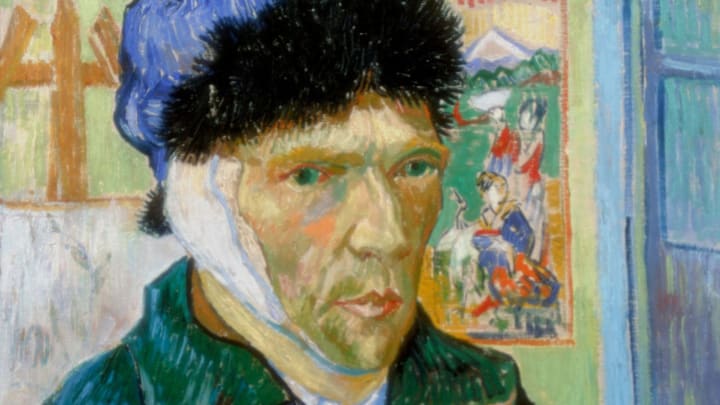
Vincent van Gogh, the creator of "The Starry Night" and the "Sunflowers" series, cut off his own ear in the 1880s.
The Dutch artist, originally from the Netherlands, produced roughly 900 paintings and 1100 drawings in the 10-year span leading up to his death in 1890. During those years, Van Gogh journeyed across Europe, creating an impressive array of artworks before settling in the south of France. There, escalating conflict with a fellow artist came to a head in the infamous incident where he lost his ear.
Let's trace Van Gogh's journey and shed light on the very night he cut off his own ear.
FROM TEACHER TO PREACHER TO PAINTER

Van Gogh was more than just an artist. He started out as a teacher, later worked as a preacher, and demonstrated skill as a writer in a series of letters to his brother Theo.
After several career paths failed to take off, Theo urged him to try painting. Embracing the suggestion, Van Gogh explored various media, starting with charcoal sketches, then moving on to vibrant paintings of peasants and countryside scenes. He took painting lessons and attended an art academy in Belgium, where he developed an appreciation for Japanese art, which would appear in some of his later portraits.
He lived with Theo in Paris in 1886. They occupied a space in Montmartre where Van Gogh explored Impressionism, specifically Pointillism (small dots forming a complete image). Two years later, the post-impressionist decided to leave Paris with everything he'd learned and apply it in the south of France, Arles, Bouches-du-Rhône, where he set out to meet other artists.
That brings us to 1888.
THE NIGHT HE LOST HIS EAR

Van Gogh was fond of fellow artist Paul Gauguin’s use of synthetism (a movement characterized by bold colors, strong outlines, and symbolism). They lived and worked together that year, and though they admired each other's art, their relationship was fraught with tension and dissimilar philosophies.
On December 23, 1888, Van Gogh and Gauguin got into an intense argument during which Van Gogh pursued Gauguin with a razor, which he ultimately used to sever his own left ear.
Although a clear diagnosis has never been established, it's said the painter was struggling with depression at the time and was potentially under the influence of Absinthe. After cutting off his ear, he wrapped it in gauze and allegedly presented it to a woman at a nearby brothel, much to her surprise. Van Gogh was taken to the hospital, and Gauguin departed their shared home in Arles. Afterward, Van Gogh stayed in the house, where he painted a self-portrait featuring his left ear in a bandage.
Not long after, he was admitted into the Saint-Paul-de-Mausole asylum in Saint-Rémy-de-Provence. Two months following his departure from the clinic in 1890, he took his life (aged 37) and was buried at the cemetery of Auvers-sur-Oise in France.
FAME AFTER DEATH

Like many artists, Van Gogh's work received widespread acclaim only after his death, with exhibitions in the early 1900s celebrating his paintings. Although Vincent and his brother Theo did not live to see his art achieve global recognition, their mother witnessed the remarkable rise in Van Gogh's popularity.
So, why did Van Gogh cut off his own ear? It's believed the incident occurred as a direct result of his deteriorating mental health, but aside from the bandaged self-portraits, Van Gogh reportedly avoided revisiting the memory of the incident, understandably.
If you or someone you know is experiencing mental health challenges, support is available. Reach out to the Suicide and Crisis Lifeline by calling 988 or visiting 988lifeline.org.