%20%20--%3E%0A%3Csvg%20version%3D%221.1%22%20id%3D%22Layer_1%22%20xmlns%3D%22http%3A%2F%2Fwww.w3.org%2F2000%2Fsvg%22%20xmlns%3Axlink%3D%22http%3A%2F%2Fwww.w3.org%2F1999%2Fxlink%22%20x%3D%220px%22%20y%3D%220px%22%0A%09%20viewBox%3D%220%200%20684.6%2068.1%22%20style%3D%22enable-background%3Anew%200%200%20684.6%2068.1%3B%22%20xml%3Aspace%3D%22preserve%22%3E%0A%3Cg%3E%0A%09%3Cpath%20d%3D%22M444.1%2C29.3h-17.4v14.5h17.4V29.3z%20M36.4%2C68.1l29.3-50.8V0H50.4L32.9%2C36.8L15.5%2C0H0v68.1h16.7V45.8l12.4%2C22.3H36.4z%0A%09%09%20M49.1%2C68.1h16.6V23.4L49.1%2C52.1V68.1z%20M76.6%2C68.1h45V53.8H93.3V41.6h21V27.1h-21V14.8h28.3V0.1h-45V68.1z%20M175.6%2C68.1h17.3v-68%0A%09%09h-16.5v40.3L150%2C0.1h-17.6v68h16.7V27.7L175.6%2C68.1z%20M235.8%2C14.8h15.4V0.1h-47.4v14.7H219v53.2h16.8V14.8z%20M290.3%2C45.9h-17.1%0A%09%09l7.5-15.6h2L290.3%2C45.9z%20M298.7%2C68.1h18l-32.2-68h-5.7l-32%2C68h18l3.3-7.1h27.1L298.7%2C68.1z%20M325.2%2C68.1h46.2V53.8h-29.6V0.1h-16.7%0A%09%09V68.1z%20M423.7%2C14.8h27.2V0.1H407v68h16.7V14.8z%20M462%2C68.1h46.2V53.8h-29.6V0.1H462V68.1z%20M564.8%2C34.1c0%2C10.7-7.2%2C19.2-18.5%2C19.2%0A%09%09c-11.4%2C0-18.5-8.5-18.5-19.2s7.1-19.2%2C18.5-19.2C557.6%2C14.9%2C564.8%2C23.4%2C564.8%2C34.1%20M580.6%2C34.1c0-19-14.2-34-34.3-34%0A%09%09c-20.2%2C0-34.3%2C15-34.3%2C34c0%2C19%2C14.1%2C34%2C34.3%2C34C566.4%2C68.1%2C580.6%2C53.1%2C580.6%2C34.1%20M604.8%2C20.5c0-4.1%2C3.3-6.2%2C6.7-6.2%0A%09%09c4.4%2C0%2C6.6%2C3%2C6.6%2C6.6h14.7C631.8%2C9.1%2C625.1%2C0.1%2C611%2C0.1c-12%2C0-21.7%2C9.3-21.7%2C20.6c0%2C10.9%2C5.9%2C15.9%2C16.7%2C19.8%0A%09%09c5.2%2C1.8%2C11.5%2C3.2%2C11.5%2C8c0%2C3.3-2.4%2C5.5-6.4%2C5.5c-3.6%2C0-6.6-3-6.6-6.7h-15.2c0%2C11.5%2C7.9%2C20.8%2C21.8%2C20.8c12%2C0%2C21.6-9.3%2C21.6-20.6%0A%09%09c0-10-5.3-16.4-16.7-19.8C610.6%2C26.1%2C604.8%2C25.3%2C604.8%2C20.5%20M670%2C20.9h14.7C683.8%2C9.1%2C677.1%2C0.1%2C663%2C0.1c-12%2C0-21.7%2C9.3-21.7%2C20.6%0A%09%09c0%2C10.9%2C5.9%2C15.9%2C16.7%2C19.8c5.2%2C1.8%2C11.5%2C3.2%2C11.5%2C8c0%2C3.3-2.4%2C5.5-6.4%2C5.5c-3.6%2C0-6.6-3-6.6-6.7h-15.2c0%2C11.5%2C7.9%2C20.8%2C21.8%2C20.8%0A%09%09c12%2C0%2C21.6-9.3%2C21.6-20.6c0-10-5.3-16.4-16.7-19.8c-5.4-1.6-11.3-2.4-11.3-7.2c0-4.1%2C3.3-6.2%2C6.7-6.2C667.7%2C14.4%2C670%2C17.3%2C670%2C20.9%0A%09%09%22%2F%3E%0A%3C%2Fg%3E%0A%3C%2Fsvg%3E%0A)

Agatha Christie is known the world over as a masterful weaver of gripping mysteries. As the best-selling novelist ever, she has guided countless readers through deftly woven tales of intrigue, murder, and justice.
Christie’s personal life was not entirely free from the type of challenges and misfortunes that plagued many of her characters. In 1926, she experienced a series of events that culminated in an 11-day disappearance, which remains widely misunderstood to this day.
Agatha Christie goes missing

On December 3, 1926, Christie kissed her seven-year-old daughter Rosalind goodnight and left home carrying nothing but a small suitcase. Her car was later found at the top of a cliff, empty. She would not be found for another 11 days.
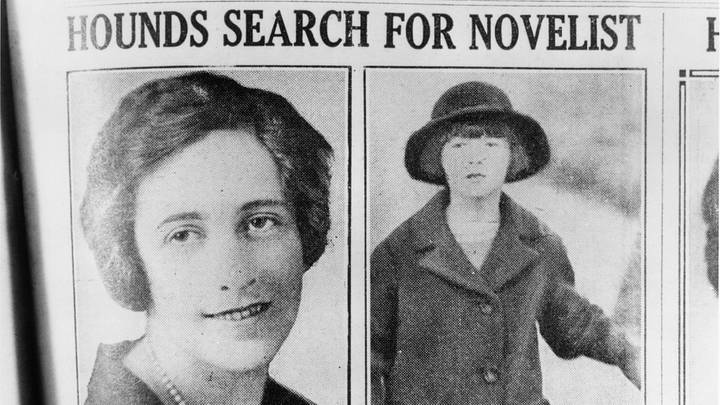
Her disappearance made headlines and sparked a massive manhunt for the 36-year-old author. Hundreds of police and thousands of volunteers fanned out across the English countryside in search of her, and public speculation ran rampant, with some people theorizing that she had been killed by her husband and others whispering that it was all a publicity stunt. (To this allegation, her publicist responded that Christie was “quite too much of a lady for that.”) Her absence even caught the attention of fellow mystery writer Sir Arthur Conan Doyle, who tasked a psychic with connecting with Christie using one of her gloves.
There were red herrings, too. Police claimed that Christie’s brother-in-law had given them a letter in which Christie claimed she was going to a Yorkshire spa to rest, but they were unconvinced by it. Finally, on December 15, 1926, Christie was discovered after being identified by guests at the Swan Hydropathic Hotel in Yorkshire. She had given the name “Mrs. Theresa Neele” upon checking in, a surname that belonged to her husband’s mistress.
When her husband came to the spa to meet her, Christie appeared not to recognize him. “She does not know who she is…she has suffered from the most complete loss of memory,” her husband told the press at the time.
What caused Christie’s disappearance?

Speculation as to what exactly happened during those 11 days has been ongoing for decades. However, according to the BBC historian Lucy Worsley, the real explanation behind what happened was likely a more somber one—a tale less fitting for headlines, but one that becomes comprehensible once you know the details of what Christie was going through at the time.
According to Worsley, struggles with mental illness were likely behind Christie’s 11-day absence. Worsley has said that the author likely entered a “fugue state,” a period of temporary amnesia in which a person does not recall their identity or the details of their life.
This was likely brought on by a number of severe life stressors. Christie’s mother died the same year as her disappearance. Not so long after, her husband, Archie Christie, told her he was having an affair with a much younger woman and that he wanted a divorce. She was also under intense pressure to produce a follow-up to The Murder of Roger Ackroyd. In the midst of all this, she began experiencing suicidal thoughts and other symptoms that, today, would be recognized as depression.
Christie publicly discussed the disappearance in detail just once, in a 1928 interview with the Daily Mail. “That night I felt terribly miserable. I felt that I could go on no longer,” she said. “I left home that night in a state of high nervous strain with the intention of doing something desperate…When I reached a point on the road which I thought was near the quarry, I turned the car off the road down the hill toward it. I left the wheel and let the car run. The car struck something with a jerk and pulled up suddenly. I was flung against the steering wheel, and my head hit something. Up to this moment I was Mrs. Christie.”
She then got out of the car, she continued, and began wandering around in a state of confusion. “I remember arriving at a big railway station,” she said, “and being surprised to learn it was Waterloo.” To avoid the pain of what was going on in her life, her mind seemed to fill in the gaps. “I had now become in my mind Mrs. Teresa Neele of South Africa,” she said. It was under this guise that she headed to a hotel in Harrogate.
Once there, according to eyewitnesses at the hotel, she participated in events, joined evening dances, purchased new clothes, and socialized with hotel guests. Soon enough, people there began connecting the dots. Christie’s face, after all, had been plastered on the front of The Daily Express.
An inconvenient story

Christie did not address the disappearance in her autobiography, though she did briefly reference a period of insomnia, forgetfulness, and sadness triggered by her husband’s infidelity and the collapse of her marriage, all of which led to a “nervous breakdown.”
“There is no need to dwell on it. I stood out for a year, hoping that he would change,” Christie wrote. “But he did not. So ended my first married life.”
She went on to marry the archaeologist Sir Max Mallowan, and published many more beloved books. Over the years, the tale of her disappearance has been retold many times. Often, the story has been portrayed as an enduring mystery. Armchair sleuths have often enthusiastically wondered if it was all done to promote her books, or even to frame her husband for murder.
Actually, it was her husband who seeded the publicity stunt myth in the first place—perhaps, Worsley theorizes, to get ahead of any stories about his infidelity. “My wife had discussed the possibility of disappearing at will,” he told a reporter at the time, “engineering a disappearance had been running through her mind, probably for the purpose of her work. Personally, I feel that is what happened.”
Per Worsley, the truth of Christie’s mental health struggles was largely brushed over in favor of an embellished and theatrical tale of mystery and intrigue. “The thing is, people didn't want to hear what she had to say because it was uncomfortable, it was difficult to hear; it was a story about mental illness,” she said.
Still, for better or for worse, this so-called “mystery” has become part of her legacy. “It may have been accidental, and deeply unpleasant,” Worsley concludes, “but it would also become a central plank of her massive success.”