%20%20--%3E%0A%3Csvg%20version%3D%221.1%22%20id%3D%22Layer_1%22%20xmlns%3D%22http%3A%2F%2Fwww.w3.org%2F2000%2Fsvg%22%20xmlns%3Axlink%3D%22http%3A%2F%2Fwww.w3.org%2F1999%2Fxlink%22%20x%3D%220px%22%20y%3D%220px%22%0A%09%20viewBox%3D%220%200%20684.6%2068.1%22%20style%3D%22enable-background%3Anew%200%200%20684.6%2068.1%3B%22%20xml%3Aspace%3D%22preserve%22%3E%0A%3Cg%3E%0A%09%3Cpath%20d%3D%22M444.1%2C29.3h-17.4v14.5h17.4V29.3z%20M36.4%2C68.1l29.3-50.8V0H50.4L32.9%2C36.8L15.5%2C0H0v68.1h16.7V45.8l12.4%2C22.3H36.4z%0A%09%09%20M49.1%2C68.1h16.6V23.4L49.1%2C52.1V68.1z%20M76.6%2C68.1h45V53.8H93.3V41.6h21V27.1h-21V14.8h28.3V0.1h-45V68.1z%20M175.6%2C68.1h17.3v-68%0A%09%09h-16.5v40.3L150%2C0.1h-17.6v68h16.7V27.7L175.6%2C68.1z%20M235.8%2C14.8h15.4V0.1h-47.4v14.7H219v53.2h16.8V14.8z%20M290.3%2C45.9h-17.1%0A%09%09l7.5-15.6h2L290.3%2C45.9z%20M298.7%2C68.1h18l-32.2-68h-5.7l-32%2C68h18l3.3-7.1h27.1L298.7%2C68.1z%20M325.2%2C68.1h46.2V53.8h-29.6V0.1h-16.7%0A%09%09V68.1z%20M423.7%2C14.8h27.2V0.1H407v68h16.7V14.8z%20M462%2C68.1h46.2V53.8h-29.6V0.1H462V68.1z%20M564.8%2C34.1c0%2C10.7-7.2%2C19.2-18.5%2C19.2%0A%09%09c-11.4%2C0-18.5-8.5-18.5-19.2s7.1-19.2%2C18.5-19.2C557.6%2C14.9%2C564.8%2C23.4%2C564.8%2C34.1%20M580.6%2C34.1c0-19-14.2-34-34.3-34%0A%09%09c-20.2%2C0-34.3%2C15-34.3%2C34c0%2C19%2C14.1%2C34%2C34.3%2C34C566.4%2C68.1%2C580.6%2C53.1%2C580.6%2C34.1%20M604.8%2C20.5c0-4.1%2C3.3-6.2%2C6.7-6.2%0A%09%09c4.4%2C0%2C6.6%2C3%2C6.6%2C6.6h14.7C631.8%2C9.1%2C625.1%2C0.1%2C611%2C0.1c-12%2C0-21.7%2C9.3-21.7%2C20.6c0%2C10.9%2C5.9%2C15.9%2C16.7%2C19.8%0A%09%09c5.2%2C1.8%2C11.5%2C3.2%2C11.5%2C8c0%2C3.3-2.4%2C5.5-6.4%2C5.5c-3.6%2C0-6.6-3-6.6-6.7h-15.2c0%2C11.5%2C7.9%2C20.8%2C21.8%2C20.8c12%2C0%2C21.6-9.3%2C21.6-20.6%0A%09%09c0-10-5.3-16.4-16.7-19.8C610.6%2C26.1%2C604.8%2C25.3%2C604.8%2C20.5%20M670%2C20.9h14.7C683.8%2C9.1%2C677.1%2C0.1%2C663%2C0.1c-12%2C0-21.7%2C9.3-21.7%2C20.6%0A%09%09c0%2C10.9%2C5.9%2C15.9%2C16.7%2C19.8c5.2%2C1.8%2C11.5%2C3.2%2C11.5%2C8c0%2C3.3-2.4%2C5.5-6.4%2C5.5c-3.6%2C0-6.6-3-6.6-6.7h-15.2c0%2C11.5%2C7.9%2C20.8%2C21.8%2C20.8%0A%09%09c12%2C0%2C21.6-9.3%2C21.6-20.6c0-10-5.3-16.4-16.7-19.8c-5.4-1.6-11.3-2.4-11.3-7.2c0-4.1%2C3.3-6.2%2C6.7-6.2C667.7%2C14.4%2C670%2C17.3%2C670%2C20.9%0A%09%09%22%2F%3E%0A%3C%2Fg%3E%0A%3C%2Fsvg%3E%0A)

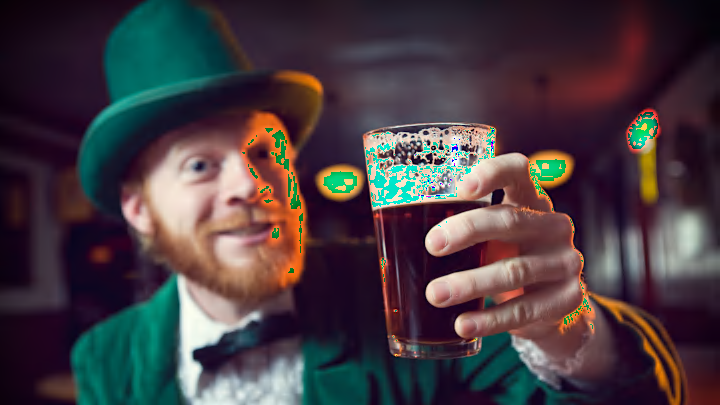
St. Patrick's Day, celebrated each year on March 17, is synonymous with parades, green clothing, shamrocks, and a pot full of Irish traditions at the end of the rainbow. Over the years, the holiday has expanded beyond its origins, becoming a worldwide celebration of Irish culture and heritage.
Along the way, stories, symbols, and customs associated with St. Patrick's Day have been repeated so often that people just assume these hallmarks are historically accurate. In reality, some of the most widely known "facts" about St. Patrick's Day are actually misunderstandings, exaggerations, or legends that developed over centuries.
Let's clear up five of the most common St. Patrick's Day myths and uncover the real stories behind them.
- ST. PATRICK WAS IRISH
- GREEN HAS ALWAYS BEEN ASSOCIATED WITH ST. PATRICKS DAY
- THE FIRST ST. PATRICKS DAY FESTIVITIES WERE HELD IN IRELAND
- ST. PATRICK BANISHED SNAKES FROM IRELAND
- ST. PATRICK WAS THE FIRST CHRISTIAN MISSIONARY IN IRELAND
ST. PATRICK WAS IRISH

St. Patrick was not born in Ireland. While interpretations vary, it's believed he was actually born in England, Scotland, or Wales. Born around A.D. 390 to a Christian deacon, St. Patrick was captured by Irish raiders at age 16 and taken to Ireland as a slave. He returned to England after being freed and later traveled back to Ireland as a missionary. Historical records suggest that St. Patrick may have been British or Italian, but his exact heritage remains unknown.
Many believe St. Patrick was British due to his supposed birthplace. During that era, the British Isles, where he is thought to have spent his youth, were under Roman rule. Others suggest he may have been Italian, as the two surviving documents attributed to him were written in Latin.
Fun Fact: A handful of accounts suggest that St. Patrick's real name was Maewyn Succat.
GREEN HAS ALWAYS BEEN ASSOCIATED WITH ST. PATRICKS DAY

We often associate St. Patrick's Day and Ireland itself with the color green, thanks to the holiday's traditions and the country's lush landscape. However, the first colors used to symbolize Ireland were actually blue and gold. Ireland's most ancient emblem is a golden harp on a blue background. This symbol, linked to Irish identity and sovereignty, predates the widespread use of green as a national color.
So, where did we get green? According to History, in the 17th century, Irish independence supporters adopted the color green as a symbol of rebellion against the English blue. Over time, green beer, green rivers, and green clothing all became representative of St. Patrick's Day festivities.
Fun fact: The harp remains on the Guinness logo, a popular Irish-born dry stout.
THE FIRST ST. PATRICKS DAY FESTIVITIES WERE HELD IN IRELAND

Did you know that the first St. Patrick's Day festivities actually took place in the United States? It's true!
Originally established as a Roman Catholic feast day in Ireland during the 1600s, St. Patrick's Day made its way to the United States with waves of Irish immigrants and gradually transformed into the lively celebration we are familiar with today. Traditions such as green beer, Irish music, and festive parades are now staples of the holiday, enjoyed by people of all backgrounds across the country.
Fun Fact: The first St. Patrick's Day parade was actually held in St. Augustine, Florida, in 1601, a tradition that moved to Boston and New York City in the 1700s.
ST. PATRICK BANISHED SNAKES FROM IRELAND

It is commonly believed that there are no snakes in Ireland because St. Patrick himself dispelled them from the Emerald Isle. So the myth goes, St. Patrick stood on top of Croagh Patrick (The Reek) and gave a sermon that banished every species of snake from Ireland, sending them all into the sea, never to return. Although this makes for an interesting legend, there is no historical evidence to support it. In reality, Ireland’s cold climate and isolated geography are the real reasons snakes never inhabited the region.
Thousands of Christians still gather in County Mayo and climb Croagh Patrick every year on the last Sunday of July in honor of St. Patrick.
Fun fact: Traditionally, the ascent to the summit of Croagh Patrick was made at midnight by candlelight, with pilgrims climbing barefoot.
ST. PATRICK WAS THE FIRST CHRISTIAN MISSIONARY IN IRELAND

While St. Patrick is known globally as the patron saint of Ireland, he wasn't the first to bring Christianity to the country. Before St. Patrick began his mission, Pope Celestine appointed a bishop named Palladius to bring Christianity to the Irish people in A.D. 431. Some historians have proposed a theory that St. Patrick may have been two individuals: Palladius and his son, both of whom, according to legend, first arrived in Ireland as slaves. This alternative perspective adds another layer of complexity to the history of early Irish Christianity.