%20%20--%3E%0A%3Csvg%20version%3D%221.1%22%20id%3D%22Layer_1%22%20xmlns%3D%22http%3A%2F%2Fwww.w3.org%2F2000%2Fsvg%22%20xmlns%3Axlink%3D%22http%3A%2F%2Fwww.w3.org%2F1999%2Fxlink%22%20x%3D%220px%22%20y%3D%220px%22%0A%09%20viewBox%3D%220%200%20684.6%2068.1%22%20style%3D%22enable-background%3Anew%200%200%20684.6%2068.1%3B%22%20xml%3Aspace%3D%22preserve%22%3E%0A%3Cg%3E%0A%09%3Cpath%20d%3D%22M444.1%2C29.3h-17.4v14.5h17.4V29.3z%20M36.4%2C68.1l29.3-50.8V0H50.4L32.9%2C36.8L15.5%2C0H0v68.1h16.7V45.8l12.4%2C22.3H36.4z%0A%09%09%20M49.1%2C68.1h16.6V23.4L49.1%2C52.1V68.1z%20M76.6%2C68.1h45V53.8H93.3V41.6h21V27.1h-21V14.8h28.3V0.1h-45V68.1z%20M175.6%2C68.1h17.3v-68%0A%09%09h-16.5v40.3L150%2C0.1h-17.6v68h16.7V27.7L175.6%2C68.1z%20M235.8%2C14.8h15.4V0.1h-47.4v14.7H219v53.2h16.8V14.8z%20M290.3%2C45.9h-17.1%0A%09%09l7.5-15.6h2L290.3%2C45.9z%20M298.7%2C68.1h18l-32.2-68h-5.7l-32%2C68h18l3.3-7.1h27.1L298.7%2C68.1z%20M325.2%2C68.1h46.2V53.8h-29.6V0.1h-16.7%0A%09%09V68.1z%20M423.7%2C14.8h27.2V0.1H407v68h16.7V14.8z%20M462%2C68.1h46.2V53.8h-29.6V0.1H462V68.1z%20M564.8%2C34.1c0%2C10.7-7.2%2C19.2-18.5%2C19.2%0A%09%09c-11.4%2C0-18.5-8.5-18.5-19.2s7.1-19.2%2C18.5-19.2C557.6%2C14.9%2C564.8%2C23.4%2C564.8%2C34.1%20M580.6%2C34.1c0-19-14.2-34-34.3-34%0A%09%09c-20.2%2C0-34.3%2C15-34.3%2C34c0%2C19%2C14.1%2C34%2C34.3%2C34C566.4%2C68.1%2C580.6%2C53.1%2C580.6%2C34.1%20M604.8%2C20.5c0-4.1%2C3.3-6.2%2C6.7-6.2%0A%09%09c4.4%2C0%2C6.6%2C3%2C6.6%2C6.6h14.7C631.8%2C9.1%2C625.1%2C0.1%2C611%2C0.1c-12%2C0-21.7%2C9.3-21.7%2C20.6c0%2C10.9%2C5.9%2C15.9%2C16.7%2C19.8%0A%09%09c5.2%2C1.8%2C11.5%2C3.2%2C11.5%2C8c0%2C3.3-2.4%2C5.5-6.4%2C5.5c-3.6%2C0-6.6-3-6.6-6.7h-15.2c0%2C11.5%2C7.9%2C20.8%2C21.8%2C20.8c12%2C0%2C21.6-9.3%2C21.6-20.6%0A%09%09c0-10-5.3-16.4-16.7-19.8C610.6%2C26.1%2C604.8%2C25.3%2C604.8%2C20.5%20M670%2C20.9h14.7C683.8%2C9.1%2C677.1%2C0.1%2C663%2C0.1c-12%2C0-21.7%2C9.3-21.7%2C20.6%0A%09%09c0%2C10.9%2C5.9%2C15.9%2C16.7%2C19.8c5.2%2C1.8%2C11.5%2C3.2%2C11.5%2C8c0%2C3.3-2.4%2C5.5-6.4%2C5.5c-3.6%2C0-6.6-3-6.6-6.7h-15.2c0%2C11.5%2C7.9%2C20.8%2C21.8%2C20.8%0A%09%09c12%2C0%2C21.6-9.3%2C21.6-20.6c0-10-5.3-16.4-16.7-19.8c-5.4-1.6-11.3-2.4-11.3-7.2c0-4.1%2C3.3-6.2%2C6.7-6.2C667.7%2C14.4%2C670%2C17.3%2C670%2C20.9%0A%09%09%22%2F%3E%0A%3C%2Fg%3E%0A%3C%2Fsvg%3E%0A)

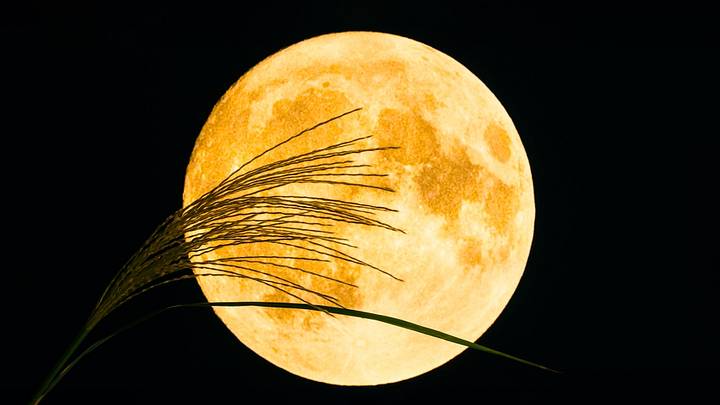
The Harvest Moon lights up the skies on September 26, 2026, reaching its peak shortly after midnight. The name "Harvest Moon" specifically refers to the full moon that occurs closest to the equinox. This particular moon is known by different names in cultures around the world, but is widely honored as a symbol of completion, gratitude, and transition.
Why is this moon called the Harvest Moon?

Traditionally, the Harvest Moon has long coincided with the year’s final harvest in the Northern Hemisphere. This moon is often especially bright for multiple days, and farmers would often use its bright evening light to gather the last of the summer’s crops, which gives the moon its name.
The autumn equinox was traditionally a time when the summer’s last crops were harvested, preparations began for the colder months, and people gathered together to celebrate summer’s bounty.
Other names for September’s full moon

The name “Harvest Moon” refers to the full moon closest to the autumn equinox, which usually occurs in September, though sometimes it falls in October.
In some Native American cultures, the September full moon is traditionally called the Corn Moon. Other Indigenous names that touch on the moon’s connection to the harvest include the Western Abenaki name Corn Maker Moon and the Dakota’s Corn Harvest Moon. Another Dakota name for this moon is the Moon When Rice Is Laid Up to Dry.
Many Indigenous names for this moon reference its association with the changing autumn leaves. The Cree call it the Autumn Moon. The Ojibwe call it the Falling Leaves Moon, and the Anishinaabe call it the Leaves Turning Moon, the Lakota call it the Moon of Brown Leaves, and the Assiniboine call it the Yellow Leaf Moon.
Other names for this moon include the Barley Moon, an Old English name linked to the harvest in Britain; the Wine Moon, a European moniker that references the beginning of the grape harvest in France and Italy; and the Singing Moon, a Celtic name that references the fairs and celebrations that typically took place just before the weather became too cold for such festivities.
Spiritual meanings of the Harvest Moon

Many different cultures honor the Harvest Moon in various ways. In China and a number of other Asian countries, this moon is celebrated with the Mid-Autumn Festival, a festive occasion meant to call in an abundant harvest in the coming year. This tradition dates back to antiquity and is often celebrated by gathering together with loved ones, lighting lanterns that symbolize good fortune for all, and eating mooncakes.
Traditional bits of folklore surrounding this moon include the belief that a very bright moon forecasted dry weather and a calmer winter to come, and that a red or coppery moon indicated that a stormy autumn was coming. Another folk belief is that lovers often met under this moon—which is why many harvest dances were scheduled to coincide with its rise.
In general, this moon is associated with the harvest, a time that is typically honored with gratitude, gathering, and celebration. Its meanings are also interwoven with those of the autumn equinox, a time that has long been connected to balance, harmony, and transition.
Full moons are often connected to gratitude, the completion of cycles, heightened emotion, and clarity. In modern New Age interpretations, the Harvest Moon’s bright light has been linked to greater illumination and heightened intuition and clarity, meaning that this moon’s rise may indicate that it is an auspicious time to get clear about your truth and to connect to your higher self. This moon’s rise may be a good time to listen more deeply to your true inner knowing rather than letting external expectations and pressures guide your path.
Additionally, the autumn equinox has long been seen as a time to honor the balance of light and dark that exists within all things, and to look inward as the nights grow longer. It is also seen as a time to honor one’s ancestors and to consider what has been cultivated and harvested throughout the year. What parts of your harvest do you want to keep in the winter, you might ask as this moon illuminates the skies, and what do you want to release before the frost creeps in?
How to celebrate the Harvest Moon

There is no one right way to honor this moon. You might choose to create a seasonal altar that pays tribute to your ancestors and the land around you. You might begin a daily gratitude practice. You might spend time in nature, enjoying the last balmy days of autumn before the frosty chill sets in. You might also spend some time under the moonlight.
This moon is also a good excuse to share some of the abundance that you have. You might give to a charity, donate your time, hold a dinner or gathering, or simply share appreciation for the people in your life. Whatever you do, be sure to give thanks for all you have and all that made it possible for you to harvest your current bounty, while honoring the interplay of light and dark that characterizes the season, the skies above, and all existence.