%20%20--%3E%0A%3Csvg%20version%3D%221.1%22%20id%3D%22Layer_1%22%20xmlns%3D%22http%3A%2F%2Fwww.w3.org%2F2000%2Fsvg%22%20xmlns%3Axlink%3D%22http%3A%2F%2Fwww.w3.org%2F1999%2Fxlink%22%20x%3D%220px%22%20y%3D%220px%22%0A%09%20viewBox%3D%220%200%20684.6%2068.1%22%20style%3D%22enable-background%3Anew%200%200%20684.6%2068.1%3B%22%20xml%3Aspace%3D%22preserve%22%3E%0A%3Cg%3E%0A%09%3Cpath%20d%3D%22M444.1%2C29.3h-17.4v14.5h17.4V29.3z%20M36.4%2C68.1l29.3-50.8V0H50.4L32.9%2C36.8L15.5%2C0H0v68.1h16.7V45.8l12.4%2C22.3H36.4z%0A%09%09%20M49.1%2C68.1h16.6V23.4L49.1%2C52.1V68.1z%20M76.6%2C68.1h45V53.8H93.3V41.6h21V27.1h-21V14.8h28.3V0.1h-45V68.1z%20M175.6%2C68.1h17.3v-68%0A%09%09h-16.5v40.3L150%2C0.1h-17.6v68h16.7V27.7L175.6%2C68.1z%20M235.8%2C14.8h15.4V0.1h-47.4v14.7H219v53.2h16.8V14.8z%20M290.3%2C45.9h-17.1%0A%09%09l7.5-15.6h2L290.3%2C45.9z%20M298.7%2C68.1h18l-32.2-68h-5.7l-32%2C68h18l3.3-7.1h27.1L298.7%2C68.1z%20M325.2%2C68.1h46.2V53.8h-29.6V0.1h-16.7%0A%09%09V68.1z%20M423.7%2C14.8h27.2V0.1H407v68h16.7V14.8z%20M462%2C68.1h46.2V53.8h-29.6V0.1H462V68.1z%20M564.8%2C34.1c0%2C10.7-7.2%2C19.2-18.5%2C19.2%0A%09%09c-11.4%2C0-18.5-8.5-18.5-19.2s7.1-19.2%2C18.5-19.2C557.6%2C14.9%2C564.8%2C23.4%2C564.8%2C34.1%20M580.6%2C34.1c0-19-14.2-34-34.3-34%0A%09%09c-20.2%2C0-34.3%2C15-34.3%2C34c0%2C19%2C14.1%2C34%2C34.3%2C34C566.4%2C68.1%2C580.6%2C53.1%2C580.6%2C34.1%20M604.8%2C20.5c0-4.1%2C3.3-6.2%2C6.7-6.2%0A%09%09c4.4%2C0%2C6.6%2C3%2C6.6%2C6.6h14.7C631.8%2C9.1%2C625.1%2C0.1%2C611%2C0.1c-12%2C0-21.7%2C9.3-21.7%2C20.6c0%2C10.9%2C5.9%2C15.9%2C16.7%2C19.8%0A%09%09c5.2%2C1.8%2C11.5%2C3.2%2C11.5%2C8c0%2C3.3-2.4%2C5.5-6.4%2C5.5c-3.6%2C0-6.6-3-6.6-6.7h-15.2c0%2C11.5%2C7.9%2C20.8%2C21.8%2C20.8c12%2C0%2C21.6-9.3%2C21.6-20.6%0A%09%09c0-10-5.3-16.4-16.7-19.8C610.6%2C26.1%2C604.8%2C25.3%2C604.8%2C20.5%20M670%2C20.9h14.7C683.8%2C9.1%2C677.1%2C0.1%2C663%2C0.1c-12%2C0-21.7%2C9.3-21.7%2C20.6%0A%09%09c0%2C10.9%2C5.9%2C15.9%2C16.7%2C19.8c5.2%2C1.8%2C11.5%2C3.2%2C11.5%2C8c0%2C3.3-2.4%2C5.5-6.4%2C5.5c-3.6%2C0-6.6-3-6.6-6.7h-15.2c0%2C11.5%2C7.9%2C20.8%2C21.8%2C20.8%0A%09%09c12%2C0%2C21.6-9.3%2C21.6-20.6c0-10-5.3-16.4-16.7-19.8c-5.4-1.6-11.3-2.4-11.3-7.2c0-4.1%2C3.3-6.2%2C6.7-6.2C667.7%2C14.4%2C670%2C17.3%2C670%2C20.9%0A%09%09%22%2F%3E%0A%3C%2Fg%3E%0A%3C%2Fsvg%3E%0A)

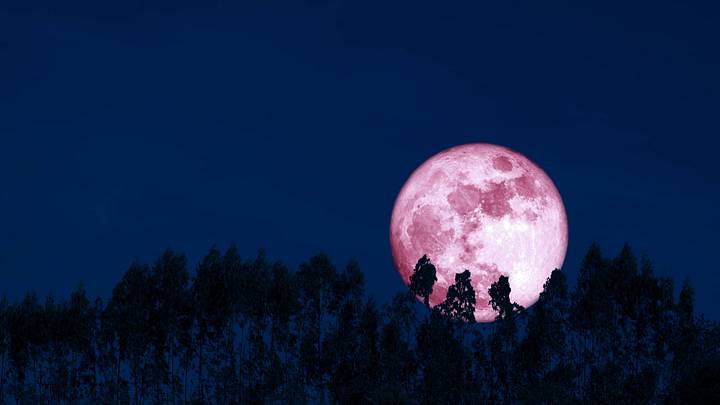
“Moons and Junes and Ferris wheels,” Joni Mitchell sings in the song “Both Sides Now” in a stanza about seeing the sweeter side of love. The full moon only lights up the June skies once, though, and when it does, it’s referred to as the Strawberry Moon.
2026’s Strawberry Moon swells to fullness on Monday, June 29, 2026, at 7:56 p.m. ET. Here’s what to know about its meaning and history.
How the Strawberry Moon Got Its Name

The name “Strawberry Moon” originated with Native American Algonquian tribes, as well as the Ojibwe, Dakota, and Lakota peoples of the United States. It references the fact that this moon usually coincides with the peak of the strawberry-growing season, when the berries are ripe and ready to be harvested.
Other Native American tribes have similarly evocative names for the moon. According to the Old Farmer's Almanac, the Haida call it Berries Ripen Moon. The Anishinaabe name Blooming Moon references the flowers that usually have unfurled into full glory at this time of year, and the Tlingit name Birth Moon refers to the fact that new animals are often born at this time in the Pacific Northwest.
The moon’s name does not, however, refer to any particular color. Instead, its popular moniker honors the abundance and sweetness that typically characterize this time of year.
The Spiritual Meaning of the Strawberry Moon

The Strawberry Moon is typically the full moon that occurs closest to the summer solstice, another occasion honored worldwide that is also often linked to abundance, prosperity, and gratitude.
While there may not be significant scientific evidence that full moons actually make people act strangely, it is true that people have ascribed a lot of meaning and sacredness to the moon since time immemorial.
In many forms of earth-based spirituality, full moons at any time of year are associated with release and culmination. They are said to mark times to reflect, to let go of the past, and to celebrate any intentions that have come to fruition over the past moon cycle. They are also sometimes thought to be connected to heightened emotions and enhanced intuition.
The Strawberry Moon is sometimes said to further enhance these themes. In some traditions, this full moon is said to be an ideal time for cultivating gratitude for all that you have and for celebrating life.
At this time of year in the Northern Hemisphere, nature is often at full bloom, making this a perfect time to give thanks. The Strawberry Moon is also said to be a good time for tapping into an energy of abundance and using that to reach for your goals, to start a new creative pursuit, or perhaps to open your heart to new romance and connection.
“The Strawberry Moon has to do with things coming into existence, or being illuminated,” astrologer Bella Popa told Parade in 2026. “It’s a time when people can see the fruits of their labor appear and they can gain deeper insight into how to achieve their goals.”
Popa also noted that this full moon marks a perfect moment for deep reflection on one’s past and future. “The Strawberry Moon is all about inviting people to reflect on how far they’ve come in their life and look forward to where they plan to go,” she added. “This is a time to focus on all of your long-term plans and serious commitments.”
This moon can also be a good time to connect to your body and to the Earth, writes Julie Peters for Spirituality & Health. “The summer season is a very embodied time, where we can be out in nature—observing the plants and animals, feeling the sun and the breeze on our skin. The fall and winter are more internal and reflective, and that is a time to focus more on the spiritual world in terms of past, future, and ancestral wisdom,” she writes. “The summer is a time to see spirit in the material world, in the present, in pleasure, in the body. Connecting to the body is a spiritual practice, and now is the time to enjoy it.”
Whether you’re an astrology devotee or not, everyone can appreciate the beauty of a full moon. A full moon at the height of summer, in particular, seems to be as good a reason to celebrate the majesty of the natural world and the joys of life as any.