%20%20--%3E%0A%3Csvg%20version%3D%221.1%22%20id%3D%22Layer_1%22%20xmlns%3D%22http%3A%2F%2Fwww.w3.org%2F2000%2Fsvg%22%20xmlns%3Axlink%3D%22http%3A%2F%2Fwww.w3.org%2F1999%2Fxlink%22%20x%3D%220px%22%20y%3D%220px%22%0A%09%20viewBox%3D%220%200%20684.6%2068.1%22%20style%3D%22enable-background%3Anew%200%200%20684.6%2068.1%3B%22%20xml%3Aspace%3D%22preserve%22%3E%0A%3Cg%3E%0A%09%3Cpath%20d%3D%22M444.1%2C29.3h-17.4v14.5h17.4V29.3z%20M36.4%2C68.1l29.3-50.8V0H50.4L32.9%2C36.8L15.5%2C0H0v68.1h16.7V45.8l12.4%2C22.3H36.4z%0A%09%09%20M49.1%2C68.1h16.6V23.4L49.1%2C52.1V68.1z%20M76.6%2C68.1h45V53.8H93.3V41.6h21V27.1h-21V14.8h28.3V0.1h-45V68.1z%20M175.6%2C68.1h17.3v-68%0A%09%09h-16.5v40.3L150%2C0.1h-17.6v68h16.7V27.7L175.6%2C68.1z%20M235.8%2C14.8h15.4V0.1h-47.4v14.7H219v53.2h16.8V14.8z%20M290.3%2C45.9h-17.1%0A%09%09l7.5-15.6h2L290.3%2C45.9z%20M298.7%2C68.1h18l-32.2-68h-5.7l-32%2C68h18l3.3-7.1h27.1L298.7%2C68.1z%20M325.2%2C68.1h46.2V53.8h-29.6V0.1h-16.7%0A%09%09V68.1z%20M423.7%2C14.8h27.2V0.1H407v68h16.7V14.8z%20M462%2C68.1h46.2V53.8h-29.6V0.1H462V68.1z%20M564.8%2C34.1c0%2C10.7-7.2%2C19.2-18.5%2C19.2%0A%09%09c-11.4%2C0-18.5-8.5-18.5-19.2s7.1-19.2%2C18.5-19.2C557.6%2C14.9%2C564.8%2C23.4%2C564.8%2C34.1%20M580.6%2C34.1c0-19-14.2-34-34.3-34%0A%09%09c-20.2%2C0-34.3%2C15-34.3%2C34c0%2C19%2C14.1%2C34%2C34.3%2C34C566.4%2C68.1%2C580.6%2C53.1%2C580.6%2C34.1%20M604.8%2C20.5c0-4.1%2C3.3-6.2%2C6.7-6.2%0A%09%09c4.4%2C0%2C6.6%2C3%2C6.6%2C6.6h14.7C631.8%2C9.1%2C625.1%2C0.1%2C611%2C0.1c-12%2C0-21.7%2C9.3-21.7%2C20.6c0%2C10.9%2C5.9%2C15.9%2C16.7%2C19.8%0A%09%09c5.2%2C1.8%2C11.5%2C3.2%2C11.5%2C8c0%2C3.3-2.4%2C5.5-6.4%2C5.5c-3.6%2C0-6.6-3-6.6-6.7h-15.2c0%2C11.5%2C7.9%2C20.8%2C21.8%2C20.8c12%2C0%2C21.6-9.3%2C21.6-20.6%0A%09%09c0-10-5.3-16.4-16.7-19.8C610.6%2C26.1%2C604.8%2C25.3%2C604.8%2C20.5%20M670%2C20.9h14.7C683.8%2C9.1%2C677.1%2C0.1%2C663%2C0.1c-12%2C0-21.7%2C9.3-21.7%2C20.6%0A%09%09c0%2C10.9%2C5.9%2C15.9%2C16.7%2C19.8c5.2%2C1.8%2C11.5%2C3.2%2C11.5%2C8c0%2C3.3-2.4%2C5.5-6.4%2C5.5c-3.6%2C0-6.6-3-6.6-6.7h-15.2c0%2C11.5%2C7.9%2C20.8%2C21.8%2C20.8%0A%09%09c12%2C0%2C21.6-9.3%2C21.6-20.6c0-10-5.3-16.4-16.7-19.8c-5.4-1.6-11.3-2.4-11.3-7.2c0-4.1%2C3.3-6.2%2C6.7-6.2C667.7%2C14.4%2C670%2C17.3%2C670%2C20.9%0A%09%09%22%2F%3E%0A%3C%2Fg%3E%0A%3C%2Fsvg%3E%0A)

A great museum is a portal, a place where you can step back in time and surround yourself with the work of some of humanity’s great masters and great achievements. There’s a reason museums are also must-see attractions in many of the world’s major cities, after all; they’re some of the best ways to truly immerse yourself in the history and culture of a place.
Museums are about a lot more than just what’s displayed in them. Their design, layout, and other factors can also significantly influence visitors’ experience, making a huge difference—and possibly helping to determine whether you find yourself exhausted at the end of the day, or being ushered out by a security guard after closing time as you try to catch a glimpse of just one more artifact.
Our planet is home to countless extraordinary museums, but some simply have a special X factor, something that makes them into unforgettable immersive experiences that can stay with you for a lifetime.
Read on to discover six museums that Mental Floss editors say you should visit at least once.
- The American Museum of Natural History, New York, NY
- Museo Frida Kahlo, Mexico City, Mexico
- The Metropolitan Museum of Art (The Met), New York, NY
- Musée de l'Orangerie, Paris, France
- Tenement Museum, New York, NY
The American Museum of Natural History, New York, NY
Written By: Eden Gordon

This museum was single-handedly responsible for inspiring me to want to become an evolutionary biologist as a very young child. Simply to wander through this museum is to be inspired to care more about the natural world and all of its creatures—and from halls filled with glittering gemstones to rows of well-preserved ancient skeletons, it can seem like the whole majesty of life on Earth is on display here.
No matter how old you are, this museum is worth a trip. It’s difficult to avoid feeling awe when gazing up at the life-sized blue whale in the oceans hall, or the gigantic dinosaur skeletons in the lobby, soaring almost as tall as the museum itself. Here, you might be reminded of how short human existence is against the scale of our planet’s history, or how extraordinary it is that we get to be here at all.
The museum contains a planetarium, a library, and a butterfly garden, as well as over 32 million specimens and artifacts that trace 4.5 billion years of Earth. It’s also located in a grand, gorgeous building that’s incredibly well-designed, and each exhibit and hall feels like a completely different dimension.
Museo Frida Kahlo, Mexico City, Mexico
Written By: Nitya Rao

Written By: Nitya Rao
Nestled along the quiet, cobblestone streets of Mexico City’s Coyoacán neighborhood stands a cobalt-drenched spectacle. From its electric blue exterior to the hand-painted orthopedic corsets inside, the structure is unmistakably the home of an artist—but it's also a world-renowned art museum. Instead of a towering marble facade and a great hall, you'll find green double doors that open onto a lush courtyard that served as Frida Kahlo's sanctuary throughout her turbulent, storied life.
Outside, the cacti, orange trees, and stepped pyramid crafted by her husband, muralist Diego Rivera, symbolize the cultural pillars that propped her up throughout her years of pain and persistence. Inside, Mexican folk art-covered walls guide you from room to room like a tangible translation of Kahlo's inner world.
Everything from the gallery displaying her final painting of watermelons, Viva la Vida, to the actual wooden canopy bed in which she dreamed and eventually died—complete with a mirror affixed to the ceiling that allowed her to paint her iconic self-portraits while bedridden—represents the unflinching fuel behind her iconic works. You can even stand in her light-filled studio, still stocked with her original paints, brushes, and adjustable easel.
Details like her and Rivera's names spelled out on the kitchen walls with clay teacups and the butterfly collection gifted by Noguchi that’s mounted under the canopy of her bed make it not just possible, but necessary to meander the halls of the house over and over. It’s the culmination of her creative soul in every corner of La Casa Azul—not just the art on the walls, which you can find plenty of in traditional museums—that makes it an absolute must-visit.
The Metropolitan Museum of Art (The Met), New York, NY
Written by: Logan DeLoye

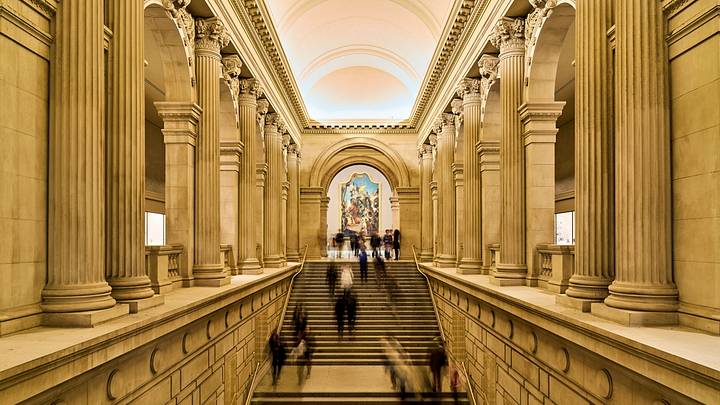
It sounds cliché, but the Metropolitan Museum of Art is more than just a museum; it’s a journey through time and cultures, renowned for its expansive collections spanning 5,000 years of history and its illustrious annual fashion event, where celebrities showcase creative looks as they ascend the iconic steps.
You could spend hours immersed in the museum’s many exhibits, home to more than 1.5 million objects. There’s always an artifact, tapestry, or statue drawing you around the next corner, pulling you deeper and deeper into the marvel that is The Met.
If climbing the legendary steps doesn’t make you feel like you’re in a painting, your first glimpse of the Great Hall surely will, leaving you absolutely awestruck and grateful to be even a small part of this institution's story.
From there, you’re free to wander through art from around the world, Greek and Roman statues, Egyptian treasures, garments, swords, rugs, ancient temples, and modern and contemporary pieces. Some exhibits are temporary, with closures listed on its website along with upcoming exhibitions.
Though The Met can feel like a maze at times, you cannot miss some of its most prized artworks: Washington Crossing the Delaware by Emanuel Leutze in the American Wing, Study of a Young Woman by Johannes Vermeer in the European Paintings Gallery, the Statuette of Amun in Gallery 125, and Perseus with the Head of Medusa in Gallery 541, to name only a few highlights. If we were to name each and every masterpiece, you’d be reading this all day!
Perhaps the best part of exploring The Met is that the experience is different for everyone who visits. You choose the exhibits, spend as much time as you like observing, maybe a few hours longer if it’s raining, and see something unique from your own perspective. Everyone you pass is viewing the same items, only through their own lens, making their time in the museum entirely independent from yours. Poetic, right?
When you’re ready for a break (for both your brain and your feet), you’ll find a variety of dining options, some with stunning views of Central Park and excellent coffee to recharge you before you set off to discover the next wing.
Whether you’re on a date, spending the day with family, or exploring solo, there are endless wonders to appreciate at this New York City gem. You just have to see it for yourself.
Musée de l'Orangerie, Paris, France
Written By: Eden Gordon

Visitors to Paris are spoiled for choice when it comes to museums. There’s the behemothic Louvre, which of course is home to the Mona Lisa, well as the Musée D’Orsay, which houses the world’s largest collection of Impressionistic paintings, and countless other options in the City of Love. But the Parisian museum that has affected me the most profoundly was certainly the Musée de l’Orangerie.
This museum is located in the idyllic Tuileries Garden, an opulent public garden created by Catherine de' Medici in the 1500s. The museum itself was originally built as a winter shelter for the garden’s orange trees, which gives it its name.
It feels appropriate that the museum is so entwined with nature, and that it once held trees through long winters, as it’s home to one of the most famous paintings of the natural world ever—Monet’s Water Lilies cycle. These are the museum’s crown jewels, and for good reason; they take up an entire room that was specifically designed to hold them.
Monet worked on these paintings for three decades and intended them to be a tribute to peace, and it’s easy to feel a sense of peace and harmony with the world when gazing at the deep blue-purple waters the artist painted so masterfully.
These paintings are far from the museum’s only gems, though. Works by Renoir, Matisse, and Picasso are also displayed here, among many other prominent pieces. Additionally, while the museum can get busy, it generally pales in comparison to the crowds that flock to the Louvre, and its small size makes it easier to avoid overwhelm. For a quintessentially Parisian experience, this would be the place.
Tenement Museum, New York, NY
Written By: Nitya Rao

Today, New York’s Lower East Side is roughly 50 blocks of trendy restaurants, bars, and boutiques with price tags almost as high as those on the pint-sized apartments above. But beneath the freshly paved asphalt are the ghosts of cobblestone streets, where immigrants from all walks of life labored to build new lives in the 19th century. Throughout the neighborhood, history isn't preserved behind glass cases. It lives in the faded crimson brick facades and the rusted fire escapes where local children once slept to beat the suffocating summer heat.
At the Tenement Museum, that history is locked inside the weathered walls of 97 and 103 Orchard Street—historic apartment buildings that housed an estimated 7,000 working-class tenants between 1863 and 1935. There are no grand exhibit halls here; instead, you step directly into the cramped, dimly lit rooms where real families cooked, worked, and dreamed.
The museum brings this history to life across several restored family homes, with each space operating as a distinct tour of a specific era. One route drops you into the 1860s inside Schneider’s Saloon, a German beer saloon that functioned as the neighborhood's living room. Another focuses on the 19th-century flat of the Moore family, exposing the tribulations of Irish immigrants at the time. You can even fast-forward to 1935 to see the Great Depression through the lens of the Italian Baldizzi family.
From the intricate crown moldings that eerily matched those of my own downtown apartment to the layers of peeling wallpaper, the space preserves the spirit of the city’s immigrant roots—a time defined by fleeing famine and finding a foothold in the burgeoning garment industry. Physical artifacts like a cast-iron stove, a shared hallway toilet, and a rusted spice tin in a tiny kitchen recreate the daily realities of that working-class struggle.
Navigating these narrow hallways makes the broad history of American immigration feel much closer to home than the history books might suggest.