%20%20--%3E%0A%3Csvg%20version%3D%221.1%22%20id%3D%22Layer_1%22%20xmlns%3D%22http%3A%2F%2Fwww.w3.org%2F2000%2Fsvg%22%20xmlns%3Axlink%3D%22http%3A%2F%2Fwww.w3.org%2F1999%2Fxlink%22%20x%3D%220px%22%20y%3D%220px%22%0A%09%20viewBox%3D%220%200%20684.6%2068.1%22%20style%3D%22enable-background%3Anew%200%200%20684.6%2068.1%3B%22%20xml%3Aspace%3D%22preserve%22%3E%0A%3Cg%3E%0A%09%3Cpath%20d%3D%22M444.1%2C29.3h-17.4v14.5h17.4V29.3z%20M36.4%2C68.1l29.3-50.8V0H50.4L32.9%2C36.8L15.5%2C0H0v68.1h16.7V45.8l12.4%2C22.3H36.4z%0A%09%09%20M49.1%2C68.1h16.6V23.4L49.1%2C52.1V68.1z%20M76.6%2C68.1h45V53.8H93.3V41.6h21V27.1h-21V14.8h28.3V0.1h-45V68.1z%20M175.6%2C68.1h17.3v-68%0A%09%09h-16.5v40.3L150%2C0.1h-17.6v68h16.7V27.7L175.6%2C68.1z%20M235.8%2C14.8h15.4V0.1h-47.4v14.7H219v53.2h16.8V14.8z%20M290.3%2C45.9h-17.1%0A%09%09l7.5-15.6h2L290.3%2C45.9z%20M298.7%2C68.1h18l-32.2-68h-5.7l-32%2C68h18l3.3-7.1h27.1L298.7%2C68.1z%20M325.2%2C68.1h46.2V53.8h-29.6V0.1h-16.7%0A%09%09V68.1z%20M423.7%2C14.8h27.2V0.1H407v68h16.7V14.8z%20M462%2C68.1h46.2V53.8h-29.6V0.1H462V68.1z%20M564.8%2C34.1c0%2C10.7-7.2%2C19.2-18.5%2C19.2%0A%09%09c-11.4%2C0-18.5-8.5-18.5-19.2s7.1-19.2%2C18.5-19.2C557.6%2C14.9%2C564.8%2C23.4%2C564.8%2C34.1%20M580.6%2C34.1c0-19-14.2-34-34.3-34%0A%09%09c-20.2%2C0-34.3%2C15-34.3%2C34c0%2C19%2C14.1%2C34%2C34.3%2C34C566.4%2C68.1%2C580.6%2C53.1%2C580.6%2C34.1%20M604.8%2C20.5c0-4.1%2C3.3-6.2%2C6.7-6.2%0A%09%09c4.4%2C0%2C6.6%2C3%2C6.6%2C6.6h14.7C631.8%2C9.1%2C625.1%2C0.1%2C611%2C0.1c-12%2C0-21.7%2C9.3-21.7%2C20.6c0%2C10.9%2C5.9%2C15.9%2C16.7%2C19.8%0A%09%09c5.2%2C1.8%2C11.5%2C3.2%2C11.5%2C8c0%2C3.3-2.4%2C5.5-6.4%2C5.5c-3.6%2C0-6.6-3-6.6-6.7h-15.2c0%2C11.5%2C7.9%2C20.8%2C21.8%2C20.8c12%2C0%2C21.6-9.3%2C21.6-20.6%0A%09%09c0-10-5.3-16.4-16.7-19.8C610.6%2C26.1%2C604.8%2C25.3%2C604.8%2C20.5%20M670%2C20.9h14.7C683.8%2C9.1%2C677.1%2C0.1%2C663%2C0.1c-12%2C0-21.7%2C9.3-21.7%2C20.6%0A%09%09c0%2C10.9%2C5.9%2C15.9%2C16.7%2C19.8c5.2%2C1.8%2C11.5%2C3.2%2C11.5%2C8c0%2C3.3-2.4%2C5.5-6.4%2C5.5c-3.6%2C0-6.6-3-6.6-6.7h-15.2c0%2C11.5%2C7.9%2C20.8%2C21.8%2C20.8%0A%09%09c12%2C0%2C21.6-9.3%2C21.6-20.6c0-10-5.3-16.4-16.7-19.8c-5.4-1.6-11.3-2.4-11.3-7.2c0-4.1%2C3.3-6.2%2C6.7-6.2C667.7%2C14.4%2C670%2C17.3%2C670%2C20.9%0A%09%09%22%2F%3E%0A%3C%2Fg%3E%0A%3C%2Fsvg%3E%0A)

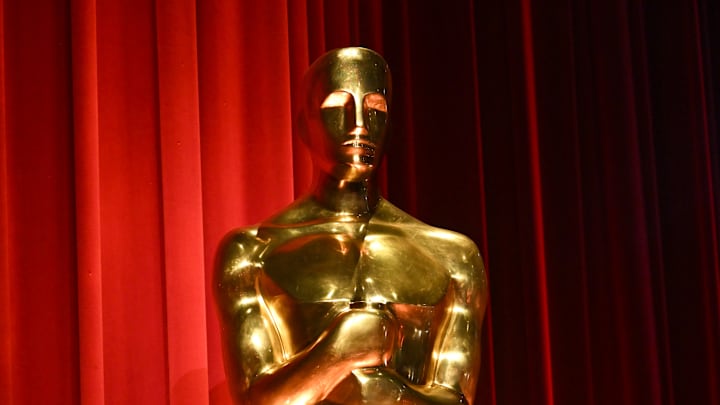
Every year since 1929, the Academy of Motion Picture Arts and Sciences has held the Academy Awards as an annual celebration of excellence in cinema. Informally known as “the Oscars,” which refers to the coveted golden statue given to winners, the Academy Awards have not been without controversy in their nearly century-long existence. Whether due to unscripted mid-ceremony pranks or the Academy’s hotly contested choice of winners, the Oscars are almost never without some kind of scandal.
Roman Polanski wins Best Director while a fugitive

Once hailed as one of the most visionary filmmakers in cinematic history, French director Roman Polanski went from one of the most beloved figures in Hollywood to an international fugitive in 1978 after fleeing sentencing on charges related to his alleged drugging and raping of a 13-year-old girl at the home of actor Jack Nicholson.
Though Polanski had negotiated a plea deal to reduce his six felony charges down to just one reduced charge, he was convinced the judge planned to hit him with a hefty prison sentence, so instead he fled to France where he’d be protected from U.S. extradition as a citizen.
Despite this and numerous additional accusations of sexual assault, Polanski has remained a revered fixture in European cinema for decades, continuing to work on major, internationally released projects like The Pianist in 2002. Despite Polanski’s sordid history, The Pianist was an enormous critical and commercial success, earning him the Academy Award for Best Director and star Adrien Brody the Oscar for Best Actor. (When Brody won Best Actor, he famously gave actress and presenter Halle Berry a passionate kiss onstage without consulting her beforehand).
Despite his continued status as a fugitive from the U.S. justice system, Polanski has received continued support from heavy hitters in Hollywood like Martin Scorsese, Wes Anderson, Tilda Swinton, and Woody Allen, all of whom signed a 2009 petition advocating for the director’s release from detention in Switzerland.
Hattie McDaniel’s bittersweet win for Best Supporting Actress

At the 12th annual Academy Awards, actress Hattie McDaniel took home the Oscar for Best Supporting Actress for her role as Mammy in the 1939 classic Gone with the Wind. This made her the first African American person ever to win an Academy Award, and this milestone has been cited as a landmark victory for the Black community’s fight for representation in Hollywood.
Despite this, McDaniel was subjected to vicious racial discrimination throughout her career, even after landing her career-defining role in Gone with the Wind. When Gone with the Wind premiered in Atlanta, McDaniel was forbidden from attending the premiere since it was held at a “whites-only” theater venue. Similarly, when McDaniel attended the Academy Awards as a nominee in 1940, she was made to sit in a segregated section during the ceremony and was denied entry to an afterparty she’d been invited to alongside her white co-stars.
Although many saw McDaniel’s win as a step forward for Black representation in Hollywood, some critics thought her performance played into regressive stereotypes and celebrated the Antebellum South.
The notorious La La Land debacle

During the 2017 Oscars, Hollywood legends Warren Beatty and Faye Dunaway were tasked with presenting the nominees for (and winner of) the night’s most coveted award: Best Picture. After Beatty announced director Damien Chazelle’s La La Land as the winner, the La La Land crew came to the stage to accept their award before the show’s producers realized Beatty had made a mistake.
After the La La Land cast and crew began making their acceptance speeches, producer Jordan Horowitz got on the mic to announce that there had been a mistake and that Moonlight, not La La Land, was the intended winner for Best Picture.
Following the ceremony, PricewaterhouseCoopers (PwC), the accounting firm tasked with overseeing the Academy’s voting each year, confirmed the mistake, stating that Beatty had been handed the incorrect envelope prior to taking the stage, resulting in the mix-up.
The 1974 streaker

On April 2, 1974, photographer Robert Opel was able to sneak into the 46th Academy Awards after posing as a member of the press. Once inside the ceremony, Opel waited until host David Niven was introducing Best Picture presenter Elizabeth Taylor before running across the stage, totally nude, flashing a peace sign.
Momentarily dumbfounded, Niven made a quip about Opel's “shortcomings” before moving on with the ceremony. Despite the interruption, Opel was neither arrested nor booted from the ceremony, and was even given his own meeting with the press pool after his stunt. Opel told journalists that he’d intended his stunt to be “educative,” and thought it would be an interesting way to launch a career.
Opel became something of an overnight celebrity, even making an appearance on The Mike Douglas Show alongside actress Bea Arthur shortly after the stunt. A former speechwriter for then-California gubernatorial candidate Ronald Reagan, Opel later joined the counterculture movement and worked as a photographer for the LGBTQ+ magazine The Advocate.
Tragically, Opel was murdered in San Francisco in 1979 after a pair of robbers stormed his gallery and shot him. In 2010, Opel’s nephew, Robert, released a documentary called Uncle Bob chronicling Opel’s life in activism and counterculture.
The slap

While presenting the nominees for Best Documentary Feature at the 94th annual Academy Awards, comedian Chris Rock cracked a joke about Jada Pinkett-Smith’s shaved head, infuriating her husband and that year’s winner for Best Actor, Will Smith. After pointing Pinkett-Smith out in the audience, Rock quipped, “G.I. Jane 2, can’t wait to see it,” a reference to Demi Moore’s buzz-cut sporting character, Jordan O’Neil, in the 1997 Ridley Scott film G.I. Jane. After cameras panned to Pinkett-Smith and her husband, Pinkett-Smith could be seen rolling her eyes while Smith chuckled along.
Despite Smith’s seemingly jocular initial reaction, he quickly stalked onto the stage and proceeded to slap Rock across the face. After slapping Rock, Smith returned to his seat, where he continued to shout at Rock, telling him not to mock his wife again. Though Smith would take home the Oscar for Best Actor later that evening, his win was largely overshadowed by the violent outburst earlier in the ceremony.
Sacheen Littlefeather accepts Marlon Brando’s Oscar for The Godfather

At the 45th annual Academy Awards in 1973, legendary actor Marlon Brando was chosen as the year's winner for Best Actor for his monumental performance in The Godfather. After actors Liv Ullmann and Roger Moore announced Brando as the winner, a young woman dressed in a buckskin dress and moccasins approached the stage in his stead.
After refusing to accept the award on Brando’s behalf, the woman introduced herself as Sacheen Littlefeather, a Native American woman of Apache and Yaqui descent who Brando had asked to refuse the award for him in light of Hollywood’s unfair treatment of Native Americans. After being ushered offstage, Littlefeather was taken to the pressroom, where she was inundated with questions by clamoring reporters. Despite an initial influx of career opportunities in Hollywood, Littlefeather later claimed she was quickly blacklisted from the industry for speaking out for Native Americans.
Although the Academy of Motion Picture Arts and Sciences refused to acknowledge Littlefeather’s activism for decades, they formally issued her an apology in 2022, just a few months before Littlefeather’s death.
Despite the Academy’s apology, Littlefeather’s legacy would be called into question after her death when two of her biological sisters, Rosalind Cruz and Trudy Orlandi, came forward with claims that Littlefeather had totally fabricated her Native American heritage. According to them, Littlefinger—who was born Marie or Maria Louise Cruz—adopted her Native American identity “Sacheen Littlefeather” in her early 20s when she first became involved in activism, despite allegedly being of Spanish-Mexican, not Native American, lineage.