%20%20--%3E%0A%3Csvg%20version%3D%221.1%22%20id%3D%22Layer_1%22%20xmlns%3D%22http%3A%2F%2Fwww.w3.org%2F2000%2Fsvg%22%20xmlns%3Axlink%3D%22http%3A%2F%2Fwww.w3.org%2F1999%2Fxlink%22%20x%3D%220px%22%20y%3D%220px%22%0A%09%20viewBox%3D%220%200%20684.6%2068.1%22%20style%3D%22enable-background%3Anew%200%200%20684.6%2068.1%3B%22%20xml%3Aspace%3D%22preserve%22%3E%0A%3Cg%3E%0A%09%3Cpath%20d%3D%22M444.1%2C29.3h-17.4v14.5h17.4V29.3z%20M36.4%2C68.1l29.3-50.8V0H50.4L32.9%2C36.8L15.5%2C0H0v68.1h16.7V45.8l12.4%2C22.3H36.4z%0A%09%09%20M49.1%2C68.1h16.6V23.4L49.1%2C52.1V68.1z%20M76.6%2C68.1h45V53.8H93.3V41.6h21V27.1h-21V14.8h28.3V0.1h-45V68.1z%20M175.6%2C68.1h17.3v-68%0A%09%09h-16.5v40.3L150%2C0.1h-17.6v68h16.7V27.7L175.6%2C68.1z%20M235.8%2C14.8h15.4V0.1h-47.4v14.7H219v53.2h16.8V14.8z%20M290.3%2C45.9h-17.1%0A%09%09l7.5-15.6h2L290.3%2C45.9z%20M298.7%2C68.1h18l-32.2-68h-5.7l-32%2C68h18l3.3-7.1h27.1L298.7%2C68.1z%20M325.2%2C68.1h46.2V53.8h-29.6V0.1h-16.7%0A%09%09V68.1z%20M423.7%2C14.8h27.2V0.1H407v68h16.7V14.8z%20M462%2C68.1h46.2V53.8h-29.6V0.1H462V68.1z%20M564.8%2C34.1c0%2C10.7-7.2%2C19.2-18.5%2C19.2%0A%09%09c-11.4%2C0-18.5-8.5-18.5-19.2s7.1-19.2%2C18.5-19.2C557.6%2C14.9%2C564.8%2C23.4%2C564.8%2C34.1%20M580.6%2C34.1c0-19-14.2-34-34.3-34%0A%09%09c-20.2%2C0-34.3%2C15-34.3%2C34c0%2C19%2C14.1%2C34%2C34.3%2C34C566.4%2C68.1%2C580.6%2C53.1%2C580.6%2C34.1%20M604.8%2C20.5c0-4.1%2C3.3-6.2%2C6.7-6.2%0A%09%09c4.4%2C0%2C6.6%2C3%2C6.6%2C6.6h14.7C631.8%2C9.1%2C625.1%2C0.1%2C611%2C0.1c-12%2C0-21.7%2C9.3-21.7%2C20.6c0%2C10.9%2C5.9%2C15.9%2C16.7%2C19.8%0A%09%09c5.2%2C1.8%2C11.5%2C3.2%2C11.5%2C8c0%2C3.3-2.4%2C5.5-6.4%2C5.5c-3.6%2C0-6.6-3-6.6-6.7h-15.2c0%2C11.5%2C7.9%2C20.8%2C21.8%2C20.8c12%2C0%2C21.6-9.3%2C21.6-20.6%0A%09%09c0-10-5.3-16.4-16.7-19.8C610.6%2C26.1%2C604.8%2C25.3%2C604.8%2C20.5%20M670%2C20.9h14.7C683.8%2C9.1%2C677.1%2C0.1%2C663%2C0.1c-12%2C0-21.7%2C9.3-21.7%2C20.6%0A%09%09c0%2C10.9%2C5.9%2C15.9%2C16.7%2C19.8c5.2%2C1.8%2C11.5%2C3.2%2C11.5%2C8c0%2C3.3-2.4%2C5.5-6.4%2C5.5c-3.6%2C0-6.6-3-6.6-6.7h-15.2c0%2C11.5%2C7.9%2C20.8%2C21.8%2C20.8%0A%09%09c12%2C0%2C21.6-9.3%2C21.6-20.6c0-10-5.3-16.4-16.7-19.8c-5.4-1.6-11.3-2.4-11.3-7.2c0-4.1%2C3.3-6.2%2C6.7-6.2C667.7%2C14.4%2C670%2C17.3%2C670%2C20.9%0A%09%09%22%2F%3E%0A%3C%2Fg%3E%0A%3C%2Fsvg%3E%0A)

If you were going to Disneyland this Christmas, what might you see? According to their website, there is going to be a Christmas Fantasy Parade, winter versions of the Haunted Mansion and Sleeping Beauty’s Castle, and festive versions of other Disney characters and attractions. All the usual foods and souvenirs will be available, along with special holiday-themed versions.
But that wasn’t what visitors could expect to see during Disneyland’s first year. It was a massive undertaking to get the park started, with financial road bumps making it hard to imagine that Disneyland could ever become the iconic vacation spot that it is today. With that in mind, their first holiday season was more low-key than it is today.
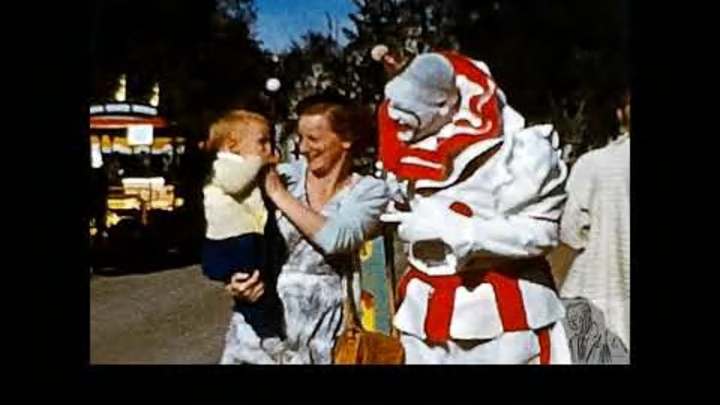
Thanks to archival footage, it’s possible to see glimpses of what Disney’s first theme park looked like in its inaugural year. Read on to learn more about Disneyland’s first year and its first holiday season.
Disneyland’s First Year

Disneyland opened on July 17, 1955, with a rather chaotic first day. Construction had been delayed so frequently that the asphalt hadn’t properly set by the time that guests arrived, and more than double the expected number of visitors attended, thanks to fraudulent tickets and people climbing over walls to gain entry. Despite the problems, however, guests were dazzled, along with the 90 million viewers watching the debut on television.
No obstacle could keep Disneyland from being a success, but the money invested in it would take time to be made back. The park cost approximately $17 million to launch (over $200 million by today’s standards), but even the most zealous guest could only spend $8.70 per visit that first year.
As the weather changed and children went back to school, admission numbers tanked, leaving the park’s operators to wonder if its popularity would return in the spring or if it was a one-hit wonder.
More Disney:
Add Mental Floss as a preferred news source!
In hindsight, we know the answer to that question. In fact, Disneyland admitted more guests in its first full year than popular national parks like Yellowstone and the Grand Canyon, but it would take time to be profitable. So, although Walt wanted the park to be constantly growing and changing, the more business-minded partners were intent on keeping him from going overboard too soon.
That fiscal context brings us to the first Disney holiday season, where Walt Disney’s dreams once again caused conflict with his business partners. There simply hadn’t been enough success yet to warrant a massive holiday spectacle.
Disneyland’s First Christmas

Disneyland itself didn’t do much for the holidays. There was a modestly decorated Christmas tree on Main Street USA and a few other trees and winter-themed decorations in other areas of the park. They also transformed the outdoor stage into the Disneyland Christmas Bowl, where local choral groups would sing Christmas carols on weekends.
While Disneyland Inc. was unwilling to commit to more substantial holiday fare, Walt Disney was certain that he could strike gold again with the Mickey Mouse Club Circus. The circus was his latest passion project, as he’d “been fascinated by the clowns and the animals, the music and the excitement ever since [he] worked in one of these wonderful shows for a few days as a youngster.”
Despite skepticism from his business partners, Walt Disney was determined to make his dream a reality. Disneyland’s general manager, C.V. Wood, refused to commit the money needed for the spectacle, so Walt Disney Productions rented part of Disneyland and underwrote the financials to get the Mickey Mouse Club Circus started.
The Mickey Mouse Club Circus opened on Thanksgiving Day, with a parade through Disneyland leading to the circus section of the park. But while the parade itself was enjoyable, the circus had several issues. A post that was holding the big top up was carried away (thankfully without collapsing the entire structure), the llamas escaped and ran around the park, and one of the trapeze artists lost her bra and was forced to finish her set topless.
Just like Disneyland’s own opening day, the circus debut was chaotic. But unlike the park as a whole, time was not the solution here. Despite including live animals, acrobats, and performers from the popular Mickey Mouse Club, few visitors were enthused by the idea, especially since it required an additional admission fee from the park itself.
The shows never fully sold out, despite special deals and giveaways for tickets. Since the whole affair had cost around $300,000, it was considered a massive financial failure. The circus closed down at the end of the holiday season and was not brought back in 1956.
While it would take some more trial and error, Disneyland and the other Disney parks eventually found the right mixture of holiday spirit and Disney magic to bring visitors year after year. Looking back through its history, Disneyland has had its share of failures, but it has also shown how persistence and experimentation can turn even the wildest ideas into successes.