%20%20--%3E%0A%3Csvg%20version%3D%221.1%22%20id%3D%22Layer_1%22%20xmlns%3D%22http%3A%2F%2Fwww.w3.org%2F2000%2Fsvg%22%20xmlns%3Axlink%3D%22http%3A%2F%2Fwww.w3.org%2F1999%2Fxlink%22%20x%3D%220px%22%20y%3D%220px%22%0A%09%20viewBox%3D%220%200%20684.6%2068.1%22%20style%3D%22enable-background%3Anew%200%200%20684.6%2068.1%3B%22%20xml%3Aspace%3D%22preserve%22%3E%0A%3Cg%3E%0A%09%3Cpath%20d%3D%22M444.1%2C29.3h-17.4v14.5h17.4V29.3z%20M36.4%2C68.1l29.3-50.8V0H50.4L32.9%2C36.8L15.5%2C0H0v68.1h16.7V45.8l12.4%2C22.3H36.4z%0A%09%09%20M49.1%2C68.1h16.6V23.4L49.1%2C52.1V68.1z%20M76.6%2C68.1h45V53.8H93.3V41.6h21V27.1h-21V14.8h28.3V0.1h-45V68.1z%20M175.6%2C68.1h17.3v-68%0A%09%09h-16.5v40.3L150%2C0.1h-17.6v68h16.7V27.7L175.6%2C68.1z%20M235.8%2C14.8h15.4V0.1h-47.4v14.7H219v53.2h16.8V14.8z%20M290.3%2C45.9h-17.1%0A%09%09l7.5-15.6h2L290.3%2C45.9z%20M298.7%2C68.1h18l-32.2-68h-5.7l-32%2C68h18l3.3-7.1h27.1L298.7%2C68.1z%20M325.2%2C68.1h46.2V53.8h-29.6V0.1h-16.7%0A%09%09V68.1z%20M423.7%2C14.8h27.2V0.1H407v68h16.7V14.8z%20M462%2C68.1h46.2V53.8h-29.6V0.1H462V68.1z%20M564.8%2C34.1c0%2C10.7-7.2%2C19.2-18.5%2C19.2%0A%09%09c-11.4%2C0-18.5-8.5-18.5-19.2s7.1-19.2%2C18.5-19.2C557.6%2C14.9%2C564.8%2C23.4%2C564.8%2C34.1%20M580.6%2C34.1c0-19-14.2-34-34.3-34%0A%09%09c-20.2%2C0-34.3%2C15-34.3%2C34c0%2C19%2C14.1%2C34%2C34.3%2C34C566.4%2C68.1%2C580.6%2C53.1%2C580.6%2C34.1%20M604.8%2C20.5c0-4.1%2C3.3-6.2%2C6.7-6.2%0A%09%09c4.4%2C0%2C6.6%2C3%2C6.6%2C6.6h14.7C631.8%2C9.1%2C625.1%2C0.1%2C611%2C0.1c-12%2C0-21.7%2C9.3-21.7%2C20.6c0%2C10.9%2C5.9%2C15.9%2C16.7%2C19.8%0A%09%09c5.2%2C1.8%2C11.5%2C3.2%2C11.5%2C8c0%2C3.3-2.4%2C5.5-6.4%2C5.5c-3.6%2C0-6.6-3-6.6-6.7h-15.2c0%2C11.5%2C7.9%2C20.8%2C21.8%2C20.8c12%2C0%2C21.6-9.3%2C21.6-20.6%0A%09%09c0-10-5.3-16.4-16.7-19.8C610.6%2C26.1%2C604.8%2C25.3%2C604.8%2C20.5%20M670%2C20.9h14.7C683.8%2C9.1%2C677.1%2C0.1%2C663%2C0.1c-12%2C0-21.7%2C9.3-21.7%2C20.6%0A%09%09c0%2C10.9%2C5.9%2C15.9%2C16.7%2C19.8c5.2%2C1.8%2C11.5%2C3.2%2C11.5%2C8c0%2C3.3-2.4%2C5.5-6.4%2C5.5c-3.6%2C0-6.6-3-6.6-6.7h-15.2c0%2C11.5%2C7.9%2C20.8%2C21.8%2C20.8%0A%09%09c12%2C0%2C21.6-9.3%2C21.6-20.6c0-10-5.3-16.4-16.7-19.8c-5.4-1.6-11.3-2.4-11.3-7.2c0-4.1%2C3.3-6.2%2C6.7-6.2C667.7%2C14.4%2C670%2C17.3%2C670%2C20.9%0A%09%09%22%2F%3E%0A%3C%2Fg%3E%0A%3C%2Fsvg%3E%0A)

For some artists, a great idea comes to mind every day, only to be set aside until they're ready to be developed. For others, it's the product of years of planning and a lot of failed attempts. But every once in a while, the right people in the right place can come up with an idea that changes the world. In Pixar's case, a group of four writers and animators went out to lunch and came back with the ideas that would keep the company going for decades.
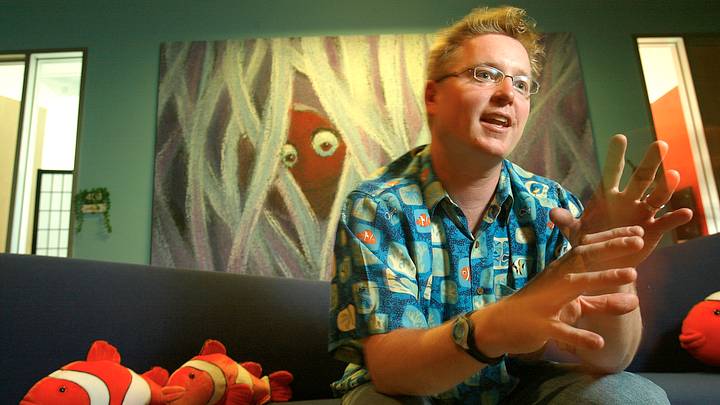
The story of this life-changing lunch meeting was told in a teaser trailer for the movie WALL-E, where filmmaker Andrew Stanton explained that he, John Lasseter, Pete Docter, and Joe Ranft got together in 1994 to brainstorm ideas for their next big project. During that meeting, they built the framework for their next film, A Bug's Life, and worked out pivotal details for three other projects.
Before they even knew if their first film would succeed, they were laying the foundation for the company's future.
Pixar's Uphill Battle

In order to understand just how important this meeting was, we need to take a brief look into the history of Pixar. The company began in 1975 as a division of Lucasfilm tasked with creating new computer graphics systems for movie production. They created a few short films throughout the 1980s to highlight new animation techniques, but feature-length productions were still beyond their capabilities.
Steve Jobs bought the company in 1986, transitioning it into an independent production studio. Rather than simply creating the technologies for other companies to use, Pixar began producing its own animated shorts and commercials. As they gained more experience with animated storytelling, they negotiated a deal with Disney to create the first fully computer-animated film: Toy Story.
The production of Toy Story was chaotic. For one thing, computer animation struggled to produce humans, since it relied on geometric shapes to function. This was fine when it came to the toys themselves, but it caused problems when it came to Andy's family and friends. Eventually, the animators decided to work around the problem by duplicating the artwork for the children at Andy's birthday party and keeping his mother off-screen whenever possible. As screenwriter Andrew Stanton told TIME, "It’s the ugliest picture we will ever make."
While the animation process came with a sharp learning curve, the storytelling process was a tug-of-war. Pixar had never created a full-length film before, so Disney tried to strong-arm them into doing things their way. The result was a preliminary version of the film that everybody hated.
While that could have marked the end of Pixar's film-making project, several of the company's best animators and storytellers decided to make a new version that rejected what Disney had told them to do. It was a huge risk, but it paid off when Disney executives agreed to continue with the project and give Pixar the space to create their own style.
The Legendary Meeting That Secured Pixar's Future

Once they realized that Toy Story was actually going to succeed, it was time for Pixar to look to the future. They were supposed to produce three films for Disney, which meant they would need to get started on the second project soon. Four members of the company's brain trust—Pete Docter, John Lasseter, Joe Ranft, and Andrew Stanton—went out for lunch at the Hidden City Café, where they sketched out four stories that would dominate Pixar's focus for the next ten years.
According to Stanton, "There was something special that happened when John, Joe, Pete and I would get in a room. Whether it was furthering an idea or coming up with something, we just brought out the best in each other. It was like a band."
Lasseter and Ranft brought their experiences working for Disney to each project, helping some of the younger members understand what worked in animation and what didn't. Docter and Stanton were more focused on the story side of things, developing exciting worlds and characters that other members of the team could develop further.
Over the course of the lunch meeting, the four men batted ideas back and forth. They had found it difficult to animate humans during Toy Story, so they considered what shapes would be easiest to work with. They knew that adolescent test audiences had resonated with the idea of their toys coming to life, so they thought about other concepts that would appeal to children. By the end of the meeting, they had developed four ideas to pitch as the company's next big hit.
This meeting became the stuff of legends when every single idea they worked on became a movie. It's rare to see one meeting have that massive of an impact on a company's trajectory, but Stanton explained that it came down to Pixar's storytelling philosophy:
A lot of studios talk about a 12-to-1 ratio — they come in with 12 ideas and one of them makes it. We pick one idea, good or bad, and we stick with it until it works.
Relying on improvisational strategies brought to the team by Ranft, the early Pixar team approached every idea as a good one, even if it wasn't where it needed to be yet. They would bounce the idea between them, allowing anyone from the company to contribute their thoughts, until the story came together. The fact that the company went on to win 23 Oscars, including Best Animated Feature for 11 out of 31 of their films, proved that their collaborative method worked.
A Bug's Life

The first film that the quartet began planning was A Bug's Life. They had learned the hard way in Toy Story that humans were difficult to animate, so they were looking for subjects that would be easier to work with. Lasseter suggested bugs, which can be constructed out of geometric shapes. Acknowledging that as a good starting point, the men spent most of the meeting expanding on it.
The story they settled on was based on the Aesop fable "The Ant and the Grasshopper," which featured an ant that worked all summer and a grasshopper that played and rested while the weather was nice. When winter came, the ant was well-equipped with food and shelter, but the grasshopper was left to starve.
While there's something satisfying about the grasshopper being punished for his laziness, Stanton and Ranft argued that it wasn't realistic. Since grasshoppers are bigger and stronger than ants, they believed that the grasshopper would simply steal the ant's food. That idea formed the foundation of their story, which the quartet built on with engaging character sketches and ideas for where the plot could go.
However, there were many changes made after that initial meeting. While the basic shapes of bugs might be simpler to animate than humans, their legs and wings caused a lot of complications. The intricate worlds of the movie were developed by animators laying in the grass and photographing the world as the bugs would see it. The film ended up being a massive undertaking, but its positive reception proved that Toy Story hadn't been a fluke.
Monsters, Inc.

The next movie that the Pixar brain trust discussed was Monsters, Inc. They believed that Toy Story's success came in part because it was based on real childhood beliefs. While the idea of living toys was mostly a horror concept at the time, it resonated with the children in their test audiences. Pete Docter suggested that they continue that trend by working on a story about the monsters that children think live in their closets or under their beds.
As a child, Docter said that he had been certain that monsters were lurking in his closet to try to scare him. When he brought it up to the group, someone asked what the monsters got out of scaring children. They decided that it was probably just a normal job in the monster world, which created the corporate environment in the final film. Going further, they added urgency to the situation by having the monsters' entire world be powered by the strength of the children's fear.
While these elements stayed central to the film, practically everything else changed. Early plot summaries described the main character as a clumsy monster named Johnson, who gets into trouble when the girl he's trying to scare ends up scaring him instead before following him back to the monster world. The character designs also changed drastically over time, with the studio eventually having to build entirely new technologies to animate Sully's hair.
Throughout all the changes, Pete Docter's original vision was still at the heart of the production. But as Andrew Stanton has repeatedly emphasized, a project that big never comes down to one man or one meeting. It required a massive number of artists and engineers working toward a common goal to become the animated classic we know today.
Finding Nemo

Stanton's biggest contribution to the conversation came through early concept work for Finding Nemo. From a design standpoint, fish were much easier to animate than humans or monsters. They also lent themselves well to bright colors, which would work well for a children's movie. Visits to Marine World and other aquatic parks helped guide him on which sea creatures were most easily translated to animation.
The basic story concept also came from Stanton. When he was a child, he had wondered if the fish in his dentist's tank wanted to go home. That memory prompted the idea of following a fish on its odyssey to return to the ocean. He expanded the idea by adding the fish's father, inspired by some of his own overprotective behaviors with his son.
From there, the production team worked on creating new techniques for depicting life underwater. Many of the animators actually got SCUBA-certified so that they could get a better understanding of how to create a fully aquatic environment. Scenes where the characters were between the water and the sky were even harder to create, as they had to showcase two completely different environments at once.
But their work clearly paid off, as Finding Nemo went on to win Pixar's first Academy Award for Best Animated Feature.
WALL-E

While most of the ideas discussed at the 1994 meeting were put into production fairly quickly, WALL-E kept getting delayed while the company worked on other projects. This might have been because the story concept was so underdeveloped in comparison to the others discussed that day. As Stanton put it, "All we had was a sad, lonely character, and that's where we just kind of left it."
The character WALL-E was inspired by the idea of humans forgetting to turn off a robot when they left the planet. How would the robot keep his battery charged? When would it realize that it no longer had to do what it was programmed for? It was an idea that stuck in Stanton's mind for years, but it couldn't be made into a movie until they created an actual plot for the robot.
The true production of WALL-E didn't begin until 2003, when Stanton re-pitched it to the Pixar executives. His successes on other films undoubtedly helped get the story approved, and it finally began getting the full art and story-building treatment that all the other ideas from that meeting did. It was a drastic departure from Pixar's previous films, with allusions to the silent film era, condemnations of consumerism and environmental neglect, and a visual and audio framework based on the golden age of science fiction.
Despite breaking so many established rules of animation, WALL-E worked. The original idea from 1994 was just as compelling to the audiences of 2008 as it was to Stanton at that first meeting, and the research and design work done by the production team brought it to life. It might have taken longer to come together than the other ideas pitched that day, but WALL-E wound up becoming one of Pixar's most beloved films.
Maybe there really was magic in the air when Docter, Lasseter, Ranft, and Stanton sat down for lunch all those years ago.