%20%20--%3E%0A%3Csvg%20version%3D%221.1%22%20id%3D%22Layer_1%22%20xmlns%3D%22http%3A%2F%2Fwww.w3.org%2F2000%2Fsvg%22%20xmlns%3Axlink%3D%22http%3A%2F%2Fwww.w3.org%2F1999%2Fxlink%22%20x%3D%220px%22%20y%3D%220px%22%0A%09%20viewBox%3D%220%200%20684.6%2068.1%22%20style%3D%22enable-background%3Anew%200%200%20684.6%2068.1%3B%22%20xml%3Aspace%3D%22preserve%22%3E%0A%3Cg%3E%0A%09%3Cpath%20d%3D%22M444.1%2C29.3h-17.4v14.5h17.4V29.3z%20M36.4%2C68.1l29.3-50.8V0H50.4L32.9%2C36.8L15.5%2C0H0v68.1h16.7V45.8l12.4%2C22.3H36.4z%0A%09%09%20M49.1%2C68.1h16.6V23.4L49.1%2C52.1V68.1z%20M76.6%2C68.1h45V53.8H93.3V41.6h21V27.1h-21V14.8h28.3V0.1h-45V68.1z%20M175.6%2C68.1h17.3v-68%0A%09%09h-16.5v40.3L150%2C0.1h-17.6v68h16.7V27.7L175.6%2C68.1z%20M235.8%2C14.8h15.4V0.1h-47.4v14.7H219v53.2h16.8V14.8z%20M290.3%2C45.9h-17.1%0A%09%09l7.5-15.6h2L290.3%2C45.9z%20M298.7%2C68.1h18l-32.2-68h-5.7l-32%2C68h18l3.3-7.1h27.1L298.7%2C68.1z%20M325.2%2C68.1h46.2V53.8h-29.6V0.1h-16.7%0A%09%09V68.1z%20M423.7%2C14.8h27.2V0.1H407v68h16.7V14.8z%20M462%2C68.1h46.2V53.8h-29.6V0.1H462V68.1z%20M564.8%2C34.1c0%2C10.7-7.2%2C19.2-18.5%2C19.2%0A%09%09c-11.4%2C0-18.5-8.5-18.5-19.2s7.1-19.2%2C18.5-19.2C557.6%2C14.9%2C564.8%2C23.4%2C564.8%2C34.1%20M580.6%2C34.1c0-19-14.2-34-34.3-34%0A%09%09c-20.2%2C0-34.3%2C15-34.3%2C34c0%2C19%2C14.1%2C34%2C34.3%2C34C566.4%2C68.1%2C580.6%2C53.1%2C580.6%2C34.1%20M604.8%2C20.5c0-4.1%2C3.3-6.2%2C6.7-6.2%0A%09%09c4.4%2C0%2C6.6%2C3%2C6.6%2C6.6h14.7C631.8%2C9.1%2C625.1%2C0.1%2C611%2C0.1c-12%2C0-21.7%2C9.3-21.7%2C20.6c0%2C10.9%2C5.9%2C15.9%2C16.7%2C19.8%0A%09%09c5.2%2C1.8%2C11.5%2C3.2%2C11.5%2C8c0%2C3.3-2.4%2C5.5-6.4%2C5.5c-3.6%2C0-6.6-3-6.6-6.7h-15.2c0%2C11.5%2C7.9%2C20.8%2C21.8%2C20.8c12%2C0%2C21.6-9.3%2C21.6-20.6%0A%09%09c0-10-5.3-16.4-16.7-19.8C610.6%2C26.1%2C604.8%2C25.3%2C604.8%2C20.5%20M670%2C20.9h14.7C683.8%2C9.1%2C677.1%2C0.1%2C663%2C0.1c-12%2C0-21.7%2C9.3-21.7%2C20.6%0A%09%09c0%2C10.9%2C5.9%2C15.9%2C16.7%2C19.8c5.2%2C1.8%2C11.5%2C3.2%2C11.5%2C8c0%2C3.3-2.4%2C5.5-6.4%2C5.5c-3.6%2C0-6.6-3-6.6-6.7h-15.2c0%2C11.5%2C7.9%2C20.8%2C21.8%2C20.8%0A%09%09c12%2C0%2C21.6-9.3%2C21.6-20.6c0-10-5.3-16.4-16.7-19.8c-5.4-1.6-11.3-2.4-11.3-7.2c0-4.1%2C3.3-6.2%2C6.7-6.2C667.7%2C14.4%2C670%2C17.3%2C670%2C20.9%0A%09%09%22%2F%3E%0A%3C%2Fg%3E%0A%3C%2Fsvg%3E%0A)

Some movies are practically synonymous with Stephen King books. Stanley Kubrick's 1980 adaptation of The Shining and Brian de Palma's 1976 take on Carrie, for example, are some of the more famous (and famously blood-soaked) adaptations of horror fiction of the 20th century, and are often mentioned with King’s name in the same breath.
Yet King has published well over 60 novels and novellas as well as hundreds of short stories over the years. Many of these have inspired movies and TV series—so many that it can be hard to remember that certain famous films were actually King adaptations.
Some of these titles are also less frequently connected back to King because they shirk his ordinary horror formula, opting for more emotional, character-driven narratives rather than scares. Others are simply more obscure to all but dedicated fans. Here are seven films you might not know were based on Stephen King’s work.
Stand By Me (1986)
Stand By Me is one of the most beloved coming-of-age films of the ‘80s. It stars Wil Wheaton, River Phoenix, Corey Feldman, and Jerry O'Connell as four young friends who set out to see the dead body of a boy who had previously gone missing. Their adventure takes them on a hazardous journey through the woods, and slowly, each of their own personal struggles at home come to light.
The film’s coming-of-age charm, large heart, and sweeping success have sometimes obscured the fact that the whole thing is based on a Stephen King novella called The Body, which was published in 1982 in the collection Different Seasons.
In an essay dedicated to the film’s late director, Rob Reiner, King shared that “The Body remains the only nakedly autobiographical story I’ve ever done. Those kids were my friends,” he wrote. “We never walked down a railroad track to see a dead body, but we got up to other stuff. The story was about my reality as I had lived it on the dirt roads of southern Maine.”
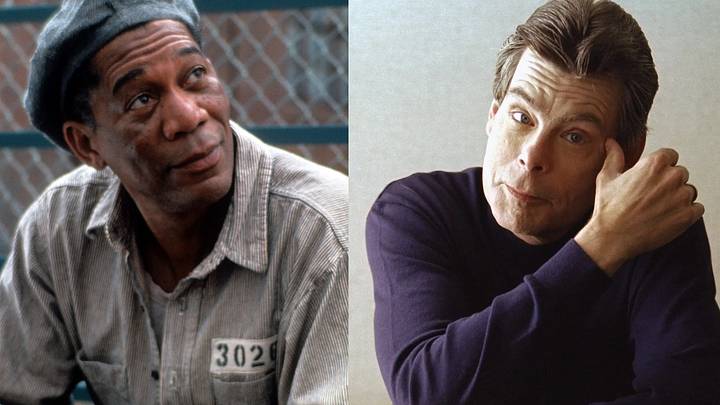
The Shawshank Redemption (1994)
Another classic film that completely deviates from King’s typical horror formula is The Shawshank Redemption, a tale of a banker sent to prison for a crime he denies committing. It follows him across two decades as he tries to plot his escape, befriends a fellow lifer, and attempts to improve life for himself and his fellow inmates.
The film is actually based on a novella called Rita Hayworth and Shawshank Redemption by King, which came out in the same 1982 collection as The Body. The movie is actually widely considered one of the most faithful adaptations of King’s work, staying extremely true to King’s story of redemption and hope.
Interestingly, the film’s decision to downplay King’s involvement was part of its marketing strategy. At the time, King was well-loved among horror fans but was widely looked down upon by literary circles and among more highbrow audiences, so the decision was made to gloss over King’s role as the creator of the source material.
Still, King has often praised the film adaptation over the years. In his book On Writing, King also recounted a funny story that shows just how surprised many people are when they discover he was the pen behind Shawshank. “I was in a supermarket down here in Florida, and I came around the corner, and there was a woman coming the other way. She pointed at me, she said, ‘I know who you are! You’re Stephen King! You write all of those horrible things. And that’s ok. That’s alright. But I like uplifting things, like that movie Shawshank Redemption,’” he recounted. “And I said, ‘I wrote that!’ And she said, ‘No you didn’t. No you didn’t!’”
Hearts in Atlantis (2001)
This film stars Anthony Hopkins as a man with psychic powers who befriends a boy who has lost his father. It is loosely based on King’s 1998 collection of three novellas and two short stories called Hearts in Atlantis, which share certain characters and are linked chronologically.
According to King, the work is semi-autobiographical. “Although it is difficult to believe, the sixties are not fictional; they actually happened,” he once said of it. The book explores childhood in the ‘60s and the subsequent decades, including Vietnam War trauma and the fallout of the decade’s idealism.
Apt Pupil (1998)
Apt Pupil follows a boy who learns that his neighbor was actually a Nazi war criminal. Instead of turning him in, the boy blackmails the Nazi by forcing him to tell him brutal stories about concentration camps, leading them both down a disturbing path.
Intriguingly, one theory holds that in The Shining, the book Jack Torrence is supposedly working on is called Apt Pupil. This is because in King's novel, Jack specifically mentions a character named Denker, which is the name of the Nazi in Apt Pupil. If true, this would give this story a whole other layer of madness.
Secret Window (2004)
Johnny Depp stars as a writer accused of plagiarism by a mysterious stranger in this film. Already going through a divorce, the writer becomes obsessed with proving he actually did write the short story in question, and strange things begin to happen. The film is based on the King novella Secret Window, Secret Garden, which was published in his 1990 collection Four Past Midnight.
The Running Man (1987)
An action-packed science fiction blockbuster starring Arnold Schwarzenegger may not be the first thing that comes to mind when you think of Stephen King adaptations, but that's what The Running Man became. This film was an extremely loose adaptation of King’s 1982 novel The Running Man, which he published under the pseudonym Richard Bachman.
Set in a dystopian, totalitarian United States of the future, both the book and movie tell a story of a violent game show where contestants, who are supposedly convicted criminals, are pursued by assassins. The film stars Schwarzenegger as a falsely accused police helicopter pilot who becomes a symbol of resistance.
The movie deviates from its source material on many levels. King’s book follows a desperate man who joins the game to try to pay for treatment for his sick daughter. King’s protagonist is an ordinary man looking to help his family, whereas Schwarzenegger’s protagonist is much more heroic and dedicated to taking down the government.
In the novel, the central game is also a month-long manhunt where the competitors can be turned in by anyone, while in the movie, the manhunt is condensed to an hours-long television broadcast. King’s novel is also more pessimistic and dark overall. The 2025 remake, meanwhile, starred Glen Powell and returned to King’s source material rather than drawing on the 1987 film.
Gerald’s Game (2017)
2017’s Gerald’s Game was horror director Mike Flanagan’s first King adaptation, and it felt like a natural fit. This story follows a woman whose husband dies while they are in the midst of a game that involved handcuffing her to the bed. Trapped without food or water, she begins to hallucinate, and eventually sees a deformed figure enter the house. Soon, she begins to remember long-suppressed memories of the past.
The film is a very faithful adaptation of King’s 1992 novel, which had long been considered “unfilmable” because much of it takes place in the protagonist’s head as she filters through her memories and imagines conversations. The film even includes the book’s complex and controversial ending.