%20%20--%3E%0A%3Csvg%20version%3D%221.1%22%20id%3D%22Layer_1%22%20xmlns%3D%22http%3A%2F%2Fwww.w3.org%2F2000%2Fsvg%22%20xmlns%3Axlink%3D%22http%3A%2F%2Fwww.w3.org%2F1999%2Fxlink%22%20x%3D%220px%22%20y%3D%220px%22%0A%09%20viewBox%3D%220%200%20684.6%2068.1%22%20style%3D%22enable-background%3Anew%200%200%20684.6%2068.1%3B%22%20xml%3Aspace%3D%22preserve%22%3E%0A%3Cg%3E%0A%09%3Cpath%20d%3D%22M444.1%2C29.3h-17.4v14.5h17.4V29.3z%20M36.4%2C68.1l29.3-50.8V0H50.4L32.9%2C36.8L15.5%2C0H0v68.1h16.7V45.8l12.4%2C22.3H36.4z%0A%09%09%20M49.1%2C68.1h16.6V23.4L49.1%2C52.1V68.1z%20M76.6%2C68.1h45V53.8H93.3V41.6h21V27.1h-21V14.8h28.3V0.1h-45V68.1z%20M175.6%2C68.1h17.3v-68%0A%09%09h-16.5v40.3L150%2C0.1h-17.6v68h16.7V27.7L175.6%2C68.1z%20M235.8%2C14.8h15.4V0.1h-47.4v14.7H219v53.2h16.8V14.8z%20M290.3%2C45.9h-17.1%0A%09%09l7.5-15.6h2L290.3%2C45.9z%20M298.7%2C68.1h18l-32.2-68h-5.7l-32%2C68h18l3.3-7.1h27.1L298.7%2C68.1z%20M325.2%2C68.1h46.2V53.8h-29.6V0.1h-16.7%0A%09%09V68.1z%20M423.7%2C14.8h27.2V0.1H407v68h16.7V14.8z%20M462%2C68.1h46.2V53.8h-29.6V0.1H462V68.1z%20M564.8%2C34.1c0%2C10.7-7.2%2C19.2-18.5%2C19.2%0A%09%09c-11.4%2C0-18.5-8.5-18.5-19.2s7.1-19.2%2C18.5-19.2C557.6%2C14.9%2C564.8%2C23.4%2C564.8%2C34.1%20M580.6%2C34.1c0-19-14.2-34-34.3-34%0A%09%09c-20.2%2C0-34.3%2C15-34.3%2C34c0%2C19%2C14.1%2C34%2C34.3%2C34C566.4%2C68.1%2C580.6%2C53.1%2C580.6%2C34.1%20M604.8%2C20.5c0-4.1%2C3.3-6.2%2C6.7-6.2%0A%09%09c4.4%2C0%2C6.6%2C3%2C6.6%2C6.6h14.7C631.8%2C9.1%2C625.1%2C0.1%2C611%2C0.1c-12%2C0-21.7%2C9.3-21.7%2C20.6c0%2C10.9%2C5.9%2C15.9%2C16.7%2C19.8%0A%09%09c5.2%2C1.8%2C11.5%2C3.2%2C11.5%2C8c0%2C3.3-2.4%2C5.5-6.4%2C5.5c-3.6%2C0-6.6-3-6.6-6.7h-15.2c0%2C11.5%2C7.9%2C20.8%2C21.8%2C20.8c12%2C0%2C21.6-9.3%2C21.6-20.6%0A%09%09c0-10-5.3-16.4-16.7-19.8C610.6%2C26.1%2C604.8%2C25.3%2C604.8%2C20.5%20M670%2C20.9h14.7C683.8%2C9.1%2C677.1%2C0.1%2C663%2C0.1c-12%2C0-21.7%2C9.3-21.7%2C20.6%0A%09%09c0%2C10.9%2C5.9%2C15.9%2C16.7%2C19.8c5.2%2C1.8%2C11.5%2C3.2%2C11.5%2C8c0%2C3.3-2.4%2C5.5-6.4%2C5.5c-3.6%2C0-6.6-3-6.6-6.7h-15.2c0%2C11.5%2C7.9%2C20.8%2C21.8%2C20.8%0A%09%09c12%2C0%2C21.6-9.3%2C21.6-20.6c0-10-5.3-16.4-16.7-19.8c-5.4-1.6-11.3-2.4-11.3-7.2c0-4.1%2C3.3-6.2%2C6.7-6.2C667.7%2C14.4%2C670%2C17.3%2C670%2C20.9%0A%09%09%22%2F%3E%0A%3C%2Fg%3E%0A%3C%2Fsvg%3E%0A)

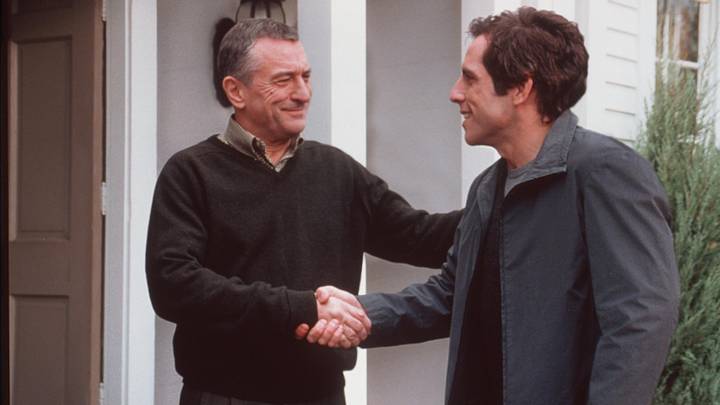
November 25 sees the release of Focker-In-Law, the newest film in the Meet the Parents franchise. The 2000 installment follows Ben Stiller and his fiancée, Teri Polo, as he meets her mother and father (played by Blythe Danner and Robert De Niro) for the first time, and the comedic chaos that follows.
However, this movie was not actually an original production: it was a remake of the 1992 indie film of the same title, directed by the filmmaker Greg Glienna. The original is also a much darker film than its more famous remake: as Variety put it, "Who ever heard of a comedy where everyone gets maimed, drowned, shot or commits suicide?... 'Meet the Parents' turns a visit with the in-laws into a living nightmare." Here's a look at the original film on which a long-running franchise was built (and which the distributor later tried to keep the public from seeing).
Inside the Indie That Inspired Meet the Parents
Like the later version of the story, the 1992 film explores the idea of what happens when a man meets his future in-laws, but in Glienna's version, it ventures into much more serious territory, with multiple characters being killed as the story unfolds. Unlike the expensive Hollywood remake, the original was shot on a budget of only $30,000, and in addition to directing, Glienna played the lead role and co-wrote the script with Mary Ruth Clark. The project was originally sold to National Lampoon to be released as part of their self-titled series of films, but the deal fell through, leaving its future uncertain at first.
However, it received some positive critical attention when it made its debut: Variety reviewed the film when it premiered at the 1992 Just for Laughs Comedy Festival in Montreal, and described it as a "wonderfully twisted dark comedy." Their review also gives a number of details about the little-seen movie's story, including their summary of the plot's framing device: "Presented almost entirely in flashback, the tale begins when a gas station attendant warns a client en route to meet the future in-laws to 'turn back' while he still can. What follows is the tragic story of a previous future groom who didn’t take the advice." The disasters which befall the characters include a saga in which "Greg blinds the mother with a fishing rod, ruins the family car, drowns the dog and accidentally climbs into bed with his fiancée's sister."
How a Tricky Contract Locked It Away

The original film was not widely distributed, but according to Glienna, one person who did see it was Steven Soderbergh, who liked it so much that he reached out to the writer-director about developing the original into a new version: "He called me and said this should be a big studio film – this is very commercial. And they flew my co-writer, Mary Ruth Clark and myself to New York to work with him for three days, and we worked on the script – his vision of it." Ultimately, Universal acquired the rights to the film with the intention to make a new version based on the same premise.
However, after Glienna sold the remake rights to Universal, it turned out there was a catch in his deal. In a 2024 interview, Glienna explained: "I got a lousy lawyer, and we signed a contract. I don't know why this wasn't explained to me, or I didn't comprehend it, but I could only release it after a certain amount of time in a not-for-profit situation. I don't know why I would have agreed to that. Now, anytime I've tried to get the rights to release the film, they say no. I don't know why they don't want me to release this film."
Glienna expressed his disappointment at the hurdle which had been placed in front of his original version. "We made this film to be seen. Why would they not let us show [it to] people? I don't understand." However, Glienna has attempted to look for the positives in the situation: "I try to look on the bright side. … I'm still getting residuals on something I did 30 years ago." Today, the original film occasionally emerges on YouTube, but it remains to be seen whether it will ever be officially cleared for re-release in the future.