%20%20--%3E%0A%3Csvg%20version%3D%221.1%22%20id%3D%22Layer_1%22%20xmlns%3D%22http%3A%2F%2Fwww.w3.org%2F2000%2Fsvg%22%20xmlns%3Axlink%3D%22http%3A%2F%2Fwww.w3.org%2F1999%2Fxlink%22%20x%3D%220px%22%20y%3D%220px%22%0A%09%20viewBox%3D%220%200%20684.6%2068.1%22%20style%3D%22enable-background%3Anew%200%200%20684.6%2068.1%3B%22%20xml%3Aspace%3D%22preserve%22%3E%0A%3Cg%3E%0A%09%3Cpath%20d%3D%22M444.1%2C29.3h-17.4v14.5h17.4V29.3z%20M36.4%2C68.1l29.3-50.8V0H50.4L32.9%2C36.8L15.5%2C0H0v68.1h16.7V45.8l12.4%2C22.3H36.4z%0A%09%09%20M49.1%2C68.1h16.6V23.4L49.1%2C52.1V68.1z%20M76.6%2C68.1h45V53.8H93.3V41.6h21V27.1h-21V14.8h28.3V0.1h-45V68.1z%20M175.6%2C68.1h17.3v-68%0A%09%09h-16.5v40.3L150%2C0.1h-17.6v68h16.7V27.7L175.6%2C68.1z%20M235.8%2C14.8h15.4V0.1h-47.4v14.7H219v53.2h16.8V14.8z%20M290.3%2C45.9h-17.1%0A%09%09l7.5-15.6h2L290.3%2C45.9z%20M298.7%2C68.1h18l-32.2-68h-5.7l-32%2C68h18l3.3-7.1h27.1L298.7%2C68.1z%20M325.2%2C68.1h46.2V53.8h-29.6V0.1h-16.7%0A%09%09V68.1z%20M423.7%2C14.8h27.2V0.1H407v68h16.7V14.8z%20M462%2C68.1h46.2V53.8h-29.6V0.1H462V68.1z%20M564.8%2C34.1c0%2C10.7-7.2%2C19.2-18.5%2C19.2%0A%09%09c-11.4%2C0-18.5-8.5-18.5-19.2s7.1-19.2%2C18.5-19.2C557.6%2C14.9%2C564.8%2C23.4%2C564.8%2C34.1%20M580.6%2C34.1c0-19-14.2-34-34.3-34%0A%09%09c-20.2%2C0-34.3%2C15-34.3%2C34c0%2C19%2C14.1%2C34%2C34.3%2C34C566.4%2C68.1%2C580.6%2C53.1%2C580.6%2C34.1%20M604.8%2C20.5c0-4.1%2C3.3-6.2%2C6.7-6.2%0A%09%09c4.4%2C0%2C6.6%2C3%2C6.6%2C6.6h14.7C631.8%2C9.1%2C625.1%2C0.1%2C611%2C0.1c-12%2C0-21.7%2C9.3-21.7%2C20.6c0%2C10.9%2C5.9%2C15.9%2C16.7%2C19.8%0A%09%09c5.2%2C1.8%2C11.5%2C3.2%2C11.5%2C8c0%2C3.3-2.4%2C5.5-6.4%2C5.5c-3.6%2C0-6.6-3-6.6-6.7h-15.2c0%2C11.5%2C7.9%2C20.8%2C21.8%2C20.8c12%2C0%2C21.6-9.3%2C21.6-20.6%0A%09%09c0-10-5.3-16.4-16.7-19.8C610.6%2C26.1%2C604.8%2C25.3%2C604.8%2C20.5%20M670%2C20.9h14.7C683.8%2C9.1%2C677.1%2C0.1%2C663%2C0.1c-12%2C0-21.7%2C9.3-21.7%2C20.6%0A%09%09c0%2C10.9%2C5.9%2C15.9%2C16.7%2C19.8c5.2%2C1.8%2C11.5%2C3.2%2C11.5%2C8c0%2C3.3-2.4%2C5.5-6.4%2C5.5c-3.6%2C0-6.6-3-6.6-6.7h-15.2c0%2C11.5%2C7.9%2C20.8%2C21.8%2C20.8%0A%09%09c12%2C0%2C21.6-9.3%2C21.6-20.6c0-10-5.3-16.4-16.7-19.8c-5.4-1.6-11.3-2.4-11.3-7.2c0-4.1%2C3.3-6.2%2C6.7-6.2C667.7%2C14.4%2C670%2C17.3%2C670%2C20.9%0A%09%09%22%2F%3E%0A%3C%2Fg%3E%0A%3C%2Fsvg%3E%0A)

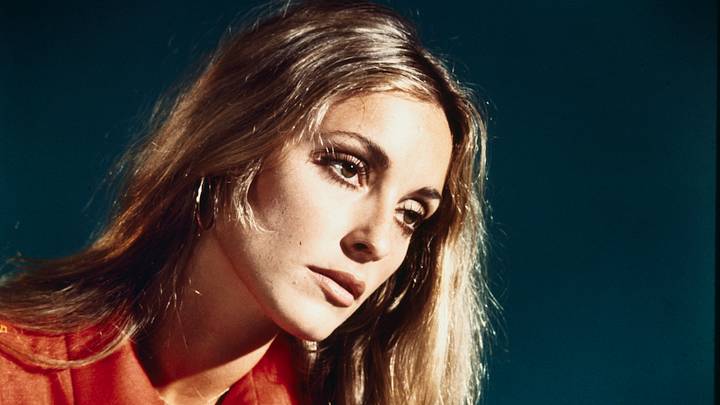
The Summer of Love was two years in the past, but by August 1969, Sharon Tate was enjoying her sweetest season yet. Newly married to director Roman Polanski and just two weeks away from welcoming her first child, the rising Hollywood star was living out a love story of her own.
But instead of getting her happy ending, Tate's life was cut short in a crime that shocked the country to its core. On August 8, the actress's final act was defined not by her fame or even fear, but by pure maternal instinct.
Sharon Tate's Story

Tate may have met her end in La La Land, but her journey started somewhere much less dreamy: Dallas. The eldest daughter of Army officer Paul James Tate and his wife Doris, Tate bounced around the globe growing up, living everywhere from Texas to Italy. But no matter where she went, Tate’s star power shined bright, earning her pageant titles, magazine covers, and early work as a movie extra. A move to Los Angeles at age 19 was the natural next step. She built momentum with television appearances on shows like The Beverly Hillbillies before landing her breakout film roles in 1967’s Valley of the Dolls and The Fearless Vampire Killers.
It was on the set of The Fearless Vampire Killers that Tate met director Roman Polanski. Their creative partnership blossomed into romance, leading to a London wedding in 1968, a pregnancy, and a big move to Beverly Hills. Within the secluded walls of 10050 Cielo Drive, Tate nurtured the new life inside her, fantasizing about her future as a mother.
As August rolled in, Tate was eight-and-a-half months pregnant. With Polanski delayed in Europe finishing a film project, Tate spent her final Friday evening surrounded by close friends: celebrity hairstylist Jay Sebring, coffee heiress Abigail Folger, and Folger’s boyfriend, Wojciech Frykowski. Tate’s summer nights as a soon-to-be-mom were less about Hollywood glitz and more about sharing intimate moments with the people she loved most. Following a quiet dinner at El Coyote Cafe—her favorite local Mexican spot—the group returned to Cielo Drive to unwind.
None of them could have imagined that four of cult leader Charles Manson’s followers—Tex Watson, Susan Atkins, Patricia Krenwinkel, and Linda Kasabian—were skulking up the dark driveway, instructed to kill everyone inside.
The Tragedy at Cielo Drive

Her Hollywood career was sparked by fictional horror; her final moments became a matter of true crime.
When Manson's followers forced their way inside, they herded Tate and her friends into the living room. Sebring was shot before being tied to Tate by their necks with ropes. As the attack turned violent and her friends fought to survive, Tate anchored her focus on her unborn baby. Hoping to buy time, Tate offered to be taken hostage until she could safely give birth.
Before drawing her own last breath, she begged and bargained for her baby to get a chance to take his first. Grand jury and court testimony later revealed her heartbreaking plea: "Please, please don't kill me. I don't want to die. I just want to have my baby." Atkins showed no mercy. She callously rejected Tate's cries before stabbing her 16 times.
When investigators arrived the following morning, the full scope of the tragedy became clear. Tate and her unborn son, Paul Richard Polanski, didn’t survive the attack.
The Mother Behind the Movie Star
The Manson Family murders sent shockwaves across the country, shattering the peaceful idealism of the late 1960s. Investigators later confirmed that 10050 Cielo Drive wasn't targeted because of Tate, but because of Charles Manson’s feud with its former tenant, music producer Terry Melcher, who had rejected Manson’s music. Manson ordered the attacks in the hope that the violence would help trigger "Helter Skelter," his delusional vision of a nationwide race war.
For decades, the public fixated on the cult and the morbid details of the crime scene. Yet Tate’s legacy reaches far beyond the tragedy. On screen, her work lives on in cult classics like Valley of the Dolls, and her story has been brought back to the silver screen several times. One of the most notable came from Margot Robbie, who played Tate in Quentin Tarantino’s 2019 film Once Upon a Time… in Hollywood, which reimagined the events with an alternate ending.
Off-screen, Tate's death sparked significant real-world change. Driven by grief, her mother, Doris Tate, became an advocate for victims' rights, helping pass California’s Victims’ Bill of Rights in 1982, which gave victims and their families a greater voice in court. Later, her sister, Debra Tate, continued that advocacy while working to preserve a more positive public memory of Tate through the photographic tribute book Sharon Tate: Recollection.
Sensationalized headlines and Hollywood headshots aside, Tate’s final words reveal the devoted mother behind those iconic blonde bouffants.