%20%20--%3E%0A%3Csvg%20version%3D%221.1%22%20id%3D%22Layer_1%22%20xmlns%3D%22http%3A%2F%2Fwww.w3.org%2F2000%2Fsvg%22%20xmlns%3Axlink%3D%22http%3A%2F%2Fwww.w3.org%2F1999%2Fxlink%22%20x%3D%220px%22%20y%3D%220px%22%0A%09%20viewBox%3D%220%200%20684.6%2068.1%22%20style%3D%22enable-background%3Anew%200%200%20684.6%2068.1%3B%22%20xml%3Aspace%3D%22preserve%22%3E%0A%3Cg%3E%0A%09%3Cpath%20d%3D%22M444.1%2C29.3h-17.4v14.5h17.4V29.3z%20M36.4%2C68.1l29.3-50.8V0H50.4L32.9%2C36.8L15.5%2C0H0v68.1h16.7V45.8l12.4%2C22.3H36.4z%0A%09%09%20M49.1%2C68.1h16.6V23.4L49.1%2C52.1V68.1z%20M76.6%2C68.1h45V53.8H93.3V41.6h21V27.1h-21V14.8h28.3V0.1h-45V68.1z%20M175.6%2C68.1h17.3v-68%0A%09%09h-16.5v40.3L150%2C0.1h-17.6v68h16.7V27.7L175.6%2C68.1z%20M235.8%2C14.8h15.4V0.1h-47.4v14.7H219v53.2h16.8V14.8z%20M290.3%2C45.9h-17.1%0A%09%09l7.5-15.6h2L290.3%2C45.9z%20M298.7%2C68.1h18l-32.2-68h-5.7l-32%2C68h18l3.3-7.1h27.1L298.7%2C68.1z%20M325.2%2C68.1h46.2V53.8h-29.6V0.1h-16.7%0A%09%09V68.1z%20M423.7%2C14.8h27.2V0.1H407v68h16.7V14.8z%20M462%2C68.1h46.2V53.8h-29.6V0.1H462V68.1z%20M564.8%2C34.1c0%2C10.7-7.2%2C19.2-18.5%2C19.2%0A%09%09c-11.4%2C0-18.5-8.5-18.5-19.2s7.1-19.2%2C18.5-19.2C557.6%2C14.9%2C564.8%2C23.4%2C564.8%2C34.1%20M580.6%2C34.1c0-19-14.2-34-34.3-34%0A%09%09c-20.2%2C0-34.3%2C15-34.3%2C34c0%2C19%2C14.1%2C34%2C34.3%2C34C566.4%2C68.1%2C580.6%2C53.1%2C580.6%2C34.1%20M604.8%2C20.5c0-4.1%2C3.3-6.2%2C6.7-6.2%0A%09%09c4.4%2C0%2C6.6%2C3%2C6.6%2C6.6h14.7C631.8%2C9.1%2C625.1%2C0.1%2C611%2C0.1c-12%2C0-21.7%2C9.3-21.7%2C20.6c0%2C10.9%2C5.9%2C15.9%2C16.7%2C19.8%0A%09%09c5.2%2C1.8%2C11.5%2C3.2%2C11.5%2C8c0%2C3.3-2.4%2C5.5-6.4%2C5.5c-3.6%2C0-6.6-3-6.6-6.7h-15.2c0%2C11.5%2C7.9%2C20.8%2C21.8%2C20.8c12%2C0%2C21.6-9.3%2C21.6-20.6%0A%09%09c0-10-5.3-16.4-16.7-19.8C610.6%2C26.1%2C604.8%2C25.3%2C604.8%2C20.5%20M670%2C20.9h14.7C683.8%2C9.1%2C677.1%2C0.1%2C663%2C0.1c-12%2C0-21.7%2C9.3-21.7%2C20.6%0A%09%09c0%2C10.9%2C5.9%2C15.9%2C16.7%2C19.8c5.2%2C1.8%2C11.5%2C3.2%2C11.5%2C8c0%2C3.3-2.4%2C5.5-6.4%2C5.5c-3.6%2C0-6.6-3-6.6-6.7h-15.2c0%2C11.5%2C7.9%2C20.8%2C21.8%2C20.8%0A%09%09c12%2C0%2C21.6-9.3%2C21.6-20.6c0-10-5.3-16.4-16.7-19.8c-5.4-1.6-11.3-2.4-11.3-7.2c0-4.1%2C3.3-6.2%2C6.7-6.2C667.7%2C14.4%2C670%2C17.3%2C670%2C20.9%0A%09%09%22%2F%3E%0A%3C%2Fg%3E%0A%3C%2Fsvg%3E%0A)

For movie fans, the 2020s have been very much an era of remakes and live-action reimaginings. But most recent remakes benefit from being released decades after their original inspiration, meaning there aren’t multiple versions of the same story hitting theaters at once.
Not so with the movie pairings on this list, which were released within months of each other despite having essentially the same plot—or, in some instances, the exact same source material. As this list shows, so-called “twin movies” are by no means rare, nor are they a modern phenomenon, with examples spanning the entire history of the film industry.
- Dr. Jekyll and Mr. Hyde (1920) / Dr. Jekyll and Mr. Hyde (1920)
- Young Mr. Lincoln (1939) / Abe Lincoln in Illinois (1940)
- Those Magnificent Men in Their Flying Machines (1965) / The Great Race (1965)
- Gothic (1986) / Haunted Summer (1988) / Rowing with the Wind (1988)
- 1492: Conquest of Paradise (1992) / Christopher Columbus: The Discovery (1992)
- Dante’s Peak (1997) / Volcano (1997)
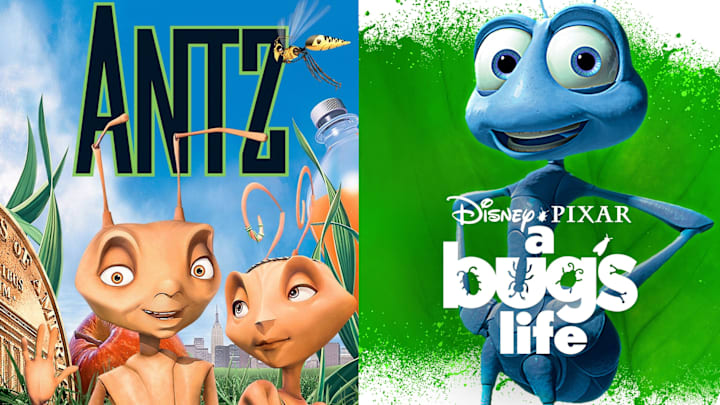
- Antz (1998) / A Bug’s Life (1998)
- The Truman Show (1998) / EDtv (1999)
- Capote (2005) / Infamous (2006)
- The Pope’s Exorcist (2023) / The Exorcism (2024)
Dr. Jekyll and Mr. Hyde (1920) / Dr. Jekyll and Mr. Hyde (1920)
Horror fans were spoilt for choice in 1920, with no less than four big-screen adaptations of Robert Louis Stephenson’s classic horror novella Dr. Jekyll and Mr. Hyde. The two principal versions were one made by Paramount and starring John Barrymore, which was the larger, more ambitious and bigger-budget affair (and remains highly regarded more than a century later), and a smaller-scale, tighter budgeted, hammier production starring Sheldon Lewis (that reportedly went into production first, but was released a month after Paramount’s and so was almost entirely overshadowed by it).
The success of Barrymore’s Jekyll and Hyde later led silent era comic Hank Mann to produce his own spoof version of the tale later on in 1920, while across in Europe the legendary German filmmaker FW Murnau released his own, now lost, version of the same story under the title Der Januskopf (“The Head of Janus”) in August of the same year.
Young Mr. Lincoln (1939) / Abe Lincoln in Illinois (1940)
Two big screen adaptations of the life of Abraham Lincoln went head-to-head just six months apart in 1939 and 1940. Directed by John Ford, Young Mr. Lincoln was released first, in June 1939, and starred Henry Fonda in the title role; as its title suggests, the movie focused on Lincoln’s early years and ends long before his entry into politics.
Abe Lincoln in Illinois, directed by John Cromwell, was released the following January. Adapted from a Pulitzer-winning stage play of the same name by Robert E Sherwood, the film covers more of Lincoln’s life than Ford’s version and ends with Lincoln winning the presidential election and journeying on to Washington. The play’s original star, Raymond Massey, reprised the title role in the movie version, too, and earned an Academy Award nomination in the process.
Those Magnificent Men in Their Flying Machines (1965) / The Great Race (1965)
The runaway success of 1963’s all-star comedy It’s a Mad, Mad, Mad, Mad World (which grossed more than six times its $9 million budget) led to a slew of copycat movies in the mid 1960s, of which 1965’s Those Magnificent Men in Their Flying Machines and The Great Race were just two. British epic Those Magnificent Men was released just two weeks ahead of its rival in June of 1965. Set in 1910, it followed a ragtag group of aviation-crazy hopefuls (played by an ensemble cast of legendary comic actors, including Eric Sykes and Terry-Thomas) competing in the London to Paris air race.
The Great Race (which starred Jack Lemmon, Tony Curtis, Natalie Wood, and Peter Falk) was released the following month and was based on the 1908 New York to Paris road race. Despite their similarities, both films picked up Oscar nods, and both fared well at the box office, finishing in the top 10 biggest movies of the year.
Gothic (1986) / Haunted Summer (1988) / Rowing with the Wind (1988)
No less than three films were released in the mid-to-late 1980s that retold the story of Mary Shelley, her husband Percy Shelley, and their fellow writer John William Polidori staying together at Lord Byron’s villa in Switzerland during the summer of 1816, and the writing contest they concocted together that led to Mary Shelley writing Frankenstein. Ken Russell’s Gothic was the first of the three, and starred Gabriel Byrne as Byron, Julian Sands as Shelley, Natasha Richardson as Mary Shelley, and Timothy Spall as John Polidori.
Haunted Summer followed two years later, after more than a decade and a half in development; although previous iterations of the script had had Martin Scorsese and then John Huston signed on to direct, Haunted Summer was eventually made by Czech filmmaker Ivan Passer, and starred Philip Anglim, Eric Stoltz, Alice Krige, and Alex Winter as the four writers. Two months earlier, however, an acclaimed Spanish version of the same story was released, titled Remando al Viento (“Rowing with the Wind”), starring Hugh Grant as Lord Byron.
1492: Conquest of Paradise (1992) / Christopher Columbus: The Discovery (1992)
The 500th anniversary of Columbus’ arrival in America led to rival retellings of his journey from Europe being released just weeks apart in 1992. John Glen’s Christopher Columbus: The Discovery was released first, in August 1992, and starred French actor Georges Corraface in the title role (as well as Marlon Brando as Torquemada, and Tom Selleck as King Ferdinand V of Aragon).
Ridley Scott’s epic 1492: Conquest of Paradise followed in October of the same year, and starred Gérard Depardieu as Columbus (as well as Sigourney Weaver as Queen Isabella I). Neither film was particularly warmly received, both had troubled productions, and both were considerably box office failures, failing to gross more than seven figures set against budgets of $40 million to $50 million. Ironically, a farcical British send-up of the Columbus story, Carry On Columbus, which was also released that year, was less of a financial disaster.
Dante’s Peak (1997) / Volcano (1997)
1997 was the year of the epic volcano movie. Released in February, Dante’s Peak, starring Pierce Brosnan, told the story of a Mount St. Helens-style eruption in a fictional remote Washington town. Volcano, released just two months later, relocated the action to downtown Los Angeles, where activity along the San Andreas Fault unleashes a volcanic eruption right in the middle of the city.
Despite their overlaps, both films fared reasonably well at the box office in 1997, but Dante’s Peak finished ahead of its rival with a worldwide gross of $178 million against Volcano’s $120 million.
Antz (1998) / A Bug’s Life (1998)
Not long after Disney released Pixar’s groundbreaking Toy Story in 1995, Pixar began production on its second computer-generated animation, titled A Bug’s Life. Disney Studios themselves, however, had quietly had a film called Army Ants in development since the late 1980s, but by the mid-90s, it had been picked up by a new animation studio, DreamWorks, and had at long last been shifted into production as Antz.
The two rival studios were now producing rival movies—both about an ant who must fight to save his colony—and were both eying a 1998 release date. Behind the scenes, however, an entirely different kind of rivalry was brewing.
DreamWorks was cofounded by former Disney chairman Jeffrey Katzenberg, who had reportedly seen potential in the Army Ants concept during his time at the studio, despite it never being greenlit. After leaving Disney following a bitter fallout with CEO Michael Eisner (which would later result in a $270 million settlement), Katzenberg revived the idea at DreamWorks, where it was developed into Antz.
As a result, not only were two studios competing with nearly identical films, but Katzenberg was also effectively going up against his former employer with a project he had once championed. Both films were critical and commercial successes, but despite Antz releasing six weeks before A Bug’s Life, Pixar ultimately came out ahead at the box office.
The Truman Show (1998) / EDtv (1999)
There were twin movies aplenty in the late 90s and early 2000s, with Armageddon and Deep Impact both bringing Earth-destroying asteroids to the big screen in 1998, Stigmata and End of Days both showcasing demonic religious horror (and both times with Gabriel Byrne) in 1999, and both Mission to Mars and Red Planet taking us to our planetary neighbor in 2000.
One pair of twins that went a little under the radar around this time, though, was 1998’s The Truman Show and 1999’s subtly similar (but criminally underrated) EDtv. Starring Jim Carrey as a man unaware his entire life is a fallacy broadcast live as a television show, Peter Weir’s The Truman Show was a box office smash that grossed a quarter of a billion dollars and cemented its lead as both a dramatic and comedic star.
Ron Howard’s EDtv , meanwhile, starred future Oscar-winner Matthew McConaughey as a man whose life is willingly broadcast as a television show for all the world to tune in to—but it was a box office bomb, and struggled to recoup barely half its $80 million budget.
Capote (2005) / Infamous (2006)
Philip Seymour Hoffman rightly won an Oscar for his staggering performance as Truman Capote in the 2005 movie of the same name, which retold the story of Capote’s work on his 1965 nonfiction masterpiece In Cold Blood.
Less than twelve months later, however, Toby Jones likewise won rave reviews for his performance in Infamous, which told a similar yet slightly expanded story, focusing on Capote’s life in the late 50s and early 60s, as well as his writing and research for In Cold Blood. Both films were critically acclaimed, but Hoffman’s Oscar win turned Capote into a box office success, grossing almost $50 million against a $7 million budget.
The Pope’s Exorcist (2023) / The Exorcism (2024)
Not only were these two religious horror movies released just one year apart, but they both received somewhat lukewarm reviews, and both starred Russell Crowe—in the title role in 2023’s The Pope’s Exorcist, and as a troubled actor who becomes possessed while filming an Exorcist-like horror movie in 2024’s The Exorcism.
Although Crowe’s roles were on either side of the demonic possession, their almost back-to-back listing in his filmography makes them prime twin-movie contenders.