%20%20--%3E%0A%3Csvg%20version%3D%221.1%22%20id%3D%22Layer_1%22%20xmlns%3D%22http%3A%2F%2Fwww.w3.org%2F2000%2Fsvg%22%20xmlns%3Axlink%3D%22http%3A%2F%2Fwww.w3.org%2F1999%2Fxlink%22%20x%3D%220px%22%20y%3D%220px%22%0A%09%20viewBox%3D%220%200%20684.6%2068.1%22%20style%3D%22enable-background%3Anew%200%200%20684.6%2068.1%3B%22%20xml%3Aspace%3D%22preserve%22%3E%0A%3Cg%3E%0A%09%3Cpath%20d%3D%22M444.1%2C29.3h-17.4v14.5h17.4V29.3z%20M36.4%2C68.1l29.3-50.8V0H50.4L32.9%2C36.8L15.5%2C0H0v68.1h16.7V45.8l12.4%2C22.3H36.4z%0A%09%09%20M49.1%2C68.1h16.6V23.4L49.1%2C52.1V68.1z%20M76.6%2C68.1h45V53.8H93.3V41.6h21V27.1h-21V14.8h28.3V0.1h-45V68.1z%20M175.6%2C68.1h17.3v-68%0A%09%09h-16.5v40.3L150%2C0.1h-17.6v68h16.7V27.7L175.6%2C68.1z%20M235.8%2C14.8h15.4V0.1h-47.4v14.7H219v53.2h16.8V14.8z%20M290.3%2C45.9h-17.1%0A%09%09l7.5-15.6h2L290.3%2C45.9z%20M298.7%2C68.1h18l-32.2-68h-5.7l-32%2C68h18l3.3-7.1h27.1L298.7%2C68.1z%20M325.2%2C68.1h46.2V53.8h-29.6V0.1h-16.7%0A%09%09V68.1z%20M423.7%2C14.8h27.2V0.1H407v68h16.7V14.8z%20M462%2C68.1h46.2V53.8h-29.6V0.1H462V68.1z%20M564.8%2C34.1c0%2C10.7-7.2%2C19.2-18.5%2C19.2%0A%09%09c-11.4%2C0-18.5-8.5-18.5-19.2s7.1-19.2%2C18.5-19.2C557.6%2C14.9%2C564.8%2C23.4%2C564.8%2C34.1%20M580.6%2C34.1c0-19-14.2-34-34.3-34%0A%09%09c-20.2%2C0-34.3%2C15-34.3%2C34c0%2C19%2C14.1%2C34%2C34.3%2C34C566.4%2C68.1%2C580.6%2C53.1%2C580.6%2C34.1%20M604.8%2C20.5c0-4.1%2C3.3-6.2%2C6.7-6.2%0A%09%09c4.4%2C0%2C6.6%2C3%2C6.6%2C6.6h14.7C631.8%2C9.1%2C625.1%2C0.1%2C611%2C0.1c-12%2C0-21.7%2C9.3-21.7%2C20.6c0%2C10.9%2C5.9%2C15.9%2C16.7%2C19.8%0A%09%09c5.2%2C1.8%2C11.5%2C3.2%2C11.5%2C8c0%2C3.3-2.4%2C5.5-6.4%2C5.5c-3.6%2C0-6.6-3-6.6-6.7h-15.2c0%2C11.5%2C7.9%2C20.8%2C21.8%2C20.8c12%2C0%2C21.6-9.3%2C21.6-20.6%0A%09%09c0-10-5.3-16.4-16.7-19.8C610.6%2C26.1%2C604.8%2C25.3%2C604.8%2C20.5%20M670%2C20.9h14.7C683.8%2C9.1%2C677.1%2C0.1%2C663%2C0.1c-12%2C0-21.7%2C9.3-21.7%2C20.6%0A%09%09c0%2C10.9%2C5.9%2C15.9%2C16.7%2C19.8c5.2%2C1.8%2C11.5%2C3.2%2C11.5%2C8c0%2C3.3-2.4%2C5.5-6.4%2C5.5c-3.6%2C0-6.6-3-6.6-6.7h-15.2c0%2C11.5%2C7.9%2C20.8%2C21.8%2C20.8%0A%09%09c12%2C0%2C21.6-9.3%2C21.6-20.6c0-10-5.3-16.4-16.7-19.8c-5.4-1.6-11.3-2.4-11.3-7.2c0-4.1%2C3.3-6.2%2C6.7-6.2C667.7%2C14.4%2C670%2C17.3%2C670%2C20.9%0A%09%09%22%2F%3E%0A%3C%2Fg%3E%0A%3C%2Fsvg%3E%0A)

Ashley Cullins knows her Scream. The journalist is the author of the book Your Favorite Scary Movie: How the Scream Films Rewrote the Rules of Horror, which details the movies' origins and features in-depth behind-the-scenes interviews with cast and crew members. She spoke to Mental Floss about how exactly the first Scream film managed to revitalize the horror genre—and what’s kept the franchise going decades later.
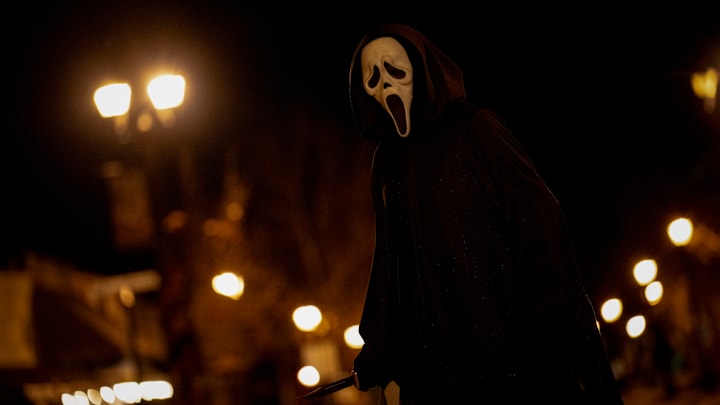
“Horror has a really rich history, but around the time that Scream came out, people were a little bit underwhelmed,” Cullins says of the media landscape that Scream burst onto, black robes flowing and knife in hand, in 1996. “The franchises that had gotten really popular—Halloween, Friday the 13th, Nightmare on Elm Street—had started to get a little schlocky, or at least that’s the word people like to use. Audience expectations were lower, which led to diminishing returns on the business side of making these movies. Everybody was just kind of losing interest, which was a bummer for huge horror fans.”
Then came Scream, which changed horror forever and won fans over with its blend of comedy, scares, and endless references to other famous horror flicks.
What Helped the First Scream Movie Succeed?

According to Cullins, one key part of what set the debut Scream apart was that its screenwriter, Kevin Williamson, had a deep and genuine love for the horror genre. “Halloween was one of the films that made [Williamson] love movies,” she says. “So he decided to write the kind of movie he wanted to see—one that had been missing from the marketplace. I think the fact that Scream was written by a horror fan who had been a little bit underwhelmed with the genre, and the fact that it wasn't a parody of slashers and wasn't trying to like take down slashers and wasn't criticizing the genre as a whole, made a difference.” If there was criticism in Scream, she adds, “it was loving criticism.”
Another thing that made Scream so unique, she says, is its lightheartedness, despite the grim subject matter. “It's comedy, horror, and a whodunit. While you're watching it, you're laughing, you're trying to figure out the mystery, and you're scared," she says. “The fact that you aren't just sitting in terror for two hours makes it more rewatchable to me.”
Ultimately, the movie was fresh and surprising, and that's what helped it make such an impact. “Scream erased the box around what a slasher was supposed to be,” she says. It also “gave fans a new set of expectations, and gave filmmakers the confidence to take swings and think differently about what it means to make a horror movie.”
What's Behind the Scream Franchise's Enduring Success?
The first Scream certainly made a bloody splash when it arrived, but seven movies in, it’s clear that the franchise is here to stay.
Part of what’s helped is how much time has passed between movie releases, says Cullins. “The thing about Scream is that it's commenting on culture along with telling a murder mystery,” she says. “The first film was the beginning. In the second, you're reacting to the events of the first film. The third movie is about movie-making, and the fourth movie is a commentary on influencer culture and social media, which was ahead of its time...Then you get into Scream V, which comments on toxic fandom, and VI, which again explores this cancel culture idea.”
Leaving so much time between movies helped the new ones feel fresh and relevant, not stale. “If they had done seven of these movies in 10 years, starting in 1996, not that much would have changed about our day-to-day life in that time period,” she says. Still, she notes, it makes sense that the pace of the movies' releases has sped up a bit recently. “Now it's a totally different story,” she says, “because the pace of change is breakneck.”
Of course, another part of what’s caused Scream’s success is the ingenuity of director Wes Craven, who helmed the first four movies. “It’s really his understanding of the psychology of fear—not just what is scary but why it is scary,” Cullins says of how Craven helped cement the Scream movies as mainstays in the scary movie pantheon.
Specifically, according to Cullins, Craven’s use of blood in the films was always intentional. For her book, she conducted extensive on-set interviews, and one behind-the-scenes fact she loves is that there was apparently “a running joke that Craven was always asking for more blood.” Apparently, in a scene where Sarah Michelle Gellar falls to her death in Scream 2, Craven became so frustrated with the lack of fake blood being used that he went in, dumped a bucket of blood on her head, and ran out of the shot.
Even that had a purpose. “Blood is very primal. It's a visual signal that something is serious,” Cullins says. “If you are watching something and someone gets stabbed and you don't see the aftermath, you don't have the same kind of visceral emotional reaction to it as if there is a lot of blood.”
Ultimately, Craven helped elevate the movie into the enduring phenomenon that it is by ensuring it was actually scary in addition to being funny and clever. “Craven was a genius,” she concludes, “and he truly appreciated human psychology and really set the tone for the franchise. That’s another reason why it's still going on today.”