%20%20--%3E%0A%3Csvg%20version%3D%221.1%22%20id%3D%22Layer_1%22%20xmlns%3D%22http%3A%2F%2Fwww.w3.org%2F2000%2Fsvg%22%20xmlns%3Axlink%3D%22http%3A%2F%2Fwww.w3.org%2F1999%2Fxlink%22%20x%3D%220px%22%20y%3D%220px%22%0A%09%20viewBox%3D%220%200%20684.6%2068.1%22%20style%3D%22enable-background%3Anew%200%200%20684.6%2068.1%3B%22%20xml%3Aspace%3D%22preserve%22%3E%0A%3Cg%3E%0A%09%3Cpath%20d%3D%22M444.1%2C29.3h-17.4v14.5h17.4V29.3z%20M36.4%2C68.1l29.3-50.8V0H50.4L32.9%2C36.8L15.5%2C0H0v68.1h16.7V45.8l12.4%2C22.3H36.4z%0A%09%09%20M49.1%2C68.1h16.6V23.4L49.1%2C52.1V68.1z%20M76.6%2C68.1h45V53.8H93.3V41.6h21V27.1h-21V14.8h28.3V0.1h-45V68.1z%20M175.6%2C68.1h17.3v-68%0A%09%09h-16.5v40.3L150%2C0.1h-17.6v68h16.7V27.7L175.6%2C68.1z%20M235.8%2C14.8h15.4V0.1h-47.4v14.7H219v53.2h16.8V14.8z%20M290.3%2C45.9h-17.1%0A%09%09l7.5-15.6h2L290.3%2C45.9z%20M298.7%2C68.1h18l-32.2-68h-5.7l-32%2C68h18l3.3-7.1h27.1L298.7%2C68.1z%20M325.2%2C68.1h46.2V53.8h-29.6V0.1h-16.7%0A%09%09V68.1z%20M423.7%2C14.8h27.2V0.1H407v68h16.7V14.8z%20M462%2C68.1h46.2V53.8h-29.6V0.1H462V68.1z%20M564.8%2C34.1c0%2C10.7-7.2%2C19.2-18.5%2C19.2%0A%09%09c-11.4%2C0-18.5-8.5-18.5-19.2s7.1-19.2%2C18.5-19.2C557.6%2C14.9%2C564.8%2C23.4%2C564.8%2C34.1%20M580.6%2C34.1c0-19-14.2-34-34.3-34%0A%09%09c-20.2%2C0-34.3%2C15-34.3%2C34c0%2C19%2C14.1%2C34%2C34.3%2C34C566.4%2C68.1%2C580.6%2C53.1%2C580.6%2C34.1%20M604.8%2C20.5c0-4.1%2C3.3-6.2%2C6.7-6.2%0A%09%09c4.4%2C0%2C6.6%2C3%2C6.6%2C6.6h14.7C631.8%2C9.1%2C625.1%2C0.1%2C611%2C0.1c-12%2C0-21.7%2C9.3-21.7%2C20.6c0%2C10.9%2C5.9%2C15.9%2C16.7%2C19.8%0A%09%09c5.2%2C1.8%2C11.5%2C3.2%2C11.5%2C8c0%2C3.3-2.4%2C5.5-6.4%2C5.5c-3.6%2C0-6.6-3-6.6-6.7h-15.2c0%2C11.5%2C7.9%2C20.8%2C21.8%2C20.8c12%2C0%2C21.6-9.3%2C21.6-20.6%0A%09%09c0-10-5.3-16.4-16.7-19.8C610.6%2C26.1%2C604.8%2C25.3%2C604.8%2C20.5%20M670%2C20.9h14.7C683.8%2C9.1%2C677.1%2C0.1%2C663%2C0.1c-12%2C0-21.7%2C9.3-21.7%2C20.6%0A%09%09c0%2C10.9%2C5.9%2C15.9%2C16.7%2C19.8c5.2%2C1.8%2C11.5%2C3.2%2C11.5%2C8c0%2C3.3-2.4%2C5.5-6.4%2C5.5c-3.6%2C0-6.6-3-6.6-6.7h-15.2c0%2C11.5%2C7.9%2C20.8%2C21.8%2C20.8%0A%09%09c12%2C0%2C21.6-9.3%2C21.6-20.6c0-10-5.3-16.4-16.7-19.8c-5.4-1.6-11.3-2.4-11.3-7.2c0-4.1%2C3.3-6.2%2C6.7-6.2C667.7%2C14.4%2C670%2C17.3%2C670%2C20.9%0A%09%09%22%2F%3E%0A%3C%2Fg%3E%0A%3C%2Fsvg%3E%0A)

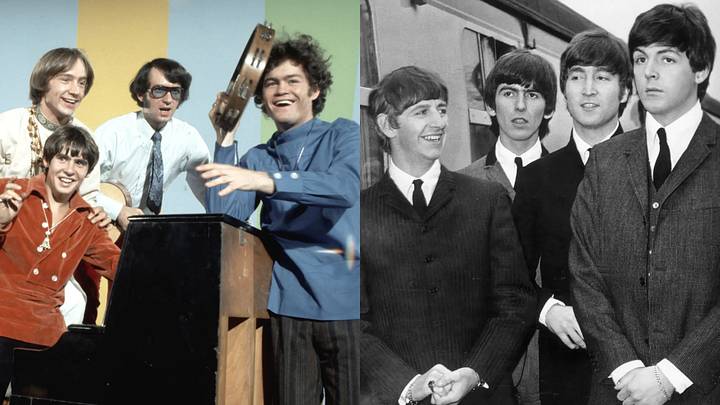
During the 1960s, then-aspiring filmmaker Bob Rafelson spent years trying to pitch a television sitcom about an American pop band, but network executives couldn’t see the concept working—until The Beatles proved them wrong.
A Beatles movie makes waves
In 1964—at the same time they released their third studio album A Hard Day’s Night—the Fab Four starred in a musical comedy of the same name. Written by Welsh playwright Alun Owen and directed by Richard Lester, the film followed a fictional day in the band’s lives in which the musicians try to evade their pesky manager and party.
While the film became a huge commercial success, its critical acclaim did not hinge exclusively on The Beatles’ massive stardom. The plot—which involves Paul McCartney’s unruly and mischievous grandfather John, played by Wilfrid Brambell—was funny and well-constructed, and the many musical numbers, which were mostly songs from A Hard Day’s Night, helped shape the modern music video.
The Monkees TV show clears a path to real musical success
The film also paved the way for The Monkees, which is what Rafelson’s show was called. Produced by NBC and on the air from 1966 to 1968, its story revolved around a fictional pop band trying to break into Los Angeles’ music industry.
The four lead actors—singer and frontman Davy Jones, guitarist Michael Nesmith, bassist and keyboardist Peter Tork, and drummer Micky Dolenz—were chosen for both their acting and musical skills. Dolenz, a one-time child actor, learned to play the drums specifically for this role.
Although premiering to high ratings and positive reviews, the show quickly started to become formulaic and stale, a development some of the episodes poked fun at. But while The Monkees was canceled after its second season, The Monkees themselves went on to become an actual band, and a successful one at that. While not as popular as The Beatles, they came pretty close, especially in the U.S., where they continue to be regarded as one of the best pop rock bands of their time.
The Monkees would not return to sitcoms, but they did star in a film: Head. Released in 1968 and co-written by Rafelson and—of all people—Oscar-winning actor Jack Nicholson, it surprised audiences who expected a continuation of the show.
In both form and content, Head could not have been more different from its sitcom predecessor. Almost as if to compensate for the latter’s conventional predictability and tonal light-heartedness, the film was composed of a series of disjointed vignettes that, Dolenz later told The Guardian, could be watched in any order. Rather than telling a coherent story, it offered a satirical critique of big concepts like celebrity, TV, and artificiality—a nod to the band’s commercial origins.