%20%20--%3E%0A%3Csvg%20version%3D%221.1%22%20id%3D%22Layer_1%22%20xmlns%3D%22http%3A%2F%2Fwww.w3.org%2F2000%2Fsvg%22%20xmlns%3Axlink%3D%22http%3A%2F%2Fwww.w3.org%2F1999%2Fxlink%22%20x%3D%220px%22%20y%3D%220px%22%0A%09%20viewBox%3D%220%200%20684.6%2068.1%22%20style%3D%22enable-background%3Anew%200%200%20684.6%2068.1%3B%22%20xml%3Aspace%3D%22preserve%22%3E%0A%3Cg%3E%0A%09%3Cpath%20d%3D%22M444.1%2C29.3h-17.4v14.5h17.4V29.3z%20M36.4%2C68.1l29.3-50.8V0H50.4L32.9%2C36.8L15.5%2C0H0v68.1h16.7V45.8l12.4%2C22.3H36.4z%0A%09%09%20M49.1%2C68.1h16.6V23.4L49.1%2C52.1V68.1z%20M76.6%2C68.1h45V53.8H93.3V41.6h21V27.1h-21V14.8h28.3V0.1h-45V68.1z%20M175.6%2C68.1h17.3v-68%0A%09%09h-16.5v40.3L150%2C0.1h-17.6v68h16.7V27.7L175.6%2C68.1z%20M235.8%2C14.8h15.4V0.1h-47.4v14.7H219v53.2h16.8V14.8z%20M290.3%2C45.9h-17.1%0A%09%09l7.5-15.6h2L290.3%2C45.9z%20M298.7%2C68.1h18l-32.2-68h-5.7l-32%2C68h18l3.3-7.1h27.1L298.7%2C68.1z%20M325.2%2C68.1h46.2V53.8h-29.6V0.1h-16.7%0A%09%09V68.1z%20M423.7%2C14.8h27.2V0.1H407v68h16.7V14.8z%20M462%2C68.1h46.2V53.8h-29.6V0.1H462V68.1z%20M564.8%2C34.1c0%2C10.7-7.2%2C19.2-18.5%2C19.2%0A%09%09c-11.4%2C0-18.5-8.5-18.5-19.2s7.1-19.2%2C18.5-19.2C557.6%2C14.9%2C564.8%2C23.4%2C564.8%2C34.1%20M580.6%2C34.1c0-19-14.2-34-34.3-34%0A%09%09c-20.2%2C0-34.3%2C15-34.3%2C34c0%2C19%2C14.1%2C34%2C34.3%2C34C566.4%2C68.1%2C580.6%2C53.1%2C580.6%2C34.1%20M604.8%2C20.5c0-4.1%2C3.3-6.2%2C6.7-6.2%0A%09%09c4.4%2C0%2C6.6%2C3%2C6.6%2C6.6h14.7C631.8%2C9.1%2C625.1%2C0.1%2C611%2C0.1c-12%2C0-21.7%2C9.3-21.7%2C20.6c0%2C10.9%2C5.9%2C15.9%2C16.7%2C19.8%0A%09%09c5.2%2C1.8%2C11.5%2C3.2%2C11.5%2C8c0%2C3.3-2.4%2C5.5-6.4%2C5.5c-3.6%2C0-6.6-3-6.6-6.7h-15.2c0%2C11.5%2C7.9%2C20.8%2C21.8%2C20.8c12%2C0%2C21.6-9.3%2C21.6-20.6%0A%09%09c0-10-5.3-16.4-16.7-19.8C610.6%2C26.1%2C604.8%2C25.3%2C604.8%2C20.5%20M670%2C20.9h14.7C683.8%2C9.1%2C677.1%2C0.1%2C663%2C0.1c-12%2C0-21.7%2C9.3-21.7%2C20.6%0A%09%09c0%2C10.9%2C5.9%2C15.9%2C16.7%2C19.8c5.2%2C1.8%2C11.5%2C3.2%2C11.5%2C8c0%2C3.3-2.4%2C5.5-6.4%2C5.5c-3.6%2C0-6.6-3-6.6-6.7h-15.2c0%2C11.5%2C7.9%2C20.8%2C21.8%2C20.8%0A%09%09c12%2C0%2C21.6-9.3%2C21.6-20.6c0-10-5.3-16.4-16.7-19.8c-5.4-1.6-11.3-2.4-11.3-7.2c0-4.1%2C3.3-6.2%2C6.7-6.2C667.7%2C14.4%2C670%2C17.3%2C670%2C20.9%0A%09%09%22%2F%3E%0A%3C%2Fg%3E%0A%3C%2Fsvg%3E%0A)

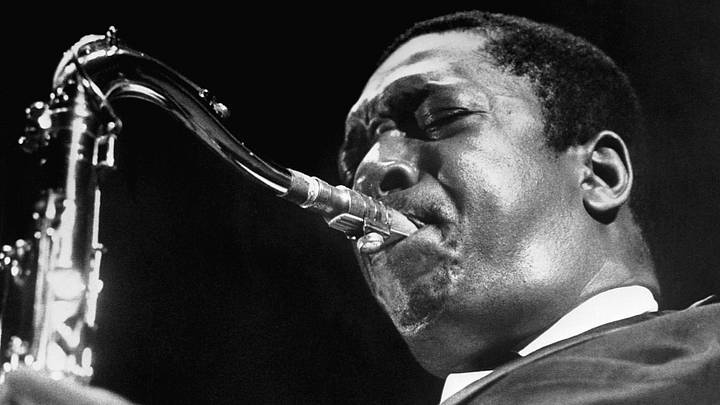
John Coltrane was born on September 26, 1926, in North Carolina. This year is the Coltrane centennial. In a tragically short life—Coltrane was 40 when he died in 1967—he fundamentally changed the face of jazz with his saxophone playing and his compositions. It was an influence that spread to other forms of music as well.
Here are four facts about John Coltrane ahead of what would have been his 100th birthday.
John Coltrane’s Music Had Deep Spiritual Roots
A strong sense of the divine infused much of John Coltrane’s output. The musician had struggled with drug addiction. After his recovery in 1957, he saw his music as an integral part of his spiritual pathway. A Love Supreme, Coltrane’s 1965 classic album, is framed by his poem of the same title, where he writes that the album is “a humble offering to Him.” A Love Supreme, besides being one of the most important albums in jazz history, is also an act of devotion. And in albums like Om and songs like the haunting “Dear Lord,” we see that Coltrane’s spirituality was fluid and all-encompassing.
Saint John Coltrane

Coltrane’s spiritual impact was such that there was an actual church devoted to him. The Saint John Coltrane Church was established in San Francisco in the 1960s and still exists, although the locale has changed numerous times over the decades. The church venerates Coltrane and uses A Love Supreme as its liturgy. Equally important is the church’s commitment to social justice, community, and the arts.
Coltrane is the Inspiration Behind the Byrds’ “Eight Miles High”
Coltrane’s innovations were of massive importance in the development of jazz, but his legacy—both musically and in his spiritual quest—did not go unnoticed in the world of rock. “Eight Miles High” was released by the Byrds in 1966—the word “high” duly noted, which ultimately killed any chance for a breakout hit. “Eight Miles High” is a groundbreaking, expansive song that helped usher in psychedelic rock. It was an intentional homage to Coltrane’s music and an attempt to fuse jazz sensibilities into the rock format. It’s debatable if Coltrane’s later music can be construed as true psychedelia, but his musical expansiveness and spiritual journey—both heavily influenced by India—could not help but appeal to the musical zeitgeist that was beginning to bubble by the mid-sixties.
“My Favorite Things”: One Song and a Huge Impact
John Coltrane’s recording of Rodgers and Hammerstein’s “My Favorite Things”—recorded over sixty years ago—still looms large in jazz history. Coltrane took this chipper, perfectly acceptable song from The Sound of the Music and made it something entirely, dramatically different. Coltrane’s version lasted almost fourteen minutes, and his use of the neglected soprano saxophone added an entirely different dimension to this onetime Broadway hit. It also brought the soprano sax back into music-making. There are prominent Middle Eastern motifs in the trance-like Coltrane version. In the words of Alexander Westerman, Coltrane proved “disparate worlds could coexist in one song.” And, perhaps most importantly, Coltrane’s “My Favorite Things” is simply beautiful.