%20%20--%3E%0A%3Csvg%20version%3D%221.1%22%20id%3D%22Layer_1%22%20xmlns%3D%22http%3A%2F%2Fwww.w3.org%2F2000%2Fsvg%22%20xmlns%3Axlink%3D%22http%3A%2F%2Fwww.w3.org%2F1999%2Fxlink%22%20x%3D%220px%22%20y%3D%220px%22%0A%09%20viewBox%3D%220%200%20684.6%2068.1%22%20style%3D%22enable-background%3Anew%200%200%20684.6%2068.1%3B%22%20xml%3Aspace%3D%22preserve%22%3E%0A%3Cg%3E%0A%09%3Cpath%20d%3D%22M444.1%2C29.3h-17.4v14.5h17.4V29.3z%20M36.4%2C68.1l29.3-50.8V0H50.4L32.9%2C36.8L15.5%2C0H0v68.1h16.7V45.8l12.4%2C22.3H36.4z%0A%09%09%20M49.1%2C68.1h16.6V23.4L49.1%2C52.1V68.1z%20M76.6%2C68.1h45V53.8H93.3V41.6h21V27.1h-21V14.8h28.3V0.1h-45V68.1z%20M175.6%2C68.1h17.3v-68%0A%09%09h-16.5v40.3L150%2C0.1h-17.6v68h16.7V27.7L175.6%2C68.1z%20M235.8%2C14.8h15.4V0.1h-47.4v14.7H219v53.2h16.8V14.8z%20M290.3%2C45.9h-17.1%0A%09%09l7.5-15.6h2L290.3%2C45.9z%20M298.7%2C68.1h18l-32.2-68h-5.7l-32%2C68h18l3.3-7.1h27.1L298.7%2C68.1z%20M325.2%2C68.1h46.2V53.8h-29.6V0.1h-16.7%0A%09%09V68.1z%20M423.7%2C14.8h27.2V0.1H407v68h16.7V14.8z%20M462%2C68.1h46.2V53.8h-29.6V0.1H462V68.1z%20M564.8%2C34.1c0%2C10.7-7.2%2C19.2-18.5%2C19.2%0A%09%09c-11.4%2C0-18.5-8.5-18.5-19.2s7.1-19.2%2C18.5-19.2C557.6%2C14.9%2C564.8%2C23.4%2C564.8%2C34.1%20M580.6%2C34.1c0-19-14.2-34-34.3-34%0A%09%09c-20.2%2C0-34.3%2C15-34.3%2C34c0%2C19%2C14.1%2C34%2C34.3%2C34C566.4%2C68.1%2C580.6%2C53.1%2C580.6%2C34.1%20M604.8%2C20.5c0-4.1%2C3.3-6.2%2C6.7-6.2%0A%09%09c4.4%2C0%2C6.6%2C3%2C6.6%2C6.6h14.7C631.8%2C9.1%2C625.1%2C0.1%2C611%2C0.1c-12%2C0-21.7%2C9.3-21.7%2C20.6c0%2C10.9%2C5.9%2C15.9%2C16.7%2C19.8%0A%09%09c5.2%2C1.8%2C11.5%2C3.2%2C11.5%2C8c0%2C3.3-2.4%2C5.5-6.4%2C5.5c-3.6%2C0-6.6-3-6.6-6.7h-15.2c0%2C11.5%2C7.9%2C20.8%2C21.8%2C20.8c12%2C0%2C21.6-9.3%2C21.6-20.6%0A%09%09c0-10-5.3-16.4-16.7-19.8C610.6%2C26.1%2C604.8%2C25.3%2C604.8%2C20.5%20M670%2C20.9h14.7C683.8%2C9.1%2C677.1%2C0.1%2C663%2C0.1c-12%2C0-21.7%2C9.3-21.7%2C20.6%0A%09%09c0%2C10.9%2C5.9%2C15.9%2C16.7%2C19.8c5.2%2C1.8%2C11.5%2C3.2%2C11.5%2C8c0%2C3.3-2.4%2C5.5-6.4%2C5.5c-3.6%2C0-6.6-3-6.6-6.7h-15.2c0%2C11.5%2C7.9%2C20.8%2C21.8%2C20.8%0A%09%09c12%2C0%2C21.6-9.3%2C21.6-20.6c0-10-5.3-16.4-16.7-19.8c-5.4-1.6-11.3-2.4-11.3-7.2c0-4.1%2C3.3-6.2%2C6.7-6.2C667.7%2C14.4%2C670%2C17.3%2C670%2C20.9%0A%09%09%22%2F%3E%0A%3C%2Fg%3E%0A%3C%2Fsvg%3E%0A)

Musicians have also always been the subject of wild rumors and conspiracy theories, and their songs are no different. Fans have always speculated about the meanings of their favorite songs—and it is true that sometimes, even classic hit songs are wildly misunderstood and misinterpreted.
Each one of the following songs has sparked rumors, conspiracies, and enduring speculation about possible deeper meanings buried within their iconic chord changes and vocal riffs. From Pink Floyd deep cuts encoded with audible secret messages to purportedly prophetic David Bowie hits, read on to discover six songs with conspiracy theories and possible hidden messages attached to them.
- “Stairway to Heaven” - Led Zeppelin
- “Bohemian Rhapsody” - Queen
- “Strawberry Fields Forever” - The Beatles
- “Wind of Change” - Scorpions
- “Five Years” - David Bowie
- “Empty Spaces” - Pink Floyd
“Stairway to Heaven” - Led Zeppelin
Few songs have been the subject of more conspiracy theories than Led Zeppelin’s epic masterpiece, “Stairway to Heaven.” This 1971 song is known for its incredible guitar solo as well as its mystical, enigmatic lyrics, which have given rise to a great deal of speculation about their meaning.
According to one commonly held interpretation of the song, the track could be about the downfalls of materialism and the possibility of a world beyond consumerism. Countless other analyses exist about the song’s lyrics, but one particularly extreme conspiracy theory about this song centers around the idea that if played backwards, the track holds Satanic messages.
This theory is tied to the Satanic panic of the 1980s. It is often traced to the moment when televangelist Paul Crouch first proposed that, when played backwards, the lyric that starts with “if there’s a bustle in your hedgerow” in the song sounds like, “Here’s to my sweet Satan/The one whose little path would make me sad, whose power is Satan.”
While the lyrics, when played backwards, do have a faint resemblance to these words, the theory has been widely debunked, with audio engineer Eddie Kramer saying that the rumors were “totally and utterly ridiculous. Why would they want to spend so much studio time doing something so dumb?” he added.
Lead singer Robert Plant also denounced the theories in a 1983 interview. “To me it’s very sad, because ‘Stairway to Heaven’ was written with every best intention, and as far as reversing tapes and putting messages on the end, that’s not my idea of making music,” he said.
The theories also gained some traction because the members of Led Zeppelin did have some interest in occultism, and guitarist Jimmy Page bought a house in Scotland formerly owned by Satanist Aleister Crowley. However, there is zero real evidence that any member of Led Zeppelin had an interest in Satanism. Though this conspiracy theory has lost steam over the years, Stairway to Heaven remains an ever-popular, soaring, and mysterious masterpiece about life, death, and hope for a better world—depending on who you ask, naturally.
“Bohemian Rhapsody” - Queen
Freddie Mercury’s Bohemian Rhapsody is an abstract opus full of extremely enigmatic and creative storytelling, to say the least, so it’s no wonder that this iconic smash hit has spawned a number of theories. One major theory about this song that might actually have some substance to it is the idea that it might have been Mercury’s way of coming out as queer.
Tim Rice, an influential lyricist who worked with Mercury on several projects, has said that he interprets the song this way. “In the line 'Mama, I just killed a man' he’s killed the old Freddie, his former image,” Rice said to The Daily Mail. “With 'Put a gun against his head, pulled my trigger, now he’s dead,' he’s dead, the straight person he was originally. He’s destroyed the man he was trying to be, and now this is him, trying to live with the new Freddie. 'I see a little silhouetto of a man'—that’s him, still being haunted by what he’s done, and what he is…It had never occurred to me, but 'Bohemian Rhapsody' was Freddie's coming-out song, written in a time when he wasn't able to be honest and open about his sexuality. It was a very covert statement about who he was as a gay man, which he couldn't come out directly and say because of the lifestyle he was leading.”
Mercury never did come out publicly in his life, but he had relationships with both men and women. In general, whether or not Bohemian Rhapsody is specifically about Mercury’s sexuality, it seems to explore themes of defiance and challenging social norms, as well as religious anxieties and the challenges of living an unconventional lifestyle.
“Strawberry Fields Forever” - The Beatles
The belief that Paul McCartney is dead and has been for a long time is one of music’s most common conspiracy theories. While this theory is widely unfounded, as McCartney continues to release music and make public appearances today, fans have identified what they believe to be a number of references to this theory in Beatles songs as old as “Strawberry Fields Forever,” which came out in 1967.
At the end of the song, John Lennon mumbles something that many conspiracy theorists hear as “Paul is dead.” However, Lennon is actually saying “cranberry sauce.”
Other purported references to Paul’s alleged death across the Beatles' discography include the line “monsieur, monsieur, monsieur, how about another one” in “I’m So Tired,” which does sound a bit like “Paul is dead, man, miss him, miss him” when played backwards.
McCartney has, of course, been steadily renouncing the theory since it emerged. “Someone from the office rang me up and said, ‘Look, Paul, you’re dead,’” he said in a 1974 Rolling Stone interview. “And I said, ‘Oh, I don’t agree with that.’”
“Wind of Change” - Scorpions
While they may be best known for their song “Rock You Like a Hurricane,” the band Scorpions also had a hit with the 1990 ballad “Wind of Change,” which describes the fall of the Soviet Union and became popular in Eastern Europe as the iron curtain fell. However, the song’s success and political message also sparked a conspiracy theory that the CIA may have written it to further push a dissolving Soviet Union over the edge.
This theory is actually the subject of an entire podcast named after the song, which follows journalist Patrick Radden Keefe as he investigates the theory. While he—spoiler alert—doesn’t prove that the song was CIA-written, he does uncover various links between U.S. intelligence and the music industry.
Keefe even asked Scorpions lead singer Klaus Meine about the theory, which provoked nothing but laughter in the musician. “I found it very funny and I continued to laugh. It's quite a fun and really crazy story, but like I said, it's not true at all. As you Americans say, it's fake news,” Meine said.
“Five Years” - David Bowie
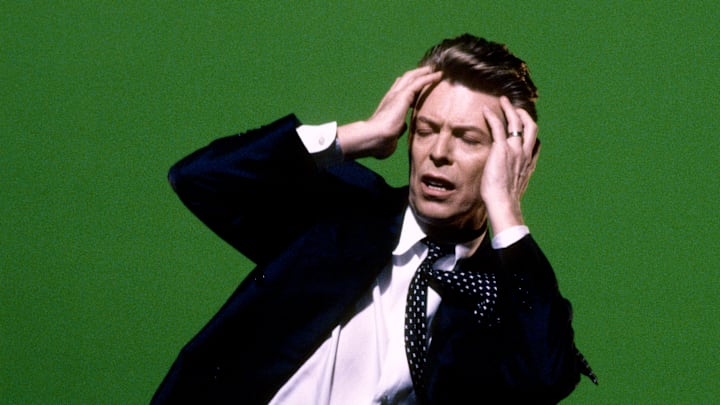
David Bowie has always been a rather mythical and ethereal figure. But Bowie’s album The Rise and Fall of Ziggy Stardust is connected to one particularly popular conspiracy theory—that it may have predicted the rise of Kanye West. This is largely due to the fact that Bowie is standing under a sign reading “K. West” on the front of the album. The sign actually belonged to a furrier, but that hasn't stopped fans from linking it to West.
Adding fuel to the fire is the fact that the album’s opening track is called “Five Years,” and it describes an incoming apocalypse that will occur unless a “starman” descends and saves the world. West, it turns out, was born five years after the album was released. The conspiracy theories gained further traction when Bowie released his final album, Blackstar, which contains the lyrics, “Something happened on the day he died / Spirit rose a metre and stepped aside / Somebody else took his place.” Because West is quite literally a Black star, fans immediately began to speculate.
However, fans have also linked the album's title to a little-known Elvis Presley track called "Black Star," and of course, there's also the fact that in astronomy, a black star is the name for the stage when a star collapses and turns into a black hole.
“Empty Spaces” - Pink Floyd
Pink Floyd’s “Empty Spaces” is one rare case wherein a song, when played backwards, actually does contain a hidden message. When you play the song’s audio in reverse, you can indeed hear the words, “Congratulations. You've just discovered the secret message. Please send your answer to Old Pink, care of the funny farm, Chalfont…”
The exact meaning of this secret message remains somewhat disputed. Some believe that the name “Old Pink” is a special message meant for former band member Syd Barrett, who disappeared from public view after a 1968 breakdown.
But drummer Nick Mason later confirmed that the whole thing was more of a bit than anything else. “At the time, people were always looking for messages in albums,” Mason told Sonic Reality. “So we thought: ‘Oh, well. We better do one.’”
Still, some particularly staunch believers have said that perhaps Roger Waters had his own intentions when he encoded his secret message into the song, which he kept secret from his bandmates. Regardless, this song wasn't the last time Pink Floyd would play into conspiracy theories. In 1994, while promoting their album The Division Bell, Pink Floyd’s record label launched a proto-attempt at a viral stunt and began secretly dropping little Pink Floyd-related clues, riddles, and coded messages across the internet as part of a hoax called “Publius Enigma.”
“You have heard the message Pink Floyd has delivered, but have you listened?” read the first post. “I will not solve the enigma for you.” Of course, it was all a marketing stunt in the end.