%20%20--%3E%0A%3Csvg%20version%3D%221.1%22%20id%3D%22Layer_1%22%20xmlns%3D%22http%3A%2F%2Fwww.w3.org%2F2000%2Fsvg%22%20xmlns%3Axlink%3D%22http%3A%2F%2Fwww.w3.org%2F1999%2Fxlink%22%20x%3D%220px%22%20y%3D%220px%22%0A%09%20viewBox%3D%220%200%20684.6%2068.1%22%20style%3D%22enable-background%3Anew%200%200%20684.6%2068.1%3B%22%20xml%3Aspace%3D%22preserve%22%3E%0A%3Cg%3E%0A%09%3Cpath%20d%3D%22M444.1%2C29.3h-17.4v14.5h17.4V29.3z%20M36.4%2C68.1l29.3-50.8V0H50.4L32.9%2C36.8L15.5%2C0H0v68.1h16.7V45.8l12.4%2C22.3H36.4z%0A%09%09%20M49.1%2C68.1h16.6V23.4L49.1%2C52.1V68.1z%20M76.6%2C68.1h45V53.8H93.3V41.6h21V27.1h-21V14.8h28.3V0.1h-45V68.1z%20M175.6%2C68.1h17.3v-68%0A%09%09h-16.5v40.3L150%2C0.1h-17.6v68h16.7V27.7L175.6%2C68.1z%20M235.8%2C14.8h15.4V0.1h-47.4v14.7H219v53.2h16.8V14.8z%20M290.3%2C45.9h-17.1%0A%09%09l7.5-15.6h2L290.3%2C45.9z%20M298.7%2C68.1h18l-32.2-68h-5.7l-32%2C68h18l3.3-7.1h27.1L298.7%2C68.1z%20M325.2%2C68.1h46.2V53.8h-29.6V0.1h-16.7%0A%09%09V68.1z%20M423.7%2C14.8h27.2V0.1H407v68h16.7V14.8z%20M462%2C68.1h46.2V53.8h-29.6V0.1H462V68.1z%20M564.8%2C34.1c0%2C10.7-7.2%2C19.2-18.5%2C19.2%0A%09%09c-11.4%2C0-18.5-8.5-18.5-19.2s7.1-19.2%2C18.5-19.2C557.6%2C14.9%2C564.8%2C23.4%2C564.8%2C34.1%20M580.6%2C34.1c0-19-14.2-34-34.3-34%0A%09%09c-20.2%2C0-34.3%2C15-34.3%2C34c0%2C19%2C14.1%2C34%2C34.3%2C34C566.4%2C68.1%2C580.6%2C53.1%2C580.6%2C34.1%20M604.8%2C20.5c0-4.1%2C3.3-6.2%2C6.7-6.2%0A%09%09c4.4%2C0%2C6.6%2C3%2C6.6%2C6.6h14.7C631.8%2C9.1%2C625.1%2C0.1%2C611%2C0.1c-12%2C0-21.7%2C9.3-21.7%2C20.6c0%2C10.9%2C5.9%2C15.9%2C16.7%2C19.8%0A%09%09c5.2%2C1.8%2C11.5%2C3.2%2C11.5%2C8c0%2C3.3-2.4%2C5.5-6.4%2C5.5c-3.6%2C0-6.6-3-6.6-6.7h-15.2c0%2C11.5%2C7.9%2C20.8%2C21.8%2C20.8c12%2C0%2C21.6-9.3%2C21.6-20.6%0A%09%09c0-10-5.3-16.4-16.7-19.8C610.6%2C26.1%2C604.8%2C25.3%2C604.8%2C20.5%20M670%2C20.9h14.7C683.8%2C9.1%2C677.1%2C0.1%2C663%2C0.1c-12%2C0-21.7%2C9.3-21.7%2C20.6%0A%09%09c0%2C10.9%2C5.9%2C15.9%2C16.7%2C19.8c5.2%2C1.8%2C11.5%2C3.2%2C11.5%2C8c0%2C3.3-2.4%2C5.5-6.4%2C5.5c-3.6%2C0-6.6-3-6.6-6.7h-15.2c0%2C11.5%2C7.9%2C20.8%2C21.8%2C20.8%0A%09%09c12%2C0%2C21.6-9.3%2C21.6-20.6c0-10-5.3-16.4-16.7-19.8c-5.4-1.6-11.3-2.4-11.3-7.2c0-4.1%2C3.3-6.2%2C6.7-6.2C667.7%2C14.4%2C670%2C17.3%2C670%2C20.9%0A%09%09%22%2F%3E%0A%3C%2Fg%3E%0A%3C%2Fsvg%3E%0A)

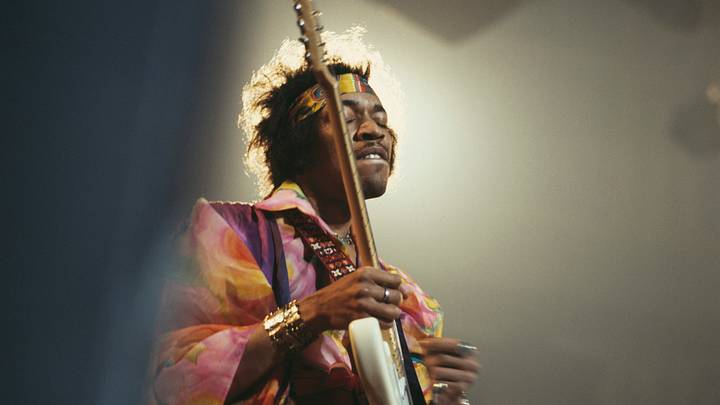
Jimi Hendrix only made it to the age of 27, but he left behind an immortal legacy that can still be heard in every note he recorded.
“He was like a shaman. It’s the only word I can use,” Pete Townshend once recalled of the man. “I don’t know if it’s the right term. Light seemed to come out of him. He would walk onstage and suddenly he would explode into light.”
Jimi Hendrix’s Life

Born James Marshall Hendrix on November 27, 1942 in Seattle, Washington, Hendrix developed a passion for music at a young age. He dropped out of high school and joined the U.S. Army, and launched a band called the King Casuals during his service.
Following that, he began touring and soon formed his own band, the Jimi Hendrix Experience. They released legendary albums in 1967 and 1968, and made history with an astonishing rendition of “The Star-Spangled Banner” at Woodstock in 1969.
Like many rock stars of that era, Hendrix also used hashish, LSD, cocaine, and other substances, and also openly admitted to struggling with drinking. The night of his death, he had been partying until three in the morning with his girlfriend, Monika Dannemann.
After returning to her London apartment, an intoxicated Hendrix took 18 times the recommended dose of sleeping pills and died by choking on his own vomit. While the circumstances and exact cause of his death have been debated, one thing is clear: His star power has never faded.
Jimi Hendrix’s Last Words

The night of his death, Hendrix left a voicemail on his manager Chas Chandler’s phone that ended with the words, “I need help bad, man.” These words reveal a man aware of his own peril and desperate to change.
Hendrix also left behind a poem he wrote the night he died. Not all the stanzas have been released, but some believe that he intended to turn the poem into a song.
“The story of Jesus / So easy to explain / After they crucified him / A woman, she claimed his name / […]” reads the excerpt that has been shared publicly. “The story of life is quicker than the wink of an eye / The story of love is hello and goodbye, until we meet again.”
The words are enigmatic and deeply poetic, and reveal a man exploring the depths of mortality and the enduring power of love.
Several days before his death, Hendrix gave his last interview to Keith Allston. At the end of it, he reflected on some of his dreams for the future. When asked if he ever envisioned putting on a free concert, Hendrix enthusiastically responded in the affirmative.
“We should only collect enough as what we can pay with. Expenses from the last time to the next time,” he said.
His tragic final words to Allston showed he had no intention of his life being cut so short so soon. “We have time,” he said. “There's no big rush. There's no reason why we can't do free concerts here.”