%20%20--%3E%0A%3Csvg%20version%3D%221.1%22%20id%3D%22Layer_1%22%20xmlns%3D%22http%3A%2F%2Fwww.w3.org%2F2000%2Fsvg%22%20xmlns%3Axlink%3D%22http%3A%2F%2Fwww.w3.org%2F1999%2Fxlink%22%20x%3D%220px%22%20y%3D%220px%22%0A%09%20viewBox%3D%220%200%20684.6%2068.1%22%20style%3D%22enable-background%3Anew%200%200%20684.6%2068.1%3B%22%20xml%3Aspace%3D%22preserve%22%3E%0A%3Cg%3E%0A%09%3Cpath%20d%3D%22M444.1%2C29.3h-17.4v14.5h17.4V29.3z%20M36.4%2C68.1l29.3-50.8V0H50.4L32.9%2C36.8L15.5%2C0H0v68.1h16.7V45.8l12.4%2C22.3H36.4z%0A%09%09%20M49.1%2C68.1h16.6V23.4L49.1%2C52.1V68.1z%20M76.6%2C68.1h45V53.8H93.3V41.6h21V27.1h-21V14.8h28.3V0.1h-45V68.1z%20M175.6%2C68.1h17.3v-68%0A%09%09h-16.5v40.3L150%2C0.1h-17.6v68h16.7V27.7L175.6%2C68.1z%20M235.8%2C14.8h15.4V0.1h-47.4v14.7H219v53.2h16.8V14.8z%20M290.3%2C45.9h-17.1%0A%09%09l7.5-15.6h2L290.3%2C45.9z%20M298.7%2C68.1h18l-32.2-68h-5.7l-32%2C68h18l3.3-7.1h27.1L298.7%2C68.1z%20M325.2%2C68.1h46.2V53.8h-29.6V0.1h-16.7%0A%09%09V68.1z%20M423.7%2C14.8h27.2V0.1H407v68h16.7V14.8z%20M462%2C68.1h46.2V53.8h-29.6V0.1H462V68.1z%20M564.8%2C34.1c0%2C10.7-7.2%2C19.2-18.5%2C19.2%0A%09%09c-11.4%2C0-18.5-8.5-18.5-19.2s7.1-19.2%2C18.5-19.2C557.6%2C14.9%2C564.8%2C23.4%2C564.8%2C34.1%20M580.6%2C34.1c0-19-14.2-34-34.3-34%0A%09%09c-20.2%2C0-34.3%2C15-34.3%2C34c0%2C19%2C14.1%2C34%2C34.3%2C34C566.4%2C68.1%2C580.6%2C53.1%2C580.6%2C34.1%20M604.8%2C20.5c0-4.1%2C3.3-6.2%2C6.7-6.2%0A%09%09c4.4%2C0%2C6.6%2C3%2C6.6%2C6.6h14.7C631.8%2C9.1%2C625.1%2C0.1%2C611%2C0.1c-12%2C0-21.7%2C9.3-21.7%2C20.6c0%2C10.9%2C5.9%2C15.9%2C16.7%2C19.8%0A%09%09c5.2%2C1.8%2C11.5%2C3.2%2C11.5%2C8c0%2C3.3-2.4%2C5.5-6.4%2C5.5c-3.6%2C0-6.6-3-6.6-6.7h-15.2c0%2C11.5%2C7.9%2C20.8%2C21.8%2C20.8c12%2C0%2C21.6-9.3%2C21.6-20.6%0A%09%09c0-10-5.3-16.4-16.7-19.8C610.6%2C26.1%2C604.8%2C25.3%2C604.8%2C20.5%20M670%2C20.9h14.7C683.8%2C9.1%2C677.1%2C0.1%2C663%2C0.1c-12%2C0-21.7%2C9.3-21.7%2C20.6%0A%09%09c0%2C10.9%2C5.9%2C15.9%2C16.7%2C19.8c5.2%2C1.8%2C11.5%2C3.2%2C11.5%2C8c0%2C3.3-2.4%2C5.5-6.4%2C5.5c-3.6%2C0-6.6-3-6.6-6.7h-15.2c0%2C11.5%2C7.9%2C20.8%2C21.8%2C20.8%0A%09%09c12%2C0%2C21.6-9.3%2C21.6-20.6c0-10-5.3-16.4-16.7-19.8c-5.4-1.6-11.3-2.4-11.3-7.2c0-4.1%2C3.3-6.2%2C6.7-6.2C667.7%2C14.4%2C670%2C17.3%2C670%2C20.9%0A%09%09%22%2F%3E%0A%3C%2Fg%3E%0A%3C%2Fsvg%3E%0A)

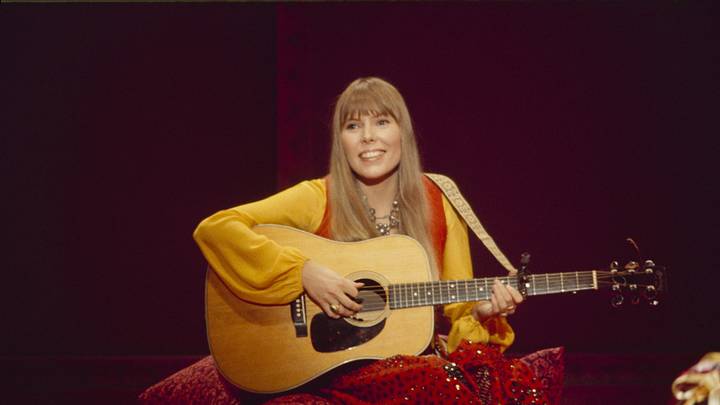
Joni Mitchell is known for her evocative songwriting and unique guitar-playing. Her music is so distinct to her that it’s difficult to mistake her for any other artist.
As one of the defining voices of the 1960s, she is best known for tracks like “Big Yellow Taxi” and “Both Sides Now,” and yet her discography is filled with deep cuts that show off her massive range as a songwriter and performer with an uncanny ability to translate the human experience into song.
Mitchell wrote for herself first and foremost, and there aren’t many songs that she actively penned for other artists. But a number of her songs were covered by other artists before Mitchell had a chance to release them herself. Here are five such songs.
“Michael From Mountains”
Like many Joni Mitchell tunes, this track paints a picture of a nuanced romance against a backdrop of kaleidoscopic imagery. This track tells the story of a free-spirited, sweet-hearted man whom the woman singing has fallen for, but knows she can’t quite hold onto. It was inspired by Mitchell’s relationship with a Colorado musician named Michael Durbin, and was also the first track on Judy Collins’ 1967 album Wildflowers. Mitchell released it the following year on her debut album, Song to a Seagull.
“Life is full of falling into love and falling out of love, and sometimes when...when things go wrong and love evaporates, it leaves you empty and with nothing and makes you very bitter,” Mitchell said of the tune. “Sometimes when love leaves, it leaves really more than it takes away, and that's what this song is all about. It's called ‘Michael from the Mountains.’”
“The Circle Game”
“The Circle Game” is a wistful Mitchell classic that offers a bird’s-eye view of the strange loops that the passage of time can take us in. It was also recorded by several other artists before Mitchell released it herself. Written in 1966, it was released by the folk duo Ian & Sylvia as well as the songwriter Buffy Sainte-Marie in 1967, and Tom Rush shared a version in 1968. Mitchell finally released the song on her 1970 album Ladies of the Canyon.
The song was written for Mitchell’s friend Neil Young, who was struggling with leaving his teenage years behind at the time. “I wrote it for a friend of mine named Neil Young who, at the time that I knew him, was a Canadian ex-rock ‘n roll type turned folkie from Winnipeg, Manitoba, which is just about as bad as Saskatoon, Saskatchewan, I guess,” Mitchell said in 1968.
“Anyway, he’d just turned 20 years old and was very, very depressed, because he said, ‘You know, all my life I’ve been looking forward to being an adult...And suddenly here I am, and I’m older and I can do just about all those things except I can’t go into the pubs [until] next year. But I can do just about anything I want to and you know what? I wanna go out and play skipping rope and play jacks and all that stuff that I missed and left behind. He was really depressed, so I wrote a song for him.”
“Born to Take the Highway”
This song was another early Mitchell composition, but she never formally released it herself until it appeared on the anthology Joni Mitchell Archives – Vol. 1: The Early Years (1963–1967) in 2020. Instead, it was released by the band Foggy Dew-O in 1968. Like many of Mitchell’s early songs, it describes life on the road. At the time of its release, though, some of Mitchell's friends didn’t approve of it due to its rosy portrayal of the bohemian life.
“I know some of my hippie friends say to me, ‘hey, really that’s kind of a schmaltzy travel song. I mean there’s no hard times on it, you know. There should be more hard times and troubles and trials and tribulations,’ because everybody knows that all travel songs nowadays have got to be like that,” Mitchell said of the song in 1966.
“Both Sides Now”
This tune may be one of Mitchell’s most beloved. Written when she was just 21, it takes a prismatic look at the shift from innocence to experience and back again. Yet the song was actually released by Judy Collins before Mitchell could release it herself. It appeared on Collins’ 1968 album Wildflowers and quickly rose on the Adult Contemporary charts, and its fame helped bolster Mitchell's career.
“I had begun to hear of Joni Mitchell by then. She had a good following in the Village and in Canada and many cities in the States,” Collins wrote in her book Singing Lessons: A Memoir of Love, Loss, Hope, and Healing of when she first heard the song. “She didn’t have a recording contract at the time, and one night one of her ardent fans (I remember it being Tom Rush, but he always denies it) called me at 3 a.m. and had Joni play me ‘Both Sides Now.’ I immediately began to weep. I said I had to record it, she said she wanted me to, as she didn’t have a contract at that time, and was eager for her songs to get out to the public.”
Mitchell soon recorded the song for her 1969 album Clouds, and the rest is music history.
“Woodstock”
Mitchell wrote this song after a scheduling conflict made her unable to perform at 1969’s Woodstock festival. Inspired by footage she saw on television and dreams of what could have been, Mitchell ironically wound up writing the biggest song to come out of the festival.
“When I saw the magazine articles and pictures of them and everything, I really, really felt sorry for myself, because it’ll never happen again, of course. They’ll try and recapture it, you know, and it’ll just get worse and worse and worse. Well, maybe that’s a pessimistic way to look at it, but, I don’t know,” Mitchell recalled. “It was really something, that people could be so good to each other. Even if it was only for three days. All those people being good to each other for three whole days. Fantastic.”
Before Mitchell released the song herself, Crosby, Stills, Nash & Young included a version of it on their 1970 album Déjà Vu. A month later, Mitchell released her own recording on Ladies of the Canyon.
Mitchell later admitted that if she had been able to go to the festival, the song likely wouldn’t have existed. “I was the deprived kid who couldn’t go,” she said in an interview with CBC. “I wrote [the song 'Woodstock'] from the point of view of a kid going there. If I’d been there in the backroom with all the cutthroat, egomaniacal crap that goes on backstage, I would not have had that perspective.”