%20%20--%3E%0A%3Csvg%20version%3D%221.1%22%20id%3D%22Layer_1%22%20xmlns%3D%22http%3A%2F%2Fwww.w3.org%2F2000%2Fsvg%22%20xmlns%3Axlink%3D%22http%3A%2F%2Fwww.w3.org%2F1999%2Fxlink%22%20x%3D%220px%22%20y%3D%220px%22%0A%09%20viewBox%3D%220%200%20684.6%2068.1%22%20style%3D%22enable-background%3Anew%200%200%20684.6%2068.1%3B%22%20xml%3Aspace%3D%22preserve%22%3E%0A%3Cg%3E%0A%09%3Cpath%20d%3D%22M444.1%2C29.3h-17.4v14.5h17.4V29.3z%20M36.4%2C68.1l29.3-50.8V0H50.4L32.9%2C36.8L15.5%2C0H0v68.1h16.7V45.8l12.4%2C22.3H36.4z%0A%09%09%20M49.1%2C68.1h16.6V23.4L49.1%2C52.1V68.1z%20M76.6%2C68.1h45V53.8H93.3V41.6h21V27.1h-21V14.8h28.3V0.1h-45V68.1z%20M175.6%2C68.1h17.3v-68%0A%09%09h-16.5v40.3L150%2C0.1h-17.6v68h16.7V27.7L175.6%2C68.1z%20M235.8%2C14.8h15.4V0.1h-47.4v14.7H219v53.2h16.8V14.8z%20M290.3%2C45.9h-17.1%0A%09%09l7.5-15.6h2L290.3%2C45.9z%20M298.7%2C68.1h18l-32.2-68h-5.7l-32%2C68h18l3.3-7.1h27.1L298.7%2C68.1z%20M325.2%2C68.1h46.2V53.8h-29.6V0.1h-16.7%0A%09%09V68.1z%20M423.7%2C14.8h27.2V0.1H407v68h16.7V14.8z%20M462%2C68.1h46.2V53.8h-29.6V0.1H462V68.1z%20M564.8%2C34.1c0%2C10.7-7.2%2C19.2-18.5%2C19.2%0A%09%09c-11.4%2C0-18.5-8.5-18.5-19.2s7.1-19.2%2C18.5-19.2C557.6%2C14.9%2C564.8%2C23.4%2C564.8%2C34.1%20M580.6%2C34.1c0-19-14.2-34-34.3-34%0A%09%09c-20.2%2C0-34.3%2C15-34.3%2C34c0%2C19%2C14.1%2C34%2C34.3%2C34C566.4%2C68.1%2C580.6%2C53.1%2C580.6%2C34.1%20M604.8%2C20.5c0-4.1%2C3.3-6.2%2C6.7-6.2%0A%09%09c4.4%2C0%2C6.6%2C3%2C6.6%2C6.6h14.7C631.8%2C9.1%2C625.1%2C0.1%2C611%2C0.1c-12%2C0-21.7%2C9.3-21.7%2C20.6c0%2C10.9%2C5.9%2C15.9%2C16.7%2C19.8%0A%09%09c5.2%2C1.8%2C11.5%2C3.2%2C11.5%2C8c0%2C3.3-2.4%2C5.5-6.4%2C5.5c-3.6%2C0-6.6-3-6.6-6.7h-15.2c0%2C11.5%2C7.9%2C20.8%2C21.8%2C20.8c12%2C0%2C21.6-9.3%2C21.6-20.6%0A%09%09c0-10-5.3-16.4-16.7-19.8C610.6%2C26.1%2C604.8%2C25.3%2C604.8%2C20.5%20M670%2C20.9h14.7C683.8%2C9.1%2C677.1%2C0.1%2C663%2C0.1c-12%2C0-21.7%2C9.3-21.7%2C20.6%0A%09%09c0%2C10.9%2C5.9%2C15.9%2C16.7%2C19.8c5.2%2C1.8%2C11.5%2C3.2%2C11.5%2C8c0%2C3.3-2.4%2C5.5-6.4%2C5.5c-3.6%2C0-6.6-3-6.6-6.7h-15.2c0%2C11.5%2C7.9%2C20.8%2C21.8%2C20.8%0A%09%09c12%2C0%2C21.6-9.3%2C21.6-20.6c0-10-5.3-16.4-16.7-19.8c-5.4-1.6-11.3-2.4-11.3-7.2c0-4.1%2C3.3-6.2%2C6.7-6.2C667.7%2C14.4%2C670%2C17.3%2C670%2C20.9%0A%09%09%22%2F%3E%0A%3C%2Fg%3E%0A%3C%2Fsvg%3E%0A)

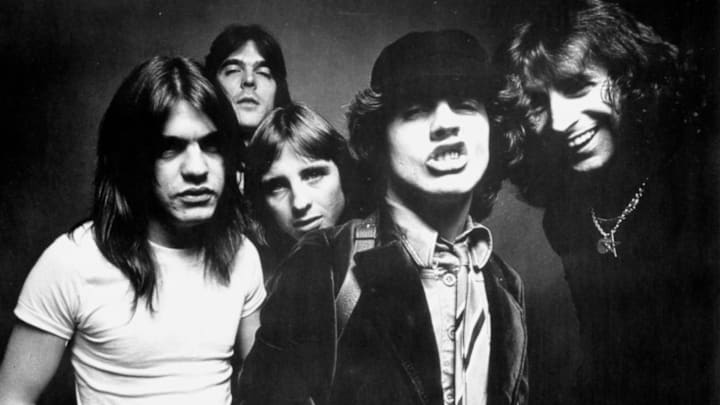
What if we told you AC/DC was named after a household appliance?
Australian rock band AC/DC rose to international stardom in 1979 with the release of Highway to Hell. Bridging rock ‘n’ roll and blues, they emerged as an early influence on the heavy metal genre, with their powerful guitar riffs and high-voltage energy.
Misunderstandings and assumptions about the dark and twisted origins of the name “AC/DC” became increasingly widespread shortly after their first overseas tour. As rumors circulated, many believed that the letters were an acronym for "Anti-Christ Devil's Child,” a supposition that couldn’t have been further from the truth.
What did AC/DC really stand for? And where did the band get the idea? Let's crank up the volume and uncover the surprisingly wholesome meaning behind the misunderstood name.
THE RISE OF AC/DC

The Young brothers formed AC/DC in Sydney, Australia, in 1973. In 1974, the Scottish-born Angus and Malcolm Young relocated from Sydney to Melbourne, expanded their lineup, and released several records (including High Voltage, T.N.T, and Dirty Deeds Done Dirt Cheap) that boosted their popularity in both Australia and Britain. The brothers, along with Bon Scott on vocals, Phil Rudd on drums, and Cliff Williams on bass, released Highway to Hell in 1979, launching AC/DC into a global spotlight. After Scott's passing in 1980, Brian Johnson stepped in as the band's new lead vocalist.
That same year, AC/DC released Back in Black, including legendary hits such as "You Shook Me All Night Long," "Hells Bells," "Shoot to Thrill," and "Rock and Roll Ain’t Noise Pollution." They spent much of the ‘80s on the road and kicked off the '90s with The Razors Edge, which featured "Thunderstruck," now one of their most-streamed songs of all time, surpassed only by "Highway to Hell" and "Back in Black."
AC/DC maintained a steady output of new music throughout the 2000s. They were inducted into the Rock & Roll Hall of Fame in 2003, achieved their first No. 1 album with 2008's Black Ice, and won their first Grammy in 2010 for Best Hard Rock Performance with “War Machine,” nearly 40 years after their debut record.
THE MEANING BEHIND AC/DC

With their swift rise to stardom, questions about the meaning behind their name quickly surfaced around the world. For years, people assumed that AC/DC stood for "Anti-Christ Devil's Child," largely because of the rebellious themes interpreted in their music.
In 1985, Angus Young and Brian Johnson sat down with Entertainment Tonight to clear up a few rumors, and, to the disappointment of conspiracy theorists, their name actually referred to something very ordinary. Young explained that he found the acronym on the power label of his sister's sewing machine in the early 1970s. "AC/DC" literally stands for "Alternating Current/Direct Current." He thought it would be a fitting band name, as heavy rock in that era was synonymous with electric energy, and "AC/DC" (appearing on countless everyday appliances) symbolized power.
FROM SEWING MACHINES TO SOLD-OUT STADIUMS
What started out as a straightforward reference to "power" gradually transformed into something demonic through hearsay and speculation. The misunderstanding highlights how quickly rumors can escalate, turning a harmless acronym seen on household appliances into a source of controversy.
AC/DC's origins had nothing to do with children of the devil and everything to do with the symbolism of power; rising from a simple sewing machine to electrifying audiences in stadiums worldwide.