%20%20--%3E%0A%3Csvg%20version%3D%221.1%22%20id%3D%22Layer_1%22%20xmlns%3D%22http%3A%2F%2Fwww.w3.org%2F2000%2Fsvg%22%20xmlns%3Axlink%3D%22http%3A%2F%2Fwww.w3.org%2F1999%2Fxlink%22%20x%3D%220px%22%20y%3D%220px%22%0A%09%20viewBox%3D%220%200%20684.6%2068.1%22%20style%3D%22enable-background%3Anew%200%200%20684.6%2068.1%3B%22%20xml%3Aspace%3D%22preserve%22%3E%0A%3Cg%3E%0A%09%3Cpath%20d%3D%22M444.1%2C29.3h-17.4v14.5h17.4V29.3z%20M36.4%2C68.1l29.3-50.8V0H50.4L32.9%2C36.8L15.5%2C0H0v68.1h16.7V45.8l12.4%2C22.3H36.4z%0A%09%09%20M49.1%2C68.1h16.6V23.4L49.1%2C52.1V68.1z%20M76.6%2C68.1h45V53.8H93.3V41.6h21V27.1h-21V14.8h28.3V0.1h-45V68.1z%20M175.6%2C68.1h17.3v-68%0A%09%09h-16.5v40.3L150%2C0.1h-17.6v68h16.7V27.7L175.6%2C68.1z%20M235.8%2C14.8h15.4V0.1h-47.4v14.7H219v53.2h16.8V14.8z%20M290.3%2C45.9h-17.1%0A%09%09l7.5-15.6h2L290.3%2C45.9z%20M298.7%2C68.1h18l-32.2-68h-5.7l-32%2C68h18l3.3-7.1h27.1L298.7%2C68.1z%20M325.2%2C68.1h46.2V53.8h-29.6V0.1h-16.7%0A%09%09V68.1z%20M423.7%2C14.8h27.2V0.1H407v68h16.7V14.8z%20M462%2C68.1h46.2V53.8h-29.6V0.1H462V68.1z%20M564.8%2C34.1c0%2C10.7-7.2%2C19.2-18.5%2C19.2%0A%09%09c-11.4%2C0-18.5-8.5-18.5-19.2s7.1-19.2%2C18.5-19.2C557.6%2C14.9%2C564.8%2C23.4%2C564.8%2C34.1%20M580.6%2C34.1c0-19-14.2-34-34.3-34%0A%09%09c-20.2%2C0-34.3%2C15-34.3%2C34c0%2C19%2C14.1%2C34%2C34.3%2C34C566.4%2C68.1%2C580.6%2C53.1%2C580.6%2C34.1%20M604.8%2C20.5c0-4.1%2C3.3-6.2%2C6.7-6.2%0A%09%09c4.4%2C0%2C6.6%2C3%2C6.6%2C6.6h14.7C631.8%2C9.1%2C625.1%2C0.1%2C611%2C0.1c-12%2C0-21.7%2C9.3-21.7%2C20.6c0%2C10.9%2C5.9%2C15.9%2C16.7%2C19.8%0A%09%09c5.2%2C1.8%2C11.5%2C3.2%2C11.5%2C8c0%2C3.3-2.4%2C5.5-6.4%2C5.5c-3.6%2C0-6.6-3-6.6-6.7h-15.2c0%2C11.5%2C7.9%2C20.8%2C21.8%2C20.8c12%2C0%2C21.6-9.3%2C21.6-20.6%0A%09%09c0-10-5.3-16.4-16.7-19.8C610.6%2C26.1%2C604.8%2C25.3%2C604.8%2C20.5%20M670%2C20.9h14.7C683.8%2C9.1%2C677.1%2C0.1%2C663%2C0.1c-12%2C0-21.7%2C9.3-21.7%2C20.6%0A%09%09c0%2C10.9%2C5.9%2C15.9%2C16.7%2C19.8c5.2%2C1.8%2C11.5%2C3.2%2C11.5%2C8c0%2C3.3-2.4%2C5.5-6.4%2C5.5c-3.6%2C0-6.6-3-6.6-6.7h-15.2c0%2C11.5%2C7.9%2C20.8%2C21.8%2C20.8%0A%09%09c12%2C0%2C21.6-9.3%2C21.6-20.6c0-10-5.3-16.4-16.7-19.8c-5.4-1.6-11.3-2.4-11.3-7.2c0-4.1%2C3.3-6.2%2C6.7-6.2C667.7%2C14.4%2C670%2C17.3%2C670%2C20.9%0A%09%09%22%2F%3E%0A%3C%2Fg%3E%0A%3C%2Fsvg%3E%0A)

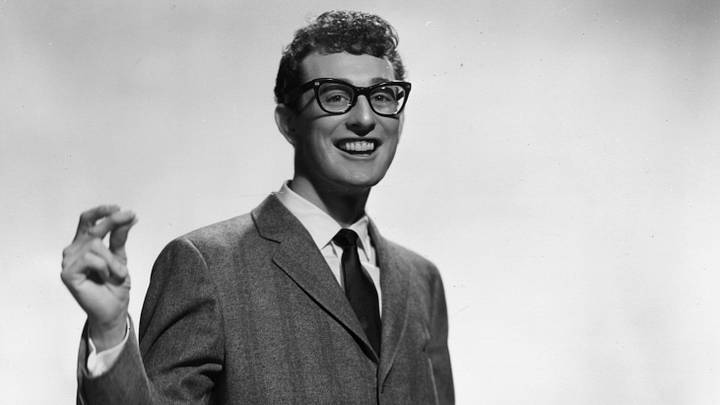
Singer-songwriter Buddy Holly didn’t intentionally change the spelling of his last name: somebody at a record company changed it for him, and he decided one letter wasn’t worth the argument.
He was born Charles Hardin Holley in Lubbock, Texas, on September 7, 1936, the youngest of four children of Ella Pauline and Lawrence Odell “L.O.” Holley, in a house where everybody but his father could sing or play something. The nickname arrived long before the misspelling did, because, as his mother once explained, “Charles Hardin was just too long a name for such a little boy.”
The “e” survived his entire childhood and stopped surviving somewhere around a typewriter. In October 1955, Nashville agent Eddie Crandall caught the 19-year-old opening for Bill Haley and His Comets at Lubbock’s Fair Park Coliseum, and he moved a demo acetate up the chain to Grand Ole Opry manager Jim Denny and on to Paul Cohen, who ran Decca’s Nashville operation. By the last week of January 1956, Holley had a Decca recording deal and a three-year songwriter’s contract with Cedarwood Publishing, and on January 26 he was cutting his first four sides at Owen Bradley’s barn in Nashville, billed as Buddy and the Two Tones.
It All Started From a Typo

The paperwork caught up on February 8, 1956, when the executed Decca contract reached him from Denny’s office with the “e” gone. The singer kept the new spelling instead of correcting it, and when Decca released his first single, “Blue Days, Black Nights” backed with “Love Me,” that April, the label read Buddy Holly.
The Texas Historical Commission’s marker outside the Buddy Holly Center in Lubbock puts it in about that many words: “Buddy’s last name was misspelled on the contract: ‘Holley’ became ‘Holly.’”
What nobody produces is the contract. The state marker and the museum’s own biographical timeline both carry the story, but the retellings disagree on whose hand slipped — an East Texas Historical Association column pins it on Cohen’s typist, while the Buddy Holly Center says only that the letter was dropped inadvertently.
The typo outlived the deal that created it. Decca wrote on January 22, 1957, to decline its option, and it barred Holly from re-recording anything he’d cut in Nashville, which is why the hit version of “That’ll Be the Day” had to go out under a band name that Jerry Allison found in an encyclopedia entry on insects, after the group briefly considered and discarded the Beetles.
Brunswick, which issued the Crickets’ singles, turned out to be a Decca subsidiary, and so did Coral, which issued the records credited to Buddy Holly.
The rock and roll icon never actually bothered to make the change legally official anywhere that wasn’t show business. Lubbock property records from August 1958 list him as Charles Buddy Holley, and the marker over his grave in the City of Lubbock Cemetery gives him back his “e.”