%20%20--%3E%0A%3Csvg%20version%3D%221.1%22%20id%3D%22Layer_1%22%20xmlns%3D%22http%3A%2F%2Fwww.w3.org%2F2000%2Fsvg%22%20xmlns%3Axlink%3D%22http%3A%2F%2Fwww.w3.org%2F1999%2Fxlink%22%20x%3D%220px%22%20y%3D%220px%22%0A%09%20viewBox%3D%220%200%20684.6%2068.1%22%20style%3D%22enable-background%3Anew%200%200%20684.6%2068.1%3B%22%20xml%3Aspace%3D%22preserve%22%3E%0A%3Cg%3E%0A%09%3Cpath%20d%3D%22M444.1%2C29.3h-17.4v14.5h17.4V29.3z%20M36.4%2C68.1l29.3-50.8V0H50.4L32.9%2C36.8L15.5%2C0H0v68.1h16.7V45.8l12.4%2C22.3H36.4z%0A%09%09%20M49.1%2C68.1h16.6V23.4L49.1%2C52.1V68.1z%20M76.6%2C68.1h45V53.8H93.3V41.6h21V27.1h-21V14.8h28.3V0.1h-45V68.1z%20M175.6%2C68.1h17.3v-68%0A%09%09h-16.5v40.3L150%2C0.1h-17.6v68h16.7V27.7L175.6%2C68.1z%20M235.8%2C14.8h15.4V0.1h-47.4v14.7H219v53.2h16.8V14.8z%20M290.3%2C45.9h-17.1%0A%09%09l7.5-15.6h2L290.3%2C45.9z%20M298.7%2C68.1h18l-32.2-68h-5.7l-32%2C68h18l3.3-7.1h27.1L298.7%2C68.1z%20M325.2%2C68.1h46.2V53.8h-29.6V0.1h-16.7%0A%09%09V68.1z%20M423.7%2C14.8h27.2V0.1H407v68h16.7V14.8z%20M462%2C68.1h46.2V53.8h-29.6V0.1H462V68.1z%20M564.8%2C34.1c0%2C10.7-7.2%2C19.2-18.5%2C19.2%0A%09%09c-11.4%2C0-18.5-8.5-18.5-19.2s7.1-19.2%2C18.5-19.2C557.6%2C14.9%2C564.8%2C23.4%2C564.8%2C34.1%20M580.6%2C34.1c0-19-14.2-34-34.3-34%0A%09%09c-20.2%2C0-34.3%2C15-34.3%2C34c0%2C19%2C14.1%2C34%2C34.3%2C34C566.4%2C68.1%2C580.6%2C53.1%2C580.6%2C34.1%20M604.8%2C20.5c0-4.1%2C3.3-6.2%2C6.7-6.2%0A%09%09c4.4%2C0%2C6.6%2C3%2C6.6%2C6.6h14.7C631.8%2C9.1%2C625.1%2C0.1%2C611%2C0.1c-12%2C0-21.7%2C9.3-21.7%2C20.6c0%2C10.9%2C5.9%2C15.9%2C16.7%2C19.8%0A%09%09c5.2%2C1.8%2C11.5%2C3.2%2C11.5%2C8c0%2C3.3-2.4%2C5.5-6.4%2C5.5c-3.6%2C0-6.6-3-6.6-6.7h-15.2c0%2C11.5%2C7.9%2C20.8%2C21.8%2C20.8c12%2C0%2C21.6-9.3%2C21.6-20.6%0A%09%09c0-10-5.3-16.4-16.7-19.8C610.6%2C26.1%2C604.8%2C25.3%2C604.8%2C20.5%20M670%2C20.9h14.7C683.8%2C9.1%2C677.1%2C0.1%2C663%2C0.1c-12%2C0-21.7%2C9.3-21.7%2C20.6%0A%09%09c0%2C10.9%2C5.9%2C15.9%2C16.7%2C19.8c5.2%2C1.8%2C11.5%2C3.2%2C11.5%2C8c0%2C3.3-2.4%2C5.5-6.4%2C5.5c-3.6%2C0-6.6-3-6.6-6.7h-15.2c0%2C11.5%2C7.9%2C20.8%2C21.8%2C20.8%0A%09%09c12%2C0%2C21.6-9.3%2C21.6-20.6c0-10-5.3-16.4-16.7-19.8c-5.4-1.6-11.3-2.4-11.3-7.2c0-4.1%2C3.3-6.2%2C6.7-6.2C667.7%2C14.4%2C670%2C17.3%2C670%2C20.9%0A%09%09%22%2F%3E%0A%3C%2Fg%3E%0A%3C%2Fsvg%3E%0A)

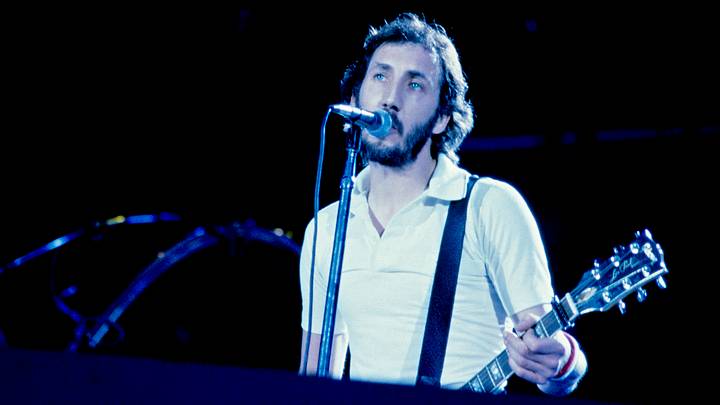
There’s something about that opening riff in “Baba O’Riley.” It practically shimmers with an infectious energy that has made countless stadium crowds scream with joy.
That riff, as it turns out, was inspired by a spiritual guru named Meher Baba, who claimed to be the manifestation of God in human form. That’s not the only fact that might surprise you about “Baba O’Riley,” the song by The Who that many people mistakenly think is called “Teenage Wasteland.”
At first listen, the song indeed might come off as a bullish anthem about the ephemeral carelessness of the teenage condition. But it was originally envisioned as the opening number in a wildly ambitious—and eerily prescient—rock opera Pete Townshend was creating at the time, which focused on environmental destruction, addiction to technology, and music’s potential role in averting the apocalypse.
Tommy and the Silent Guru
To trace the origins of “Baba O’Riley,” it's necessary to take a look at the smash hit rock opera that preceded it.
In 1969, The Who’s Tommy exploded onto the scene. It told the story of a traumatized deaf, dumb, and blind boy who grows up to become a pinball-playing messiah. Tommy’s silence was in part inspired by The Who chief songwriter Townshend’s guru, Meher Baba, who took a vow of silence from 1925 until his death in 1969.
Born in Pune, India, Meher Baba later claimed to be an incarnation of God, akin to Jesus Christ and the Buddha. “I am the same Ancient One come again into your midst,” he told his disciples, adding that major religions are really about the same “one reality which is God.” He went silent in 1925, originally communicating via an alphabet but later ceasing to do so entirely. “You have had enough of my words; now is the time to live by them,” he explained.
Townshend encountered Meher Baba in 1967 while working on Tommy, after a friend told him that many of the ideas he was putting into the project had already been expressed by the guru. His devotion to Meher Baba was immediate and transformative. They inspired him to quit drugs and to dedicate himself to Baba’s teachings, which included the idea that life was an illusion, and only complete surrender to the divine could help one wake up from the dream of suffering and separation.
It’s easy to trace Baba’s influence on Tommy. “Tommy’s real self represents the aim—God—and the illusory self is the teacher; life, the way, the path and all this,” Townshend told Rolling Stone. “The coming together of these are what make him aware. They make him see and hear and speak so he becomes a saint who everybody flocks to.”
Life House: A Vision of a World Saved By Music

After Tommy became a huge success, the pressure was on to create a follow-up. Townshend then conceptualized Lifehouse, an ambitious, futuristic film project set in an apocalyptic future.
“In Lifehouse, humanity would survive ecological disaster by living in pod-like suits, amused and distracted by sophisticated programming delivered to them by the government,” Townshend explained of his strangely prophetic vision. “Because of its potential to awaken the dormant masses, rock music would be banned.”
A Secret Chord to Unite the Masses
The Lifehouse story would culminate with a music festival that had the capacity to liberate and unite humanity. The inspiration for this idea came from the work of Sufi mystic Hazrat Inayat Khan, who wrote extensively about the divine powers of music.
Khan also proposed that there was a universal musical note—which he described as “a keynote of the chord to which we all belong”—that could heal and transform the listener. This, essentially, was what Townshend imagined the people at his fictional music festival would find.
The story centered around a composer named Bobby, who figured out a way to hack into the grid system that controlled everyone and summoned them to the music festival. There, he would translate everyone’s vital statistics into songs that together would become a transcendent, perfect note. At one point, Townshend himself envisioned actually using technology that could detect information from listeners and convert it into music, thereby creating a “universal chord” that could sweep the audience into a kind of permanent state of ecstatic harmony.
This vision was also informed by Townshend’s experiences on tour, where he felt awed and humbled by the power of music. “I've seen moments in Who gigs where the vibrations were becoming so pure that I thought the whole world was just going to stop, the whole thing was just becoming so unified,” he said.
Yet the whole idea proved extremely confounding for Townshend’s bandmates and team. Eventually, Townshend became near-suicidal in his desperation to make the project work.
“It didn’t make any sense,” said his bandmate Roger Daltrey. “None of us could grasp it. But it did have some good ideas in it. The one I picked up on was that if we ever did find the meaning of life, it would be a musical note. I thought that was a great idea.”
Ultimately, Townshend was persuaded to shelve his vision. In exchange, he recorded some of the songs he’d written for the show for the album Who’s Next. One of them was “Baba O’Riley.”
The Origins of the Riff
Technology was a major theme in Lifehouse, and Townshend wanted to incorporate it into the music. He was inspired by the work of avant-garde composer Terry Riley, who became known for using loops and droning repetitions of single chords in his works.
Townshend had also become interested in the possibility of using people’s personal information to create synthesizer chords and patterns. Using his Lowrey Berkshire Deluxe TBO-1 organ, he crafted a riff inspired by the essence and energy of his guru, Meher Baba, which became the start of “Baba O’Riley.” The song’s title is a mix of Meher Baba and Terry Riley’s names.
The Original Vision for “Baba O’Riley”—and What It Became
“Baba O’Riley” was meant to appear at the start of Lifehouse. It would have introduced audiences to a couple named Ray and Sally who live “out here in the fields,” away from the oppressive government that forces everyone to stay plugged into a simulated, digital world. Their daughter, Mary, would have already begun making her way to Life House, a music festival that promises to liberate humanity, and “Baba O’Riley” was meant to follow Ray and Sally as they search for her.
On their way, they would pass by many other young wanderers heading the festival, who would have existed in a state of chaos and disaster. Townshend modeled these figures after the disarray he saw among young people at some of his own concerts, including Woodstock in 1969 and the Isle of Wight Festival in 1970. “Audience members were strung out on acid and 20 people had brain damage,” Townshend said of Woodstock, calling the landscape “absolute desolation.” The mess left behind by audiences at Isle of Wight, meanwhile, inspired the phrase “teenage wasteland.”
Townshend first produced a 25-minute version of the song, but it was later cut down to five. Though he had been crushed when the band decided to abandon Lifehouse, he was happy to have created Who’s Next out of it all. “I was delighted with it,” he said of the album. “It felt like The Who’s first proper album. It felt uncomplicated and simple and I just didn’t care that the story had been lost. I was just relieved to have made anything.”
“Baba O’Riley” has gone on to have a tremendous legacy of its own. Thanks to its rollicking refrain, the song has become something of a defiant fight song, and has been featured in movie trailers for everything from Spike Lee’s Summer of Sam to A Bug’s Life.
Townshend, meanwhile, has revisited Lifehouse numerous times over the years, releasing several box sets of demos related to the show in the 2000s. The project was also turned into a radio drama by the BBC in 1999.
To Daltrey, the song has never lost its association with environmental collapse, technological addiction, and the possibility of a way out through music. “[It] speaks to generation after generation,” he said. “Life is not looking down at screens, it is looking up. We are heading for catastrophe with the addiction that is going on in the younger generation. Your life will disappear if you are not careful. You are being controlled, and that is terrible.”