%20%20--%3E%0A%3Csvg%20version%3D%221.1%22%20id%3D%22Layer_1%22%20xmlns%3D%22http%3A%2F%2Fwww.w3.org%2F2000%2Fsvg%22%20xmlns%3Axlink%3D%22http%3A%2F%2Fwww.w3.org%2F1999%2Fxlink%22%20x%3D%220px%22%20y%3D%220px%22%0A%09%20viewBox%3D%220%200%20684.6%2068.1%22%20style%3D%22enable-background%3Anew%200%200%20684.6%2068.1%3B%22%20xml%3Aspace%3D%22preserve%22%3E%0A%3Cg%3E%0A%09%3Cpath%20d%3D%22M444.1%2C29.3h-17.4v14.5h17.4V29.3z%20M36.4%2C68.1l29.3-50.8V0H50.4L32.9%2C36.8L15.5%2C0H0v68.1h16.7V45.8l12.4%2C22.3H36.4z%0A%09%09%20M49.1%2C68.1h16.6V23.4L49.1%2C52.1V68.1z%20M76.6%2C68.1h45V53.8H93.3V41.6h21V27.1h-21V14.8h28.3V0.1h-45V68.1z%20M175.6%2C68.1h17.3v-68%0A%09%09h-16.5v40.3L150%2C0.1h-17.6v68h16.7V27.7L175.6%2C68.1z%20M235.8%2C14.8h15.4V0.1h-47.4v14.7H219v53.2h16.8V14.8z%20M290.3%2C45.9h-17.1%0A%09%09l7.5-15.6h2L290.3%2C45.9z%20M298.7%2C68.1h18l-32.2-68h-5.7l-32%2C68h18l3.3-7.1h27.1L298.7%2C68.1z%20M325.2%2C68.1h46.2V53.8h-29.6V0.1h-16.7%0A%09%09V68.1z%20M423.7%2C14.8h27.2V0.1H407v68h16.7V14.8z%20M462%2C68.1h46.2V53.8h-29.6V0.1H462V68.1z%20M564.8%2C34.1c0%2C10.7-7.2%2C19.2-18.5%2C19.2%0A%09%09c-11.4%2C0-18.5-8.5-18.5-19.2s7.1-19.2%2C18.5-19.2C557.6%2C14.9%2C564.8%2C23.4%2C564.8%2C34.1%20M580.6%2C34.1c0-19-14.2-34-34.3-34%0A%09%09c-20.2%2C0-34.3%2C15-34.3%2C34c0%2C19%2C14.1%2C34%2C34.3%2C34C566.4%2C68.1%2C580.6%2C53.1%2C580.6%2C34.1%20M604.8%2C20.5c0-4.1%2C3.3-6.2%2C6.7-6.2%0A%09%09c4.4%2C0%2C6.6%2C3%2C6.6%2C6.6h14.7C631.8%2C9.1%2C625.1%2C0.1%2C611%2C0.1c-12%2C0-21.7%2C9.3-21.7%2C20.6c0%2C10.9%2C5.9%2C15.9%2C16.7%2C19.8%0A%09%09c5.2%2C1.8%2C11.5%2C3.2%2C11.5%2C8c0%2C3.3-2.4%2C5.5-6.4%2C5.5c-3.6%2C0-6.6-3-6.6-6.7h-15.2c0%2C11.5%2C7.9%2C20.8%2C21.8%2C20.8c12%2C0%2C21.6-9.3%2C21.6-20.6%0A%09%09c0-10-5.3-16.4-16.7-19.8C610.6%2C26.1%2C604.8%2C25.3%2C604.8%2C20.5%20M670%2C20.9h14.7C683.8%2C9.1%2C677.1%2C0.1%2C663%2C0.1c-12%2C0-21.7%2C9.3-21.7%2C20.6%0A%09%09c0%2C10.9%2C5.9%2C15.9%2C16.7%2C19.8c5.2%2C1.8%2C11.5%2C3.2%2C11.5%2C8c0%2C3.3-2.4%2C5.5-6.4%2C5.5c-3.6%2C0-6.6-3-6.6-6.7h-15.2c0%2C11.5%2C7.9%2C20.8%2C21.8%2C20.8%0A%09%09c12%2C0%2C21.6-9.3%2C21.6-20.6c0-10-5.3-16.4-16.7-19.8c-5.4-1.6-11.3-2.4-11.3-7.2c0-4.1%2C3.3-6.2%2C6.7-6.2C667.7%2C14.4%2C670%2C17.3%2C670%2C20.9%0A%09%09%22%2F%3E%0A%3C%2Fg%3E%0A%3C%2Fsvg%3E%0A)

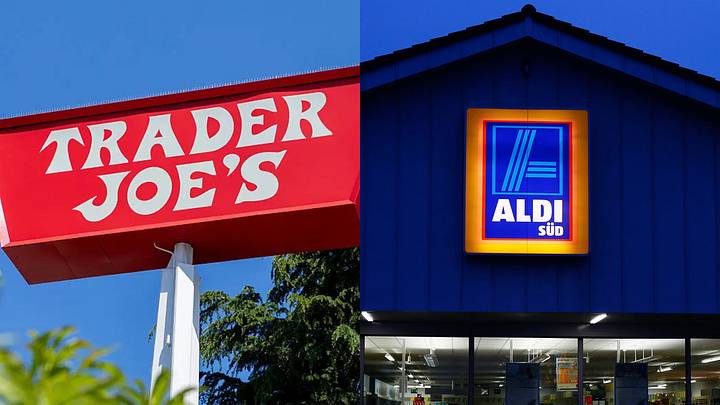
I’ll be honest: I’m a Trader Joe’s loyalist. And I’m obviously not alone, judging by the length of the lines that seem to fill every store near me, no matter the time or day.
Trader Joe’s is often ranked as one of the more beloved grocery stores in the United States, though it has competition—a 2026 ranking from YouGov placed Aldi at the top of its list of highest-rated grocery stores in America, followed by 7-Eleven, with Trader Joe’s trailing close behind that.
Both Trader Joe’s and Aldi inspire a great deal of brand loyalty in their customers, and the two companies are also often pitted against one another. Aldi is often called a better option for slightly lower prices and pantry staples, while Trader Joe’s is renowned for its specialty items. In 2026, things came to a head when a “Trader Joe’s vs. Aldi Rave” was held in Minneapolis, with many partiers repurposing their favorite grocery bags as tube tops and dancing the night away.
If you’re at all invested in either of these stores, it may interest you to know that they actually have a common lineage: German brothers Karl and Theo Albrecht, who founded Aldi together in the mid-20th century but reportedly split due to a feud over whether or not to sell cigarettes.
Trader Joe’s and Aldi's Shared History

Both Trader Joe’s and Aldi can trace their ownership back to a small shop that sold baked goods in Essen, Germany, which opened in the year 1913. The founder was Anna Albrecht, who was forced to become the family’s sole breadwinner after her husband, a miner, fell ill with emphysema.
The Albrechts had two sons named Karl and Theo. During World War II, Theo served in Rommel’s Afrika Korps while Karl fought on the Eastern Front. Both wound up in prisoner-of-war camps, and came home in 1945 to find their city in ruins but their mother’s shop still standing.
The brothers soon took over the family business, and focused on building a store that sold carefully selected products at low prices. To keep prices down, they initially decided to sell only non-perishable items and eschewed branding and advertising, and often displayed products “on wooden pallets in the cardboard boxes in which they were delivered,” per The New York Times.
Their first store opened in Essen-Schonnebeck, and the business expanded quickly, growing to over 100 stores by 1955.
Why Aldi Split

In 1961, the brothers decided to part ways, and the stores were split into two separate companies: Aldi Nord, which covered stores in the north of the country and would be Theo's domain, and Aldi Süd, which Karl helmed.
Today, Aldi Süd runs all Aldi stores in the United States. Meanwhile, Trader Joe’s was founded in 1967 by Joe Coulombe, but in 1979 it was purchased by Theo Albrecht.
So why did Karl and Theo decide to separate their businesses? According to The Houston Chronicle, it was all because of one fundamental disagreement: Theo wanted to sell cigarettes, while Karl did not. This wasn’t because of health reasons, though. Apparently, Karl was convinced that cigarettes would draw shoplifters to their stores.
Aldi and Trader Joe’s Today

Today, Trader Joe’s and Aldi operate independently from one another. Trader Joe’s website declares that though it is “owned by families that also own part of Aldi Nord,” “Trader Joe’s and Aldi Nord operate separately.” It also notes that the store has “no business or ownership relationship with Aldi Sud.”
The Albrecht family, meanwhile, has remained extremely private over the years, living in highly secure estates in the Ruhr Valley and rarely ever speaking to the press. Their reclusiveness increased after Theo was kidnapped in 1971, leading to the Albrechts paying a roughly $2 million ransom—which the famously frugal Theo reportedly later listed as a business expense.
The pair’s business ventures ultimately paid dividends. Theo died in 2012 with an estimated net worth of $17.5 billion, and Karl died in 2014 with an estimated net worth of $25 billion—quite a rise from the German corner store where it all began.