%20%20--%3E%0A%3Csvg%20version%3D%221.1%22%20id%3D%22Layer_1%22%20xmlns%3D%22http%3A%2F%2Fwww.w3.org%2F2000%2Fsvg%22%20xmlns%3Axlink%3D%22http%3A%2F%2Fwww.w3.org%2F1999%2Fxlink%22%20x%3D%220px%22%20y%3D%220px%22%0A%09%20viewBox%3D%220%200%20684.6%2068.1%22%20style%3D%22enable-background%3Anew%200%200%20684.6%2068.1%3B%22%20xml%3Aspace%3D%22preserve%22%3E%0A%3Cg%3E%0A%09%3Cpath%20d%3D%22M444.1%2C29.3h-17.4v14.5h17.4V29.3z%20M36.4%2C68.1l29.3-50.8V0H50.4L32.9%2C36.8L15.5%2C0H0v68.1h16.7V45.8l12.4%2C22.3H36.4z%0A%09%09%20M49.1%2C68.1h16.6V23.4L49.1%2C52.1V68.1z%20M76.6%2C68.1h45V53.8H93.3V41.6h21V27.1h-21V14.8h28.3V0.1h-45V68.1z%20M175.6%2C68.1h17.3v-68%0A%09%09h-16.5v40.3L150%2C0.1h-17.6v68h16.7V27.7L175.6%2C68.1z%20M235.8%2C14.8h15.4V0.1h-47.4v14.7H219v53.2h16.8V14.8z%20M290.3%2C45.9h-17.1%0A%09%09l7.5-15.6h2L290.3%2C45.9z%20M298.7%2C68.1h18l-32.2-68h-5.7l-32%2C68h18l3.3-7.1h27.1L298.7%2C68.1z%20M325.2%2C68.1h46.2V53.8h-29.6V0.1h-16.7%0A%09%09V68.1z%20M423.7%2C14.8h27.2V0.1H407v68h16.7V14.8z%20M462%2C68.1h46.2V53.8h-29.6V0.1H462V68.1z%20M564.8%2C34.1c0%2C10.7-7.2%2C19.2-18.5%2C19.2%0A%09%09c-11.4%2C0-18.5-8.5-18.5-19.2s7.1-19.2%2C18.5-19.2C557.6%2C14.9%2C564.8%2C23.4%2C564.8%2C34.1%20M580.6%2C34.1c0-19-14.2-34-34.3-34%0A%09%09c-20.2%2C0-34.3%2C15-34.3%2C34c0%2C19%2C14.1%2C34%2C34.3%2C34C566.4%2C68.1%2C580.6%2C53.1%2C580.6%2C34.1%20M604.8%2C20.5c0-4.1%2C3.3-6.2%2C6.7-6.2%0A%09%09c4.4%2C0%2C6.6%2C3%2C6.6%2C6.6h14.7C631.8%2C9.1%2C625.1%2C0.1%2C611%2C0.1c-12%2C0-21.7%2C9.3-21.7%2C20.6c0%2C10.9%2C5.9%2C15.9%2C16.7%2C19.8%0A%09%09c5.2%2C1.8%2C11.5%2C3.2%2C11.5%2C8c0%2C3.3-2.4%2C5.5-6.4%2C5.5c-3.6%2C0-6.6-3-6.6-6.7h-15.2c0%2C11.5%2C7.9%2C20.8%2C21.8%2C20.8c12%2C0%2C21.6-9.3%2C21.6-20.6%0A%09%09c0-10-5.3-16.4-16.7-19.8C610.6%2C26.1%2C604.8%2C25.3%2C604.8%2C20.5%20M670%2C20.9h14.7C683.8%2C9.1%2C677.1%2C0.1%2C663%2C0.1c-12%2C0-21.7%2C9.3-21.7%2C20.6%0A%09%09c0%2C10.9%2C5.9%2C15.9%2C16.7%2C19.8c5.2%2C1.8%2C11.5%2C3.2%2C11.5%2C8c0%2C3.3-2.4%2C5.5-6.4%2C5.5c-3.6%2C0-6.6-3-6.6-6.7h-15.2c0%2C11.5%2C7.9%2C20.8%2C21.8%2C20.8%0A%09%09c12%2C0%2C21.6-9.3%2C21.6-20.6c0-10-5.3-16.4-16.7-19.8c-5.4-1.6-11.3-2.4-11.3-7.2c0-4.1%2C3.3-6.2%2C6.7-6.2C667.7%2C14.4%2C670%2C17.3%2C670%2C20.9%0A%09%09%22%2F%3E%0A%3C%2Fg%3E%0A%3C%2Fsvg%3E%0A)

There are plenty of ways American and European foods (and kitchens) are different.
What Americans call biscuits, for instance, wouldn’t go down too well in Britain and Europe, where the word is better known as a cookie-like sweet treat (and American biscuits are closer to scones). Meanwhile, in return, Americans are only just catching up to the simple delights of quintessential meals from the other side of the Atlantic like beans on toast, having seemingly been put off by what seems, like a madcap combination.
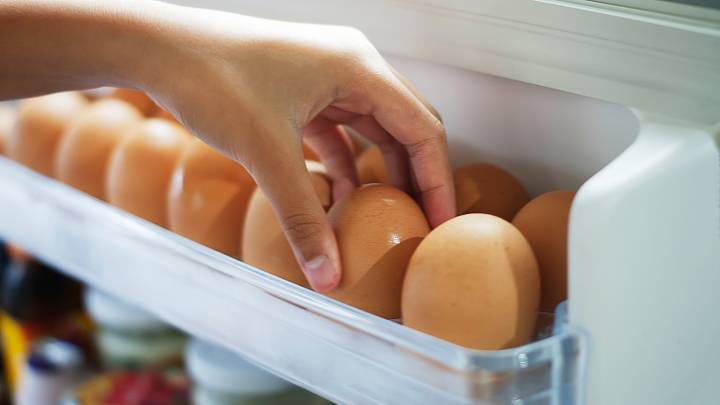
It’s not just meals and ingredients that differ between America and Europe, though, but our kitchen safety rules and practices too—and that includes the American tendency to store eggs in the refrigerator, while Europeans tend to keep them at room temperature, often out on a countertop. So why the difference?
AMERICAN EGGS

Well, unlike the biscuits vs. beans situation, this one isn’t down to simple personal preferences. In America, the US government regulations demand that commercial egg producers wash and sanitize eggs ahead of sale. This washing process—a rinse in warm water followed by a sanitizing agent, of often a mild food-grade chlorine solution—is all intended to reduce the risk of contamination from the bacterium Salmonella enteritidis, which can cause unpleasant (though rarely serious) foodborne illness. Although some Salmonella can naturally find its way inside the egg during its development if the hen producing it is infected itself, it is just as likely to become contaminated as it passes out of the hen during laying, or from unhygienic conditions in barnyards and hatcheries, through contamination from the hen’s feces.
Washing and sanitizing the eggs therefore removes any potential bacterial contaminants—but US regulations then recommend the eggs be immediately refrigerated (and, more importantly, kept that way) to further reduce any potential bacterial growth. Eggs are ultimately kept below room temperature during packaging and transportation, are refrigerated in stores, and then recommended to be kept in the refrigerator at home. Previously refrigerated eggs should likewise not be kept out for longer than two hours to avoid any potential Salmonella contamination.
Washing might sound like a simple and effective solution here, but there’s a catch. The US Department of Agriculture’s recommended method of cleaning eggs also unavoidably removes a thin protective film on the very outside of the egg’s shell, called the cuticle. This entirely organic layer naturally protects the egg from bacterial contamination, while remaining thin and porous enough for oxygen to pass through the shell to the developing chick inside. Removing the cuticle by washing the eggs, therefore, has the opposing effects of both sterilizing them while also leaving them open to future contamination. The only way to keep a washed egg safe, ultimately, is to keep it cold enough for the Salmonella bacteria’s growth to be impeded.
EUROPEAN EGGS

Over in Europe, though, the problem of Salmonella contamination is handled differently. British and EU food regulations tackle the problem at its source by ensuring the immediate health of the chickens laying the eggs themselves. Commercial flocks of hens must therefore undergo regular Salmonella testing to ensure there is no contamination present, while strict hygiene, welfare, and biosecurity rules further ensure that laying hens are kept in clean conditions and that their eggs are therefore unlikely to become contaminated after being laid. If Salmonella is found in a laying flock—or if the flock itself has not been adequately screened for Salmonella infection—the eggs cannot legally be sold as table eggs, but in some European countries can still be sold in processed form: any potential Salmonella bacteria can be eradicated relatively easily using pasteurization techniques, which render any produce made from potentially infected hens’ eggs perfectly safe.
Arrangements like these mean that European eggs do not need to undergo the same washing and sanitization processes as American eggs, and so do not lose their naturally protective cuticle. As a result, they do not require refrigeration, as the cuticle continues to do its job of naturally protecting the eggs after they have been laid, allowing European consumers to safely keep their eggs at room temperature.