%20%20--%3E%0A%3Csvg%20version%3D%221.1%22%20id%3D%22Layer_1%22%20xmlns%3D%22http%3A%2F%2Fwww.w3.org%2F2000%2Fsvg%22%20xmlns%3Axlink%3D%22http%3A%2F%2Fwww.w3.org%2F1999%2Fxlink%22%20x%3D%220px%22%20y%3D%220px%22%0A%09%20viewBox%3D%220%200%20684.6%2068.1%22%20style%3D%22enable-background%3Anew%200%200%20684.6%2068.1%3B%22%20xml%3Aspace%3D%22preserve%22%3E%0A%3Cg%3E%0A%09%3Cpath%20d%3D%22M444.1%2C29.3h-17.4v14.5h17.4V29.3z%20M36.4%2C68.1l29.3-50.8V0H50.4L32.9%2C36.8L15.5%2C0H0v68.1h16.7V45.8l12.4%2C22.3H36.4z%0A%09%09%20M49.1%2C68.1h16.6V23.4L49.1%2C52.1V68.1z%20M76.6%2C68.1h45V53.8H93.3V41.6h21V27.1h-21V14.8h28.3V0.1h-45V68.1z%20M175.6%2C68.1h17.3v-68%0A%09%09h-16.5v40.3L150%2C0.1h-17.6v68h16.7V27.7L175.6%2C68.1z%20M235.8%2C14.8h15.4V0.1h-47.4v14.7H219v53.2h16.8V14.8z%20M290.3%2C45.9h-17.1%0A%09%09l7.5-15.6h2L290.3%2C45.9z%20M298.7%2C68.1h18l-32.2-68h-5.7l-32%2C68h18l3.3-7.1h27.1L298.7%2C68.1z%20M325.2%2C68.1h46.2V53.8h-29.6V0.1h-16.7%0A%09%09V68.1z%20M423.7%2C14.8h27.2V0.1H407v68h16.7V14.8z%20M462%2C68.1h46.2V53.8h-29.6V0.1H462V68.1z%20M564.8%2C34.1c0%2C10.7-7.2%2C19.2-18.5%2C19.2%0A%09%09c-11.4%2C0-18.5-8.5-18.5-19.2s7.1-19.2%2C18.5-19.2C557.6%2C14.9%2C564.8%2C23.4%2C564.8%2C34.1%20M580.6%2C34.1c0-19-14.2-34-34.3-34%0A%09%09c-20.2%2C0-34.3%2C15-34.3%2C34c0%2C19%2C14.1%2C34%2C34.3%2C34C566.4%2C68.1%2C580.6%2C53.1%2C580.6%2C34.1%20M604.8%2C20.5c0-4.1%2C3.3-6.2%2C6.7-6.2%0A%09%09c4.4%2C0%2C6.6%2C3%2C6.6%2C6.6h14.7C631.8%2C9.1%2C625.1%2C0.1%2C611%2C0.1c-12%2C0-21.7%2C9.3-21.7%2C20.6c0%2C10.9%2C5.9%2C15.9%2C16.7%2C19.8%0A%09%09c5.2%2C1.8%2C11.5%2C3.2%2C11.5%2C8c0%2C3.3-2.4%2C5.5-6.4%2C5.5c-3.6%2C0-6.6-3-6.6-6.7h-15.2c0%2C11.5%2C7.9%2C20.8%2C21.8%2C20.8c12%2C0%2C21.6-9.3%2C21.6-20.6%0A%09%09c0-10-5.3-16.4-16.7-19.8C610.6%2C26.1%2C604.8%2C25.3%2C604.8%2C20.5%20M670%2C20.9h14.7C683.8%2C9.1%2C677.1%2C0.1%2C663%2C0.1c-12%2C0-21.7%2C9.3-21.7%2C20.6%0A%09%09c0%2C10.9%2C5.9%2C15.9%2C16.7%2C19.8c5.2%2C1.8%2C11.5%2C3.2%2C11.5%2C8c0%2C3.3-2.4%2C5.5-6.4%2C5.5c-3.6%2C0-6.6-3-6.6-6.7h-15.2c0%2C11.5%2C7.9%2C20.8%2C21.8%2C20.8%0A%09%09c12%2C0%2C21.6-9.3%2C21.6-20.6c0-10-5.3-16.4-16.7-19.8c-5.4-1.6-11.3-2.4-11.3-7.2c0-4.1%2C3.3-6.2%2C6.7-6.2C667.7%2C14.4%2C670%2C17.3%2C670%2C20.9%0A%09%09%22%2F%3E%0A%3C%2Fg%3E%0A%3C%2Fsvg%3E%0A)

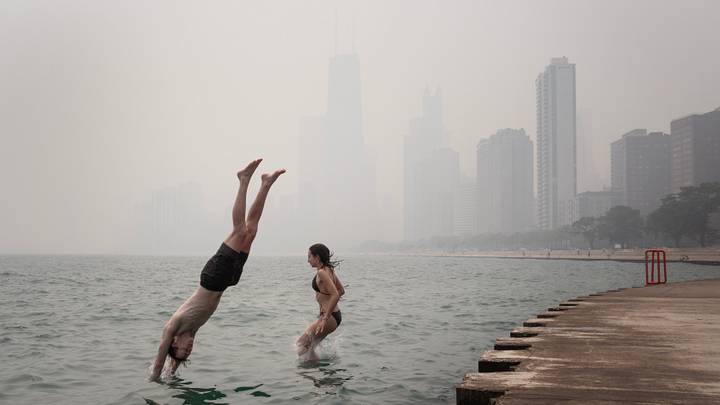
Summer wildfires have had devastating effects on homes, wildlife, and vegetation that get caught in their destruction. But the smoke from these fires has led to issues across the United States.
Smoke from fires mainly across Canadian and northern American states continued to drift well away from their initial burns, blanketing cities with cloudy skies, the smell of smoke, and harmful air quality. In fact, smoke from these wildfires could cause health problems, including respiratory issues and problems for people with chronic illnesses related to their heart and lungs.
Some cities were more affected than others, leading to suggestions to stay indoors when possible or wear masks when you're outside to protect yourself. Here are the cities where those recommendations were particularly important as they saw the worst air quality this summer from these fires, according to data collected by various monitoring agencies.

Minnesota Saw the Biggest Air Quality Issues
The state of Minnesota faced severe wildfires on its northern border with Canada, which likely contributed to poor air quality in nearby Duluth, along the shore of Lake Superior. The city by far was hit harder than any other city by poor air quality, measuring 188.7 micrograms of pollutants per cubic meter on average over a five-day period in July when fires were at their worst point. That's more than 31 times higher than its baseline for the previous six months of the year, which averaged only 6.0. The peak daily median for the city reached as high as 507.8 micrograms per cubic meter.
Any number over 125.5 micrograms per cubic meter is considered "Very Unhealthy" by the Environmental Protection Agency. Above 55.5 is marked as "Unhealthy," while a reading above 35.5 is "Unhealthy for Sensitive Groups."
While being close to the fires was a factor for Duluth, the city was also hindered by wind direction blowing smoke in its direction as well as the height of the smoke plume.

Second-place Toledo, Ohio, reached an average of 109.5 micrograms per cubic meter during the five-day stretch from July 14 to July 19 with a peak daily median of 367.8 micrograms. Third-place Detroit reached 106.5 micrograms per cubic meter, with the peak daily median going as high as 295.6.
In fact, of the worst-hit cities, every city in the top 10 was in either the Great Lakes region or the Ohio Valley. All of these cities saw their horrible air quality numbers peak on July 16 or July 17 while suffering through three to four days of sustained poor air quality above the 35.5 micrograms per cubic meter that the EPA deems as "Unhealthy for Sensitive Groups." Milwaukee was the only state in the top 10 to see five days above that level.
The top 10 cities that were hit the hardest by wildfire smoke included:
1. Duluth, Minnesota
2. Toledo, Ohio
3. Detroit, Michigan
4. Grand Rapids, Michigan
5. Milwaukee, Wisconsin
6. Chicago, Illinois
7. Weirton-Steubenville, West Virginia
8. Madison, Wisconsin
9. Youngstown, Ohio
10. Pittsburgh, Pennsylvania
East and West Coasts Also Dealt with Smoke

Smoke drifting from wildfires in Canada and Minnesota also affected states on the East Coast. Of the top 15 cities affected by dense wildfire smoke, the only city not in the Great Lakes or Ohio Valley regions was Dover, Delaware, with an average of 50.1 micrograms per cubic meter during the five-day period when wildfire smoke was at its peak.
Other cities on the East Coast that were affected by the smoke included New York City, Trenton and Atlantic City in New Jersey, and Hartford, Connecticut.
Wildfires along the Pacific Coast, particularly in British Columbia, Canada, and Washington state, also affected air quality. Spokane, Washington, represented the West Coast as the only city from the Pacific coastal area to make the top 25 worst cities for air quality.