%20%20--%3E%0A%3Csvg%20version%3D%221.1%22%20id%3D%22Layer_1%22%20xmlns%3D%22http%3A%2F%2Fwww.w3.org%2F2000%2Fsvg%22%20xmlns%3Axlink%3D%22http%3A%2F%2Fwww.w3.org%2F1999%2Fxlink%22%20x%3D%220px%22%20y%3D%220px%22%0A%09%20viewBox%3D%220%200%20684.6%2068.1%22%20style%3D%22enable-background%3Anew%200%200%20684.6%2068.1%3B%22%20xml%3Aspace%3D%22preserve%22%3E%0A%3Cg%3E%0A%09%3Cpath%20d%3D%22M444.1%2C29.3h-17.4v14.5h17.4V29.3z%20M36.4%2C68.1l29.3-50.8V0H50.4L32.9%2C36.8L15.5%2C0H0v68.1h16.7V45.8l12.4%2C22.3H36.4z%0A%09%09%20M49.1%2C68.1h16.6V23.4L49.1%2C52.1V68.1z%20M76.6%2C68.1h45V53.8H93.3V41.6h21V27.1h-21V14.8h28.3V0.1h-45V68.1z%20M175.6%2C68.1h17.3v-68%0A%09%09h-16.5v40.3L150%2C0.1h-17.6v68h16.7V27.7L175.6%2C68.1z%20M235.8%2C14.8h15.4V0.1h-47.4v14.7H219v53.2h16.8V14.8z%20M290.3%2C45.9h-17.1%0A%09%09l7.5-15.6h2L290.3%2C45.9z%20M298.7%2C68.1h18l-32.2-68h-5.7l-32%2C68h18l3.3-7.1h27.1L298.7%2C68.1z%20M325.2%2C68.1h46.2V53.8h-29.6V0.1h-16.7%0A%09%09V68.1z%20M423.7%2C14.8h27.2V0.1H407v68h16.7V14.8z%20M462%2C68.1h46.2V53.8h-29.6V0.1H462V68.1z%20M564.8%2C34.1c0%2C10.7-7.2%2C19.2-18.5%2C19.2%0A%09%09c-11.4%2C0-18.5-8.5-18.5-19.2s7.1-19.2%2C18.5-19.2C557.6%2C14.9%2C564.8%2C23.4%2C564.8%2C34.1%20M580.6%2C34.1c0-19-14.2-34-34.3-34%0A%09%09c-20.2%2C0-34.3%2C15-34.3%2C34c0%2C19%2C14.1%2C34%2C34.3%2C34C566.4%2C68.1%2C580.6%2C53.1%2C580.6%2C34.1%20M604.8%2C20.5c0-4.1%2C3.3-6.2%2C6.7-6.2%0A%09%09c4.4%2C0%2C6.6%2C3%2C6.6%2C6.6h14.7C631.8%2C9.1%2C625.1%2C0.1%2C611%2C0.1c-12%2C0-21.7%2C9.3-21.7%2C20.6c0%2C10.9%2C5.9%2C15.9%2C16.7%2C19.8%0A%09%09c5.2%2C1.8%2C11.5%2C3.2%2C11.5%2C8c0%2C3.3-2.4%2C5.5-6.4%2C5.5c-3.6%2C0-6.6-3-6.6-6.7h-15.2c0%2C11.5%2C7.9%2C20.8%2C21.8%2C20.8c12%2C0%2C21.6-9.3%2C21.6-20.6%0A%09%09c0-10-5.3-16.4-16.7-19.8C610.6%2C26.1%2C604.8%2C25.3%2C604.8%2C20.5%20M670%2C20.9h14.7C683.8%2C9.1%2C677.1%2C0.1%2C663%2C0.1c-12%2C0-21.7%2C9.3-21.7%2C20.6%0A%09%09c0%2C10.9%2C5.9%2C15.9%2C16.7%2C19.8c5.2%2C1.8%2C11.5%2C3.2%2C11.5%2C8c0%2C3.3-2.4%2C5.5-6.4%2C5.5c-3.6%2C0-6.6-3-6.6-6.7h-15.2c0%2C11.5%2C7.9%2C20.8%2C21.8%2C20.8%0A%09%09c12%2C0%2C21.6-9.3%2C21.6-20.6c0-10-5.3-16.4-16.7-19.8c-5.4-1.6-11.3-2.4-11.3-7.2c0-4.1%2C3.3-6.2%2C6.7-6.2C667.7%2C14.4%2C670%2C17.3%2C670%2C20.9%0A%09%09%22%2F%3E%0A%3C%2Fg%3E%0A%3C%2Fsvg%3E%0A)

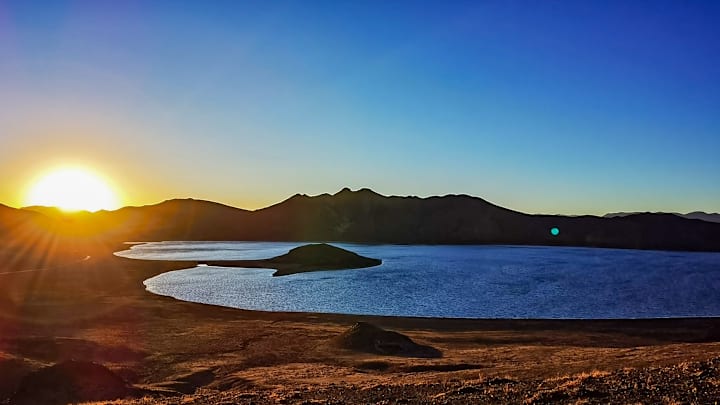
The Earth is studded with countless gorgeous lakes of all shapes and sizes, but some lakes around the world are so breathtaking that they’ve spawned all kinds of folklore, legends, and pilgrimages to their waters. It’s no wonder that these lakes are sometimes associated with portals to other realms, but they’re also simply prime examples of just how beautiful our very own planet is.
From legend-shrouded lakes tucked away in the Andes Mountains to icy yet surprisingly biodiverse bodies of water hidden in remote Siberia, here are 13 of the dreamiest lakes in the world.
- Lake Atitlán, Guatemala
- Laguna Colorada, Bolivia
- Lake Kawaguchi, Japan
- Melissani Lake, Greece
- Jökulsárlón, Iceland
- Lake Wakatipu, New Zealand
- Crater Lake, Oregon
- Plitvice Lakes, Croatia
- Lake Como, Italy
- Lake Titicaca, Peru
- Jellyfish Lake, Palau
- Lake Yamdrok, Tibet
- Lake Baikal, Russia
Lake Atitlán, Guatemala

Guatemala’s Lake Atitlán is a sprawling and serene body of water nestled beneath three volcanoes. The lake is surrounded by small towns that each have their own unique character, from the local textile and craft hub of San Juan to the spiritual mecca of San Marcos.
The lake itself is a stunning expanse of blue that stretches across a total of 50 square miles, and it’s easy to travel by boat from town to town while drinking in the area’s rich Mayan history, hiking up volcanoes, enjoying an abundance of yoga classes and other activities, and sometimes, even seeing spurts of fire shoot from the distant, highly active Volcán de Fuego.
Laguna Colorada, Bolivia

Bolivia’s Laguna Colorada is a breathtaking lake best known for its startling red color. Located in the southwest of the country near Chile, this lake is nestled in a hallucinatory expanse of desert and salt flats. Its unique color is the result of algae and sediments that produce red pigments when exposed to sunlight, and so it’s no wonder that the lake was once believed to be made up of the blood of the gods. Even more strikingly, the lake is often populated by large flocks of flamingos, giving a surreal pink tint to its already extraordinary red hue.
Lake Kawaguchi, Japan

Japan’s Lake Kawaguchi is a serene lake that provides a uniquely clear view of the snow-capped Mount Fuji, Japan’s tallest peak. This lake is beautiful anytime of year, from summer—when fields of lavender blossom by the shore—to autumn, with its vibrant tapestries of orange and gold hues. Of course, the area surrounding the lake is particularly noted for its springtime display of pink cherry blossoms.
Lake Kawaguchi is one of five lakes created by Mount Fuji’s past eruptions, and it is located about two hours outside of Tokyo by train. It is also surrounded by museums, restaurants, hot springs, and occasional festivals, and is the perfect destination for anyone looking to immerse themselves in Japanese culture, cuisine, and natural beauty.
Melissani Lake, Greece

Nestled inside a cave on the Greek island of Kefalonia is a body of water that glows so brightly, it almost looks lit from within. This is Melissani Lake, a body of water that was first discovered in 1951 by speleologist Yiannis Petrochilos and his wife Anna after they descended into the cave by ropes through a small opening at the top.
One can only imagine their awe upon seeing the water within, as well as the strange and evocative stalactites and rock formations that surround it, some of which are said to resemble dolphins and other creatures.
The lake has since been identified as a place of worship in ancient Greece after artifacts from the 3rd and 4th centuries BCE were unearthed. Today, scholars believe it was a holy place dedicated to the god Pan and to nymphs, both of which are associated with the forest and nature, though nymphs tend to also be linked to water.
According to local mythology, the cave was created when a nymph named Melissanthe fell in love with Pan. After he rejected her, the story goes, she committed suicide in the lake, which retains her name.
Jökulsárlón, Iceland

Iceland’s Jökulsárlón gives new meaning to the color blue, especially when illuminated by sunrises, sunsets, or the Aurora Borealis. Jökulsárlón is a glacial lagoon located in Vatnajökull National Park at the head of the Breiðamerkurjökull glacier. It developed as the glacier began to melt around the 1920s, and has continued to expand since then.
Studded with ancient icebergs that glow softly in the sunlight, rimmed by black sand beaches, and often populated by seals and wild birds, this lagoon is an oasis of peace—despite the crowds that tend to flock to it.
Lake Wakatipu, New Zealand

New Zealand is well-known for its stunning landscapes that seem right out of fantasy novels, but Lake Wakatipu stands out even among many other gorgeous vistas. This lake is a stretch of still blue water nestled on New Zealand’s South Island in a basin carved out by ancient glaciers.
It is particularly notable for its changing water levels. One Māori legend says that the lake was created when a giant died, and his breathing results in the lake’s shifting water levels. Another legend holds that an ancient lake monster named Matau sleeps at the bottom of this lake, and its heartbeat causes the varying water levels.
The name “Wakatipu” might mean “to create” or “to cause growth,” and this is also believed to connect to a Māori story about a time a decimated tribe took refuge and rebuilt their numbers on its shores. Today, the lake still offers a place to rest and refresh, albeit through peaceful boat rides, plentiful fishing, and water said to be 99.9% pure.
Crater Lake, Oregon

Oregon’s Crater Lake is a donut-shaped body of water surrounded by snow-capped, pine-covered mountains and punctuated by Wizard Island, a cinder cone volcano left behind by an ancient cataclysm.
The lake was formed when the stratovolcano Mount Mazama collapsed some 7,700 years ago, releasing miles of magma that formed a deep crater. Eventually, rainwater and melted snow turned the crater into a lake, and the purity of the lake’s water sources has resulted in its unusual clarity and stunning hue.
Today, Crater Lake is the deepest lake in the U.S., reaching 1,943 feet in parts. It’s the crown jewel of Crater Lake National Park, which also offers plentiful hikes through old-growth forests and much more.
Plitvice Lakes, Croatia

If there ever was a paradise on Earth, it might look like Croatia’s Plitvice Lakes. These waters are fed by countless waterfalls that cascade through a lush forest and pool into a collection of 16 terraced jade-colored lakes known for their turquoise-jade colorings that shift with the light and the seasons.
These lakes are located in Plitvice Lakes National Park. Today, thousands of visitors each day can often be seen wandering the boardwalks, taking rides on silent, eco-friendly electric boats, and observing the area’s abundance of beauty, which includes clouds of colorful butterflies, 160 species of birds, and rainbows that can be frequently seen glittering off the naturally formed limestone dams that separate the lakes.
Lake Como, Italy

Italy’s Lake Como is one of the most desirable vacation destinations in the world for a reason. Located at the foothills of the Alps in Lombardy, Italy, this lake has been a mecca for the rich and royal for centuries, and it offers access to magnificent villas, stunning ruins, sprawling gardens, waterfront adventures, and plenty of Italian charm.
Visitors have access to sweet villages like Bellagio, with its array of gelato shops and cafes and its famous vine-cloaked passageway, Salita Serbelloni. Another standout town includes the colorful Menaggio, with its charming old buildings and famous St. Stephen’s Church, and there are many more to choose from.
Surrounded by the snow-dusted Alps on one side and palm trees and vast gardens on the other, Lake Como is also famously linked to some of the world’s greatest artists—Verdi composed operas on its shores and Franz Liszt created several odes to the lake's beauty while living in the region, and that’s just the tip of the iceberg when it comes to this destination’s stacked resume.
Lake Titicaca, Peru

Lake Titicaca stretches across the border of Peru and Bolivia and rests amid the Andes Mountains at over 12,500 feet above sea level. This makes it the world’s highest lake accessible to large ships as well as the second-largest lake in South America. It also consists of two bodies of water connected by a thin strait, and is dotted by 41 islands and fed by over 25 rivers.
The lake is home to many ancient ruins and legends, including a temple on the Isla del Sol (Island of the Sun) that Incan tradition holds was the place where the god of the sun, Inti, first appeared on earth, along with his sons Manco Capac and Mama Ocllo, who went on to found the Inca civilization. Meanwhile, the Isla de la Luna, or Island of the Moon, is said to be inhabited by moon goddess Mama Killa.
The lake is at the heart of countless other Incan stories, ranging from creation myths to tales of a powerful ancient city that rests beneath its waters. Some even say this city contains a bridge to the realm of the gods, and recent archaeological research has indeed unearthed some temples and other structures under its surface, generating newfound interest in this remote locale.
Today, locals still practice ancient ways of living and farming on the land. Visitors can also explore sacred sites like Isla del Sol’s Labyrinth, believed to be an ancient holy complex for Inca priests, and the Uros floating islands, among many other sites.
Jellyfish Lake, Palau

Palau’s Jellyfish Lake is located on Eil Malk Island, and it’s noted for the thousands of golden jellyfish that can sometimes be seen floating peacefully in its waters. Visitors can even snorkel with the creatures, which are completely harmless and spend their days following the movement of the sun.
Jellyfish Lake is nestled among the jungle and connects to the nearby sea through a series of underground tunnels and fissures. The lake contains two layers—one of which is more oxygen-rich and allows jellyfish, plankton, and other creatures to thrive. The lower layer, meanwhile, is concentrated with hydrogen sulfide and can be dangerous for humans and animals.
Unfortunately, the jellyfish population has declined significantly in recent years, so it’s a good idea to do some research and adjust your expectations accordingly if you do plan to visit.
Lake Yamdrok, Tibet

Tibet’s Lake Yamdrok rests at over 14,000 feet above sea level and is one of Tibet’s three sacred lakes. Located near Lhasa, this lake shines in varying shades of emerald green and teal blue that stand out against the area’s browned hills.
The lake has many legends associated with it, including a belief that it was created by a goddess who turned herself into the lake to protect Tibetans. Today, the lake is still associated with protection and fertility. It is also home to the Samding Monastery, the only Tibetan monastery to ever be led by a female incarnated lama.
Lake Baikal, Russia

Deep in Russia’s Siberian wilderness lies Lake Baikal, which— at 25 to 30 million years old and around 5,387 feet deep—has the distinction of being the world’s oldest and deepest lake. In addition to that, this lake holds an estimated 20% of the world’s unfrozen fresh water.
Lake Baikal is typically frozen from around January to May or June, creating a stunning vista of thick ice that has awed many photographers and brave visitors. The lake is also occupied by the Buryat tribes, who farm on the east of the lake, and it is also home to an astounding variety of flora and wildlife, including over 1,000 species that are endemic to the area.