%20%20--%3E%0A%3Csvg%20version%3D%221.1%22%20id%3D%22Layer_1%22%20xmlns%3D%22http%3A%2F%2Fwww.w3.org%2F2000%2Fsvg%22%20xmlns%3Axlink%3D%22http%3A%2F%2Fwww.w3.org%2F1999%2Fxlink%22%20x%3D%220px%22%20y%3D%220px%22%0A%09%20viewBox%3D%220%200%20684.6%2068.1%22%20style%3D%22enable-background%3Anew%200%200%20684.6%2068.1%3B%22%20xml%3Aspace%3D%22preserve%22%3E%0A%3Cg%3E%0A%09%3Cpath%20d%3D%22M444.1%2C29.3h-17.4v14.5h17.4V29.3z%20M36.4%2C68.1l29.3-50.8V0H50.4L32.9%2C36.8L15.5%2C0H0v68.1h16.7V45.8l12.4%2C22.3H36.4z%0A%09%09%20M49.1%2C68.1h16.6V23.4L49.1%2C52.1V68.1z%20M76.6%2C68.1h45V53.8H93.3V41.6h21V27.1h-21V14.8h28.3V0.1h-45V68.1z%20M175.6%2C68.1h17.3v-68%0A%09%09h-16.5v40.3L150%2C0.1h-17.6v68h16.7V27.7L175.6%2C68.1z%20M235.8%2C14.8h15.4V0.1h-47.4v14.7H219v53.2h16.8V14.8z%20M290.3%2C45.9h-17.1%0A%09%09l7.5-15.6h2L290.3%2C45.9z%20M298.7%2C68.1h18l-32.2-68h-5.7l-32%2C68h18l3.3-7.1h27.1L298.7%2C68.1z%20M325.2%2C68.1h46.2V53.8h-29.6V0.1h-16.7%0A%09%09V68.1z%20M423.7%2C14.8h27.2V0.1H407v68h16.7V14.8z%20M462%2C68.1h46.2V53.8h-29.6V0.1H462V68.1z%20M564.8%2C34.1c0%2C10.7-7.2%2C19.2-18.5%2C19.2%0A%09%09c-11.4%2C0-18.5-8.5-18.5-19.2s7.1-19.2%2C18.5-19.2C557.6%2C14.9%2C564.8%2C23.4%2C564.8%2C34.1%20M580.6%2C34.1c0-19-14.2-34-34.3-34%0A%09%09c-20.2%2C0-34.3%2C15-34.3%2C34c0%2C19%2C14.1%2C34%2C34.3%2C34C566.4%2C68.1%2C580.6%2C53.1%2C580.6%2C34.1%20M604.8%2C20.5c0-4.1%2C3.3-6.2%2C6.7-6.2%0A%09%09c4.4%2C0%2C6.6%2C3%2C6.6%2C6.6h14.7C631.8%2C9.1%2C625.1%2C0.1%2C611%2C0.1c-12%2C0-21.7%2C9.3-21.7%2C20.6c0%2C10.9%2C5.9%2C15.9%2C16.7%2C19.8%0A%09%09c5.2%2C1.8%2C11.5%2C3.2%2C11.5%2C8c0%2C3.3-2.4%2C5.5-6.4%2C5.5c-3.6%2C0-6.6-3-6.6-6.7h-15.2c0%2C11.5%2C7.9%2C20.8%2C21.8%2C20.8c12%2C0%2C21.6-9.3%2C21.6-20.6%0A%09%09c0-10-5.3-16.4-16.7-19.8C610.6%2C26.1%2C604.8%2C25.3%2C604.8%2C20.5%20M670%2C20.9h14.7C683.8%2C9.1%2C677.1%2C0.1%2C663%2C0.1c-12%2C0-21.7%2C9.3-21.7%2C20.6%0A%09%09c0%2C10.9%2C5.9%2C15.9%2C16.7%2C19.8c5.2%2C1.8%2C11.5%2C3.2%2C11.5%2C8c0%2C3.3-2.4%2C5.5-6.4%2C5.5c-3.6%2C0-6.6-3-6.6-6.7h-15.2c0%2C11.5%2C7.9%2C20.8%2C21.8%2C20.8%0A%09%09c12%2C0%2C21.6-9.3%2C21.6-20.6c0-10-5.3-16.4-16.7-19.8c-5.4-1.6-11.3-2.4-11.3-7.2c0-4.1%2C3.3-6.2%2C6.7-6.2C667.7%2C14.4%2C670%2C17.3%2C670%2C20.9%0A%09%09%22%2F%3E%0A%3C%2Fg%3E%0A%3C%2Fsvg%3E%0A)

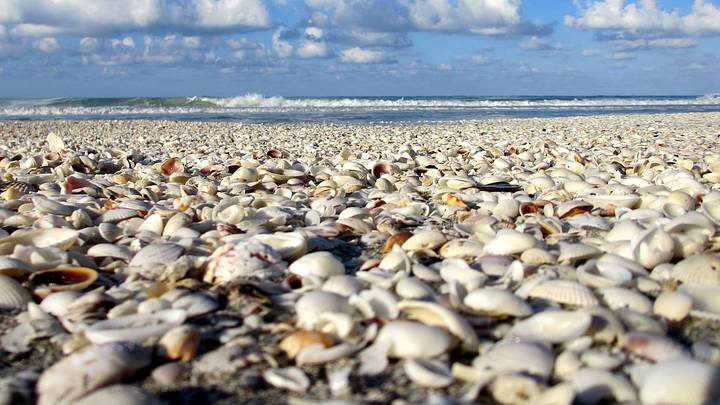
Almost everyone has absentmindedly pocketed a few seashells while strolling along the beach. Actually making practical use of those shells, however, is a far rarer feat. The Calusa—the indigenous inhabitants who ruled Florida’s southwest coast for centuries—did just that. For the Calusa, collecting shells wasn’t a hobby, but a means of survival. They harvested mollusks not just for the meat inside, but to make weapons and even artificial islands.
Said to mean "fierce people," the Calusa tribe certainly were when fending off 16th-century colonizers with poison-tipped arrows. But more importantly, they were an extremely ingenious people.
During my time on Sanibel Island—a central part of their historic territory—I learned about the society that walked these shell-strewn shores long before modern sunbathers arrived. Every corner of Lee County I explored—from walking the coastline of the "Seashell Capital of the World" and touring the Bailey-Matthews National Shell Museum to my stay on the Caloosahatchee River—was a constant reminder of who came first. While most tourists today hunt for shiny junonia and colorful scallop shells for fun, the Calusa simply saw those same shores as their source for building materials. Without access to local stone, they engineered an entire coastal empire out of seashells.
An Empire Built Without Stone

If you’ve ever visited Florida—where former Calusa territory stretches from Tampa Bay all the way down through the Ten Thousand Islands—you know it's a flat landscape of sand, water, and swamp. What you won't find scattered across the coastline is exposed bedrock, granite, or limestone. Because southwest Florida has little readily available hard stone, the Calusa couldn't build traditional masonry structures like the Maya or Romans. So, they improvised with the most abundant material around them: mollusk shells.
Millions of discarded oyster, clam, and whelk shells, along with clay and other discarded items, were stacked into mounds or middens. These mounds served a multitude of purposes, from house and temple platforms to burial memorials. The Calusa’s capital—Mound Key, a manmade island in Estero Bay—stands over 30 feet above sea level. Known historically as Calos, the 125-acre island still dominates the bay today, serving as one of the most important archaeological sites in North America.
Tools of the Trade

Some cultures used seashells for currency. The Calusa used them for weaponry. Wandering through the Shell Museum's cavernous halls, the scale of their civilization comes into focus. Where a modern eye sees a decorative shelf trinket, the Calusa saw a specialized toolkit. Glass-encased displays showcase the huge lightning whelk and horse conch hammers and adzes used to fell trees and shape dugout canoes.
A nearby wall plaque titled "A Life Shaped by the Sea" puts their savvy into perspective. It notes that the Calusa "understood the variation in hardness among different parts of the same shell and used that to their benefit in toolmaking."
Quahog clams doubled as anvils, scrapers, and knives, while tusk shells served a ceremonial purpose, strung like beads on fiber cord.
Ironically, even their fishing tactics relied on shellfish. Clusters of "watercourts"—submerged holding pens built from shells—helped trap mullet, pinfish, and herring for meals on tap. Radiocarbon dating places these aquatic pantries between 1300 and 1400 A.D. To put that into perspective, that’s right around the same era the Ming Dynasty began constructing the Forbidden City and the Aztecs were founding Tenochtitlan.
Who were once the most powerful people on the southern peninsula were tragically wiped out by the 18th century due to European diseases and slave raids by neighboring tribes working with colonizers. The Calusa legacy lives on through their sturdy mounds, museums like the Mound House built atop a preserved one, and the many shells that scatter the shores of southwest Florida.